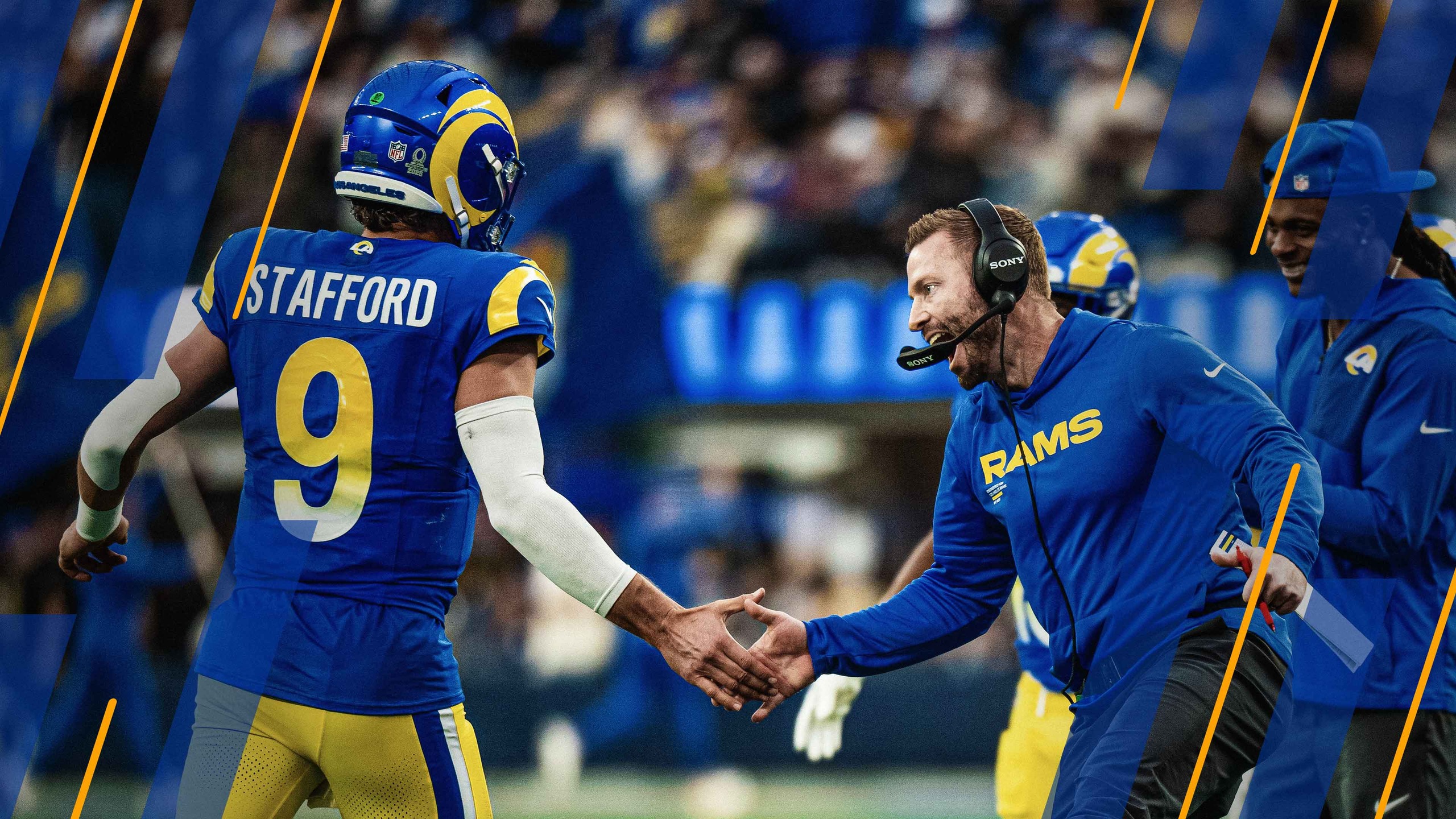
- The Rams' backend additions solidify the NFL's best roster: Los Angeles entered March looking to address its Achilles' heel in coverage after a late-season collapse. The front office did just that, pulling off an aggressive trade for cornerback Trent McDuffie and signing Jaylen Watson — key pieces to the Chiefs’ fifth-ranked coverage unit.
- The Super Bowl champion Seahawks come in at No. 2: The team watched some key contributors walk in free agency, including Super Bowl MVP running back Kenneth Walker III. Yet, Seattle maintains a strong foundation in all three phases of the game, the blueprint to its championship run.
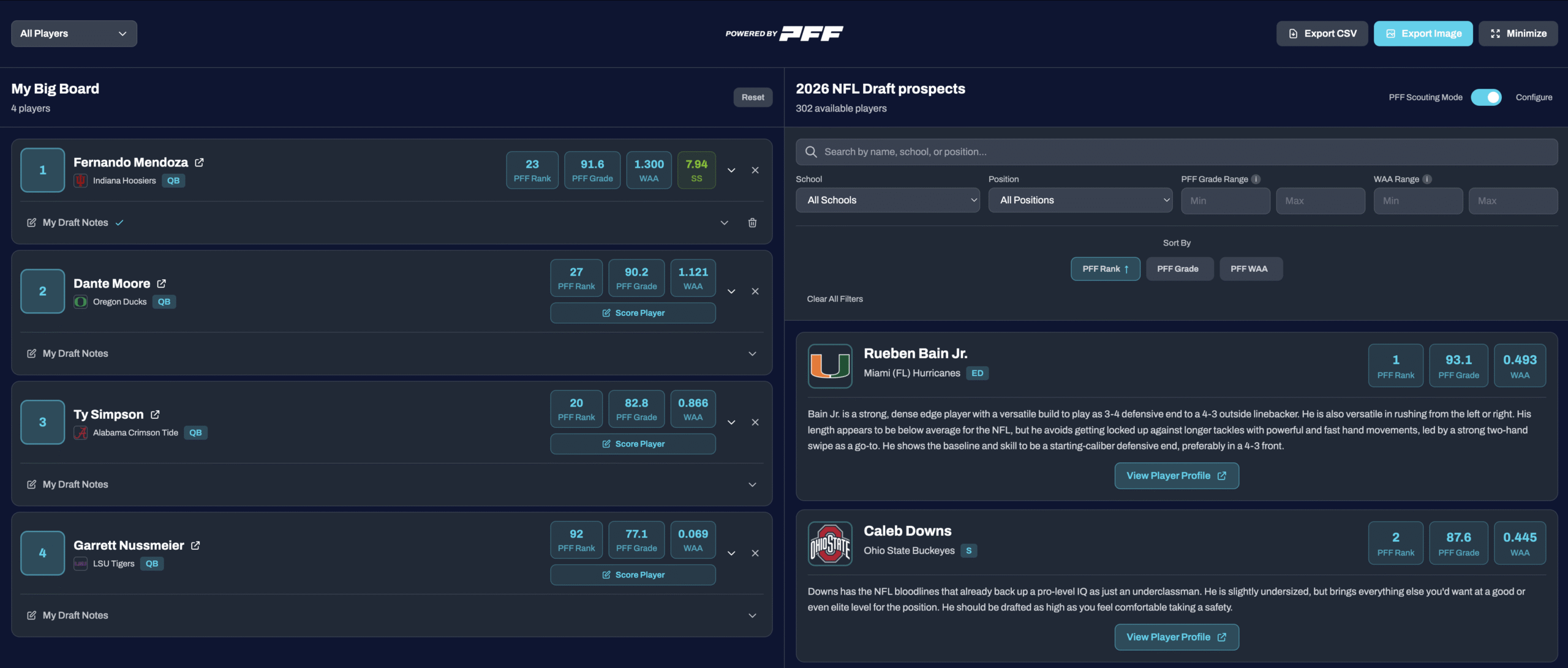
- 2026 NFL Draft season is here: Try the best-in-class PFF Mock Draft Simulator and learn about 2026's top prospects while trading and drafting for your favorite NFL team.
1. Los Angeles Rams
In the PFF era (since 2006), no team had ever finished the year ranked atop the NFL in both PFF team offensive (93.0) and defensive (86.9) grading — until the Rams did this past season. Led by NFL and PFF MVP Matthew Stafford and PFF Offensive Player of the Year Puka Nacua, the Rams were a force to be reckoned with.
Even still, Los Angeles entered March looking to address its Achilles' heel in coverage after a late-season collapse. And the front office did just that, pulling off an aggressive trade for cornerback Trent McDuffie and signing Jaylen Watson — key pieces to the Chiefs’ fifth-ranked coverage unit. Those additions leave the Rams with virtually no weaknesses.
[Read More: 2026 NFL free agency grades for all 32 teams]
2. Seattle Seahawks
The Super Bowl champion Seahawks cede some ground here after seeing key contributors walk this offseason, including Super Bowl MVP Kenneth Walker III, three starters on defense and offensive coordinator Klint Kubiak. While those are significant losses, Seattle maintains a strong foundation in all three phases of the game, the blueprint to its championship run.
All three units feature elite talent, highlighted by Offensive Player of the Year Jaxon Smith-Njigba and PFF’s highest-graded cornerback, Devon Witherspoon, to name a few. The front office also re-signed elite returner Rashid Shaheed.
3. Buffalo Bills
Led by Josh Allen and James Cook, the Bills’ rushing attack dominated this past season, ranking third in rushing success rate (33.8%). A strong offensive line helped set the table for that production, leading the Bills to league-leading marks in yards before contact on designed runs. That made Buffalo’s free-agent decisions up front that much harder. Although they weren’t able to retain guard David Edwards, the Bills re-signed top-10 center Connor McGovern to remain somewhat consistent on the interior.
Maintaining that strength on the ground was only half the battle. To bolster the NFL’s third-ranked offense (83.3 PFF team offensive grade) through the air, the Bills traded for D.J. Moore, addressing the lack of playmaking talent at receiver. Along with Khalil Shakir, Buffalo now possesses two of the top 10 receivers in generating yards after the catch over the past two seasons.
4. Baltimore Ravens
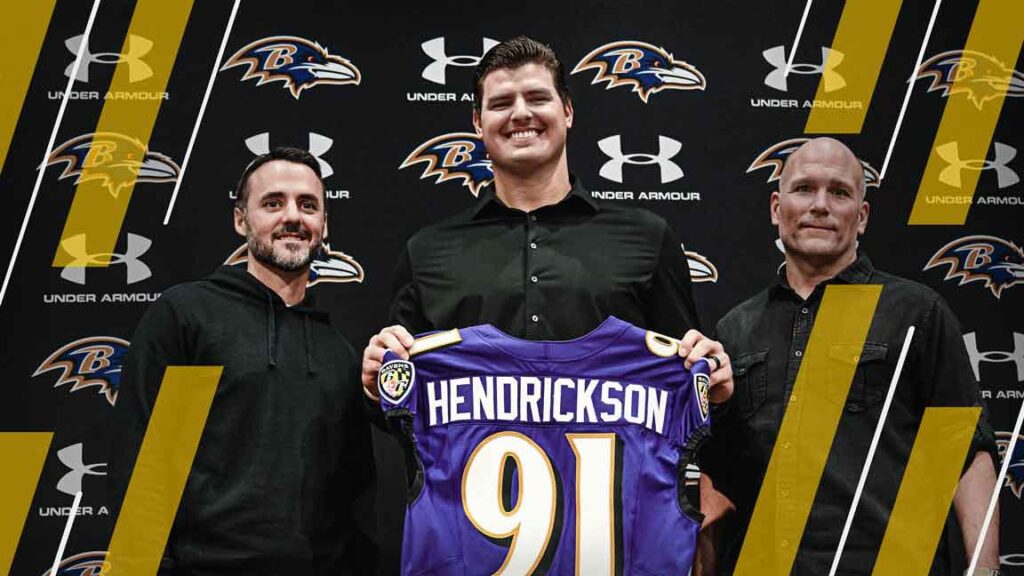
After finishing the 2025 season ranked in the bottom five in team PFF pass-rush grade (62.1) and pressure rate (31.4%), the Ravens spared no expense to strengthen the unit by signing Trey Hendrickson to a massive contract. The move gives the Ravens an answer to one of their biggest issues in 2025 and provides the defense with a player well acquainted with the physical nature of the AFC North.
Although the loss of Tyler Linderbaum is a tough pill to swallow, the Ravens still possess the two key pieces to their offensive philosophy in quarterback Lamar Jackson and workhorse running back Derrick Henry.
5. Green Bay Packers
The Packers saw significant turnover this offseason, with leaders Elgton Jenkins, Romeo Doubs and Quay Walker — among others — all departing Green Bay. To soften that blow, the Packers did well to measure contingencies against their needs, most notably on defense, where they added Javon Hargrave, Zaire Franklin and Benjamin St-Juste.
Even amid the slew of roster changes, the Packers still maintain elite talent on both sides of the ball. After posting the fourth-highest PFF overall grade among quarterbacks last season, Jordan Love gives Green Bay an exceptionally high floor on offense. Edge defender Micah Parsons also gives the defense a dominant force to shoulder the load.
6. Detroit Lions
Despite coming up short of a playoff berth in 2025, the Lions were incredibly efficient, ranking fifth in the NFL in both PFF team offensive (82.8) and defensive (81.9) grading. Although they weren’t terribly active on the open market, Detroit maintains a strong core of talent.
It starts in the trenches, buoyed by PFF’s Protector of the Year, Penei Sewell, and fourth-highest-graded edge defender Aidan Hutchinson. They also boast elite skill players in Amon-Ra St. Brown and Jahmyr Gibbs, giving the Lions one of the most dangerous rosters in football.
7. Philadelphia Eagles
The Eagles waited out the opening phase of free agency, biding their time to let the market run its course. Their patience allowed them to acquire a trio of cost-effective free agents in cornerback Riq Woolen, edge rusher Arnold Ebiketie and receiver Marquise Brown.
Those signings are premier examples of the Eagles’ self-awareness and ability to pivot. After missing out on Jaelan Phillips, attention turned to other solutions to stabilize the pass rush off the edge, leading to Ebiketie. Woolen provides the perfect answer at the outside CB2 spot, a position that was a weak link in the secondary this past season. Savvy moves like these have allowed the Eagles to stay a formidable force in the NFL.
8. Los Angeles Chargers
Despite ranking near the top of the league in available cap space leading up to free agency, the Chargers weren’t major players in the market. They focused on retaining many of their key players, although edge defender Odafe Oweh departed in the process.
Yet, their lofty placement on this list stems from the overall strength of a roster expected to return numerous players who missed varying amounts of time last season, chief among them tackles Rashawn Slater and Joe Alt. Los Angeles also added center Tyler Biadasz and re-signed Trevor Penning, so their glaring weakness, the offensive line, should be less so in 2026.
9. Houston Texans
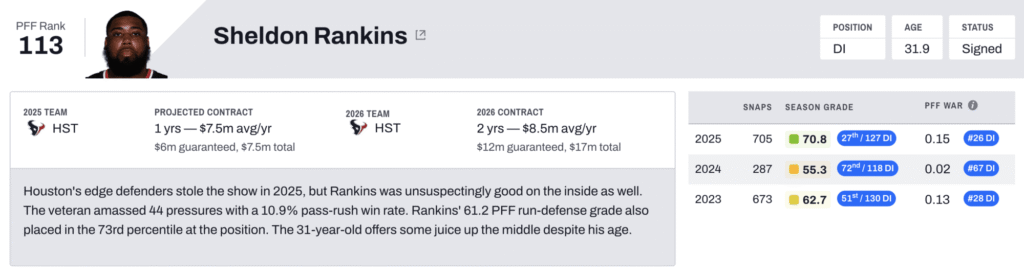
After leading the NFL in EPA per play allowed, the Texans made clear their priorities to maintain that strength on defense this offseason, returning solid contributors in Sheldon Rankins and E.J. Speed, as well as signing safety Reed Blankenship.
But the most aggressive move came on offense, where the Texans traded for former Lions running back David Montgomery to bolster a backfield lacking a workhorse. Although the offense still has questions to answer up front amid another offseason offensive line shuffle, the unit now has a highly capable back to pair with Woody Marks. That should help the offense find balance and give quarterback C.J. Stroud more room to operate.
10. San Francisco 49ers
With Jauan Jennings and Kendrick Bourne testing free agency and Brandon Aiyuk likely to depart, the 49ers approached their need at receiver with tact. Instead of shelling out significant figures to retain Jennings or Bourne, the team opted to sign a veteran upgrade in Mike Evans. Although injuries hindered Evans this past season, he’s still performing at a high level, having just posted his 12th straight season with a 70.0-plus PFF receiving grade. The move ensures the 49ers' fourth-ranked offense (83.1) from 2025 should remain highly productive.
11. New England Patriots
After a run to the Super Bowl this past season, the Patriots faced difficult offseason decisions. As a result, they lost Stefon Diggs, K'Lavon Chaisson and Jaylinn Hawkins, the team’s leaders in receiving yardage, sacks and interceptions, respectively. New England made every effort to fill those voids with quality veterans in receiver Romeo Doubs, edge Dre'Mont Jones and All-Pro safety Kevin Byard, though. The Patriots should be a contender once again.
12. Denver Broncos
The Broncos were reserved throughout the first week of free agency, opting to prioritize their own pending free agents as opposed to adding new talent. Not all were able to be retained, as John Franklin-Myers cashed in on a strong showing over the past two years in Denver. The real splash didn’t come until this week with the trade to acquire former Dolphins receiver Jaylen Waddle, giving quarterback Bo Nix a highly efficient pass catcher who has ranked in the 88th percentile in yards per route run over the past three seasons.
13. Kansas City Chiefs
Heading into free agency, the Chiefs were staring down numerous roster holes, including a backfield absent their two leading rushers from 2025. They not only addressed the issue but also added serious juice to the position with Kenneth Walker III. The Super Bowl MVP was the highest-graded running back in the NFL in 2025 and now joins a franchise with a championship pedigree. While the Chiefs still have needs to address, they now have ample draft capital to do so.
14. Jacksonville Jaguars
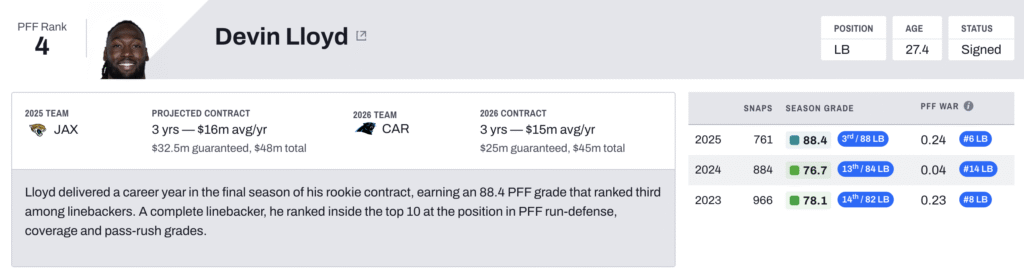
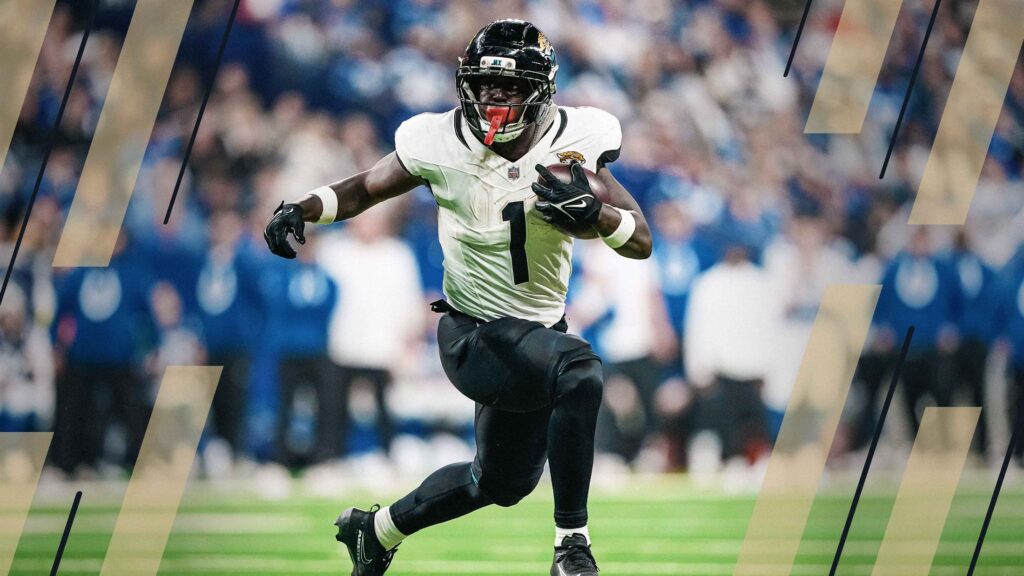
The Jaguars’ list of departing free agents wasn’t as long as that of some teams, but the losses they did suffer are easily the most impactful, with Devin Lloyd and Travis Etienne both heading to new destinations. That leaves Jacksonville down a key playmaker on both sides of the ball. Chris Rodriguez Jr. will somewhat supplement the backfield — but likely not to Etienne's level. Third-year linebacker Ventrell Miller will likely step into Lloyd’s role with big shoes to fill after the latter ranked third among linebackers in PFF overall grade last season.
All things considered, the Jaguars showed significant growth in Liam Coen’s first year at the helm and can build on that in 2026.
15. Chicago Bears
The retirement of center Drew Dalman and the trade of D.J. Moore, combined with a deep list of pending free agents on defense, set the stage for a busy offseason in Chicago. Trading for Garrett Bradbury filled the need left by Dalman at center, and the signings of Coby Bryant and Devin Bush addressed the voids on defense left by the departures of Kevin Byard and Tremaine Edmunds.
Despite some of the departures, such as Byard and cornerback Nahshon Wright, directly impacting the Bears’ league-leading takeaway numbers, the new additions should help stabilize a defense that ranked 29th in average yards per play allowed in 2025.
16. Dallas Cowboys
After surrendering the most passing yards in the NFL during the regular season, the Cowboys have made it a point to address key defensive deficiencies. Dallas took steps to add to its pass rush by trading for Rashan Gary and bolstered the secondary through the additions of safeties Jalen Thompson and P.J. Locke and cornerback Cobie Durant. Each of those moves will likely help to pull the pass defense out of the basement of the NFL and take pressure off the offense.
17. Cincinnati Bengals
The loss of Trey Hendrickson was a difficult blow, albeit an anticipated one. Yet, the Bengals did well to reallocate those cap resources to address two key needs on defense, adding Boye Mafe to bolster the pass rush and Bryan Cook to solidify the backend coverage. Both were significant holes heading into the offseason after the Bengals finished 31st in passing success rate allowed.
Fielding even a league-average defense would have a massive impact on Cincinnati’s ability to win games behind a Joe Burrow-led offense.
18. Minnesota Vikings
The Vikings’ massive cap deficit in the lead-up to free agency largely hindered the team’s ability to pursue even middle-of-the-market talent. To address some of the most pressing needs on the roster, Minnesota had to get creative and play into the upside of potential targets, which led to the signings of Kyler Murray and cornerback James Pierre.
Getting Murray at the veteran minimum is an incredibly savvy move for the team and player, allowing the Vikings to add viable competition at the position following J.J. McCarthy’s struggles, while also allowing Murray to play under Kevin O'Connell, who has a strong track record for quarterback development.
[Read More: LIVE Deal Grader — Grading and tracking every signing and trade]
19. Pittsburgh Steelers
The Steelers were one of the biggest winners to open free agency. Despite losing Isaac Seumalo, Pittsburgh was able to address various needs with quality talent and experience. The trade for Michael Pittman Jr. and the signing of Rico Dowdle are strong additions to an offense that struggled to find consistency this past season.
Jamel Dean and Jaquan Brisker round out a coverage unit that already features Jalen Ramsey and Joey Porter Jr., giving the Steelers a much more well-rounded roster than they fielded in 2025.
20. Tampa Bay Buccaneers
Without Mike Evans and Lavonte David, two of the longest-tenured Buccaneers in franchise history, a changing of the guard is underway in Tampa. The losses extended to Jamel Dean and Logan Hall, among other players with significant experience in the Buccaneers system. As the departures mounted, the Buccaneers moved to fill in the gaps with capable contributors, such as Alex Anzalone, Kenneth Gainwell and A'Shawn Robinson. Those moves allow Tampa Bay to get younger and potentially more productive in key spots, but it comes at the cost of familiarity.
21. Indianapolis Colts
Retaining high-priced free agents Alec Pierce and Daniel Jones cost the Colts more than $202 million in total contract value, largely restricting their ability to add to the roster and prevent an exodus of free agents. The moves also led to the subsequent trades of Michael Pittman Jr. and Zaire Franklin.
While Pierce and Jones were crucial pieces to the early Colts' success on offense in 2025, dedicating that level of cap resources was a boom-or-bust decision. Their roster improvement in 2026 hinges on in-house depth options and mid- to late-round draft picks.
22. Atlanta Falcons
Franchise-tagging Kyle Pitts locked up the Falcons’ top pending free agent, and the signing of Tua Tagovailoa on a veteran-minimum contract provides the quarterback room with a cost-effective option to compete with Michael Penix Jr.
Without much further cap flexibility, Atlanta was priced out of many of its own pending free agents, including Kaden Elliss, David Onyemata and Elijah Wilkinson. Various mid-level additions through free agency will fill roster spots but offer little in terms of proven production, limiting the franchise’s ceiling in year one under the new regime.
23. Washington Commanders
After a disappointing 2025 season, the Commanders invested heavily in the free-agent market. Odafe Oweh and K'Lavon Chaisson were brought in to bolster the pass rush, Nick Cross and Amik Robertson are new faces in the secondary and Leo Chenal steps into a key role at linebacker, replacing Bobby Wagner. Washington desperately needed a defensive overhaul to inject talent into a group that ranked 31st in EPA per play allowed last season.
24. New York Giants
John Harbaugh’s first offseason leading the Giants has already spurred significant roster turnover. Isaiah Likely, Patrick Ricard and Ar'Darius Washington highlight former Ravens who followed Harbaugh to New York — under-the-radar talent familiar with the culture Harbaugh aims to build. It will likely take multiple offseasons for the roster to take shape, but those signings will assist in the transition.
25. New Orleans Saints
The Saints are another team undergoing a changing of the guard, spurred by the departures of two longtime defensive leaders in Demario Davis and Cameron Jordan. While New Orleans addressed some needs with additions like Kaden Elliss, it’s unclear how the absence of Davis and Jordan will affect a defense that excelled in the second half of the 2025 season (first in EPA per play allowed from Week 10 onward).
26. Carolina Panthers
As one of the biggest winners of free agency, the Panthers have created a promising outlook for 2026. Devin Lloyd and Jaelan Phillips will revamp a defense that struggled to field top talent in the front seven. While the roster has the potential to make major strides in 2026, finding consistency will be the key. And it all starts with Bryce Young and Offensive Rookie of the Year Tetairoa McMillan, who will aim to further build their chemistry.
27. Tennessee Titans
The Titans were among the most active teams in free agency, spending a league-high $311 million in total contract value on 15 new additions, including numerous players with previous experience playing under new head coach Robert Saleh and offensive coordinator Brian Daboll. While the cost value may be up for debate with some of the acquisitions, the aggressive moves undoubtedly added talent to a roster in dire need of it at multiple positions. Now, the question is, can they put it all together?
28. Cleveland Browns
Nearly the entire Browns' starting offensive line was on expiring contracts, so the team's primary focus this offseason was to rebuild up front. Cleveland did well to piece together a capable unit, starting with the trade for Tytus Howard and followed by the signings of Zion Johnson, Elgton Jenkins and Teven Jenkins. Those additions should improve the franchise's 31st-ranked offensive line in 2025.
29. Las Vegas Raiders
The Raiders were extremely active on the free-agent market, dishing out over $218 million in total guarantees this offseason. The crown jewel of their free-agency class is center Tyler Linderbaum, who cashed in as the highest-paid interior offensive lineman in NFL history. The move fits perfectly with new head coach Klint Kubiak’s run-heavy scheme and will help progress the offense substantially in 2026.
30. Miami Dolphins
The Dolphins' roster teardown hit full stride this offseason, with nearly every highly paid key contributor being shown the door. Tua Tagovailoa, Tyreek Hill, Jaylen Waddle, Minkah Fitzpatrick and Bradley Chubb highlight the exodus.
Quarterback Malik Willis brings upside on a cost-effective contract that features little in terms of long-term guarantees, providing Miami with potential outs should the union not work out. The Dolphins’ rebuild is in full swing.



31. Arizona Cardinals
Kyler Murray's exit is the dominant headline of the Cardinals‘ offseason. Arizona, despite being debatably more productive offensively without Murray, doesn't have a strong roster on paper, evidenced by its offensive (70.4, 22nd) and defensive (50.7, 30th) grading profiles. The struggles on defense are notable, and without major investments in the unit, the Cardinals' outlook in 2026 doesn’t project favorably.
32. New York Jets
Franchise-tagging Breece Hall, reuniting with Geno Smith and trading for Minkah Fitzpatrick underscore some of the Jets' biggest moves in an active offseason. While those additions are promising, the Jets’ roster overhaul still has a long way to go. The team finished in the bottom five in EPA per play metrics on both sides of the ball this past season. The roster likely won’t shape until after the draft, where the Jets can inject young, cornerstone talent into their offense and defense.


 © 2026 PFF - all rights reserved.