- Several contenders face major offensive questions: Buffalo lacks a true No. 1 wide receiver, Philadelphia must replace A.J. Brown and Detroit enters 2026 with uncertainty across its offensive line.
- Quarterback concerns could define multiple seasons: Joe Burrow’s availability, C.J. Stroud’s decline and Bo Nix’s continued development are among the biggest issues facing their respective teams.
- Key defensive losses create significant holes: Cleveland must adjust to life without Myles Garrett, Dallas needs to rebuild its pass rush and Green Bay opens the season without Micah Parsons.
Every NFL roster also enters 2026 with a problem it has yet to solve, whether it’s Miami fielding what, on paper, is the league’s worst receiving corps, Carolina heading into the season without either starting tackle or Cleveland adjusting to life after Myles Garrett.
Here is the biggest concern facing each of the NFL’s 32 teams.
Arizona Cardinals: A defense short on high-end talent
The Cardinals had just three defenders play at least 300 snaps and earn a PFF grade above 70.0 last season, and none of them topped 80.0. One of those players, Calais Campbell, is no longer on the roster, while the only projected new starter, Roy Lopez, earned a PFF grade below 70.0 in 2025.
In short, this defense lacks high-end talent. If Arizona is going to take a meaningful step forward in 2026, it will need young players such as Walter Nolen, Will Johnson and Denzel Burke to develop quickly and join edge defenders Josh Sweat and Zaven Collins as reliable, high-level contributors.
Atlanta Falcons: Receiver depth behind Drake London
The Falcons signed wide receiver Drake London to a long-term extension this offseason, with the former first-round pick out of USC having earned a PFF receiving grade above 85.0 in three of his first four NFL seasons. Despite missing time in 2025, London still earned an 89.9 PFF receiving grade, racked up 919 receiving yards and averaged 2.34 yards per route run.
The concern is that Atlanta doesn’t have much else to get excited about at the position. Free-agent additions Jahan Dotson and Olamide Zaccheaus both earned PFF receiving grades below 60.0 and averaged fewer than 1.00 yards per route run in 2025. They do have Kyle Pitts at tight end and Bijan Robinson at running back, who combined for 213 targets last year, but don’t be shocked to see rookie third-round draft pick Zachariah Brand finish fourth on this team in targets.
Baltimore Ravens: The interior offensive line
The interior of the offensive line is still a question mark. On one hand, Vega Ioane and John Simpson should be upgrades over Daniel Faalele and Andrew Vorhees, but Ioane’s lack of NFL experience means the Ravens may have to accept some growing pains. They also lost center Tyler Linderbaum to the Raiders in free agency. While the addition of Pocic helps, he is still a step down from a player who ranked fifth among all centers in PFF overall grade last season.
Buffalo Bills: No true No. 1 receiver
It’s not that there isn’t talent around Allen, but he does lack a true No. 1 target at wide receiver. Khalil Shakir led the Bills’ wide receivers in yards per route run last season at 1.80, but that ranked just 30th among NFL wide receivers. They do have Dalton Kincaid at tight end, who led all players at the position in yards per route run(2.70), but it’s unlikely Buffalo’s wide receivers will strike much fear into opposing defenses in 2026.
That doesn’t mean the offense can’t be successful. Rather, it suggests the passing game will continue to flow through the middle of the field.
Carolina Panthers: Both tackles are out
The Panthers are currently without both starting offensive tackles. Left tackle Ikem Ekwonu suffered a ruptured patellar tendon in the wild-card loss to the Rams, while right tackle Taylor Moton is sidelined with blood clots. It remains unclear when either will return in 2026, but both appear likely to miss at least the start of the season.
That makes the additions of Rasheed Walker and Monroe Freeling through free agency and the draft even more important. Walker earned a 69.3 PFF pass-blocking grade in 2025, while Freeling was one of college football’s top pass protectors, allowing just two pressures on 469 pass-blocking snaps.
Still, losing both starting tackles is a significant concern, and for all of Freeling’s potential, he has yet to play an NFL snap.
Chicago Bears: Replacing 23 interceptions, and the pass rush
The Bears recorded 23 interceptions across the regular season and playoffs last year, but only four came from players still on the roster. Replacing that level of turnover production will not be easy, particularly after Kevin Byard accounted for seven interceptions. Coby Bryant and Dillon Thieneman will need to make an immediate impact to help fill that void.
The lack of a true difference-maker off the edge is also a concern for Chicago’s defense. Montez Sweat generated 65 total pressures, but his 13.5% PFF pass-rush win rate ranked just 38th among edge defenders with at least 100 pass-rushing snaps. His career best came in 2022, when his 15.0% pass-rush win rate was tied for 24th at the position.
Cincinnati Bengals: Joe Burrow’s availability
Optimism about the offensive line should be tempered, given the small sample size of its late-season improvement, and it is not outside the realm of possibility that the unit regresses in 2026. Burrow has played 10 or fewer games in three of his six NFL seasons, and the Bengals need to keep him healthy in 2026 if they are going to contend.
Responsibility is shared between Burrow and the offensive line. The pass protection has not been good enough for much of his career, and Burrow has never posted a pressure-to-sack rate below 19.0% in a season. If he stays healthy throughout the 2026 season, the Bengals will have a legitimate chance to compete for a championship.
Cleveland Browns: Life without Myles Garrett, and the quarterbacks
The loss of Garrett means it’s entirely possible that the Browns’ roster is worse than the one that went 5-12 last season. There is talent here, but much of it lacks experience at crucial positions, and Cleveland could wind up fielding seven offensive starters who have no more than one year of NFL experience.
Then there’s the quarterback problem. Shedeur Sanders earned a 44.1 PFF grade as a rookie, and Deshaun Watson earned a 63.1 PFF grade in 2024, the last time he took an NFL snap.
Dallas Cowboys: The pass rush
Trading Micah Parsons before the 2025 season left a massive void in the Cowboys’ pass rush, and the free-agent departures of Jadeveon Clowney and Dante Fowler only compounded the issue. Dallas is now counting on Rashan Gary to rediscover his best form, Donovan Ezeiruaku to take another step forward and rookie Malachi Lawrence to make an immediate impact.
Denver Broncos: Bo Nix’s development
The Broncos simply don’t have many weaknesses on either side of the ball. If you were being picky, you could argue that an offensive line as good as theirs would benefit from having a truly elite running back behind it. What will likely define their season, though, is how big of a step forward Bo Nix can take in his third year. He has already improved his PFF passing grade from 73.8 as a rookie to 76.1 in Year 2, while his big-time throw rate climbed from 3.7% to 5.0%.
Another jump in 2026 could be what takes an already talented Broncos roster to the next level.
Detroit Lions: The offensive line
The Lions finished the 2025 season with PFF’s 12th-ranked offensive line, but there are question marks or inexperience at every position entering 2026. Sewell is coming off a career-best 95.1 PFF grade, though his elite production has historically been driven more by his run blocking than his pass protection. While he has never earned a PFF pass-blocking grade below 69.4 and is coming off a career high in that facet as well, his transition to left tackle will be worth monitoring.
Mays projects as a solid option at center but has played more than 500 snaps just once in his career. At left guard, Christian Mahogany earned a 40.7 PFF pass-blocking grade last season. Tate Ratledge impressed as a rookie, posting a 70.3 PFF grade at right guard, but he will line up next to rookie Blake Miller in 2026 after spending last season alongside Sewell.
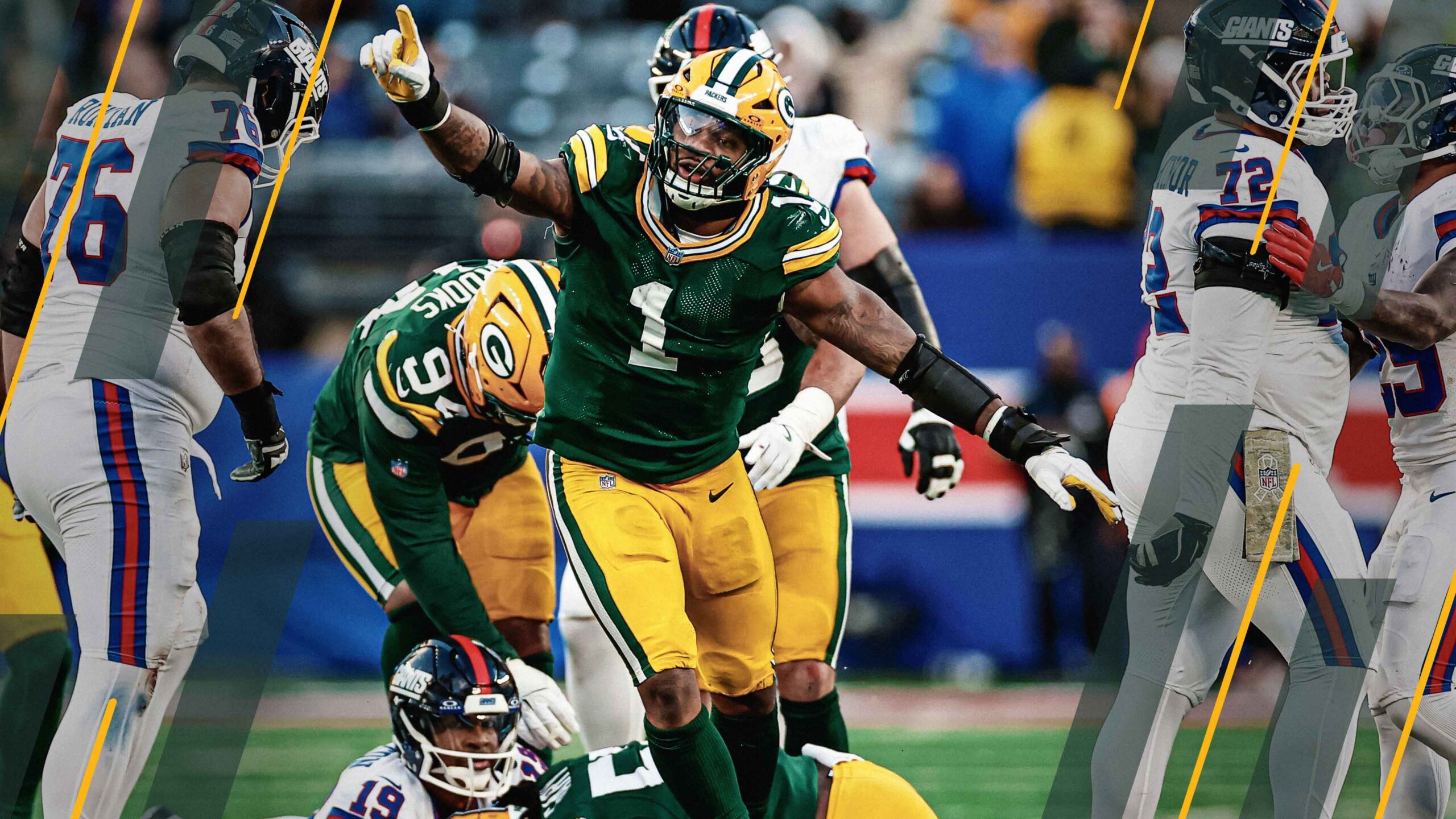
Green Bay Packers: Micah Parsons’ ACL recovery
Micah Parsons was outstanding in his first season with the Packers, generating 79 total pressures on 436 pass-rushing snaps while earning a 92.9 PFF pass-rush grade. Through five NFL seasons, he has never posted a PFF grade lower than 91.6. However, because he suffered an ACL injury so late in the season, he will not be ready for Week 1. He is set to return by mid-October, leaving a significant void in Green Bay’s pass rush.
Outside of Parsons, Lukas Van Ness and Devonte Wyatt were the only Packers defensive linemen to earn PFF pass-rush grades above 70.0 last season, posting marks of 71.3 and 71.4, respectively.
Houston Texans: C.J. Stroud’s decline
C.J. Stroud impressed as a rookie in 2023, leading all rookie quarterbacks and ranking 13th among all qualified quarterbacks in PFF grade (83.2). His performance has declined in each of the past two seasons, however, as he finished 15th in PFF grade in 2024 before falling to 32nd in 2025. That leaves the Texans facing both short- and long-term questions at the position.
In the long term, they must determine whether Stroud has shown enough to warrant a lucrative extension in a market where 12 quarterbacks already earn more than $50 million annually. In the short term, the question is whether he can put together the kind of sustained stretch needed to lead Houston on a playoff run.
As a rookie, Stroud posted four straight games with PFF grades above 80.0. In his second season, he produced another promising stretch, earning grades above 80.0 in three of four games. At just 24 years old, Stroud still has ample time to develop into the quarterback the Texans envisioned when they drafted him. But if Houston is going to realize its Super Bowl aspirations, he will either need to take another step as a passer or produce the type of postseason run that quarterbacks such as Joe Flacco and Nick Foles rode to Super Bowl titles.
Indianapolis Colts: Daniel Jones’ inconsistency
The Colts’ commitment to Daniel Jones is relatively low risk, with his contract tying him to the team for only the next two seasons. Even so, it is fair to question whether he is the long-term answer at quarterback. Jones opened 2025 strongly, ranking 10th among quarterbacks in PFF grade (80.3) through Week 8, but he fell to 32nd from Week 9 onward.
Over the full season, his 3.1% big-time throw rate ranked 34th among the 45 quarterbacks with at least 100 dropbacks, while his 3.9% turnover-worthy play rate was tied for the 13th highest. Jones’ career body of work offers little reason to expect a dramatic turnaround. Across seven NFL seasons, he has produced a higher big-time throw rate than turnover-worthy play rate just once, and his career 2.9% big-time throw rate would have ranked only 36th among those 45 qualifying quarterbacks in 2025.
Jacksonville Jaguars: The interior offensive line
The Jaguars return two projected starters on the interior offensive line who struggled in pass protection last season. Center Robert Hainsey earned a PFF pass-blocking grade below 60.0 and ranked 34th among the 40 centers who played at least 300 snaps, while right guard Patrick Mekari also finished below the 60.0 mark, ranking 67th out of 81 qualifying guards.
Jacksonville is in much better shape at both tackle spots, but the interior of the offensive line projects as one of the weaker units in the NFL entering 2026.
Kansas City Chiefs: Wide receiver production
Part of the reason for the Chiefs’ struggles in 2025 was a lack of production at wide receiver. Marquise Brown led the group with just 587 receiving yards, while Rashee Rice’s 77.2 PFF receiving grade was the best among the team’s wide receivers. Xavier Worthy also took a step back from his rookie season, with his PFF receiving grade falling from 71.6 to 66.3 and his yards per route run dropping from 1.51 to 1.25.
Rice is expected to be available in Week 1 after missing significant time in each of the past two seasons. His career average of 2.29 yards per route run highlights his status as Kansas City’s most productive wide receiver, but the Chiefs need him to stay on the field in 2026.

Las Vegas Raiders: A thin receiving corps
The Raiders have done a nice job adding talent at the skill positions in recent years, selecting tight end Brock Bowers and running back Ashton Jeanty in back-to-back NFL Drafts, but wide receiver remains a weakness. None of their returning wide receivers who saw at least 30 targets last season averaged more than 1.20 yards per route run.
Their biggest addition at the position was Jalen Nailor, who averaged just 1.06 yards per route run last season. In fact, none of the wide receivers currently on the roster ranked better than 78th among the 111 players at the position with at least 30 targets in the regular season.
That leaves 2025 second-round pick Jack Bech as perhaps their best hope for a breakout at the position. He showed flashes as a rookie but saw just 28 targets, giving him an opportunity to earn a much larger role in Year 2.
Los Angeles Chargers: Change on the defensive side of the ball
Former defensive coordinator Jesse Minter is now the head coach of the Baltimore Ravens, with Chris O’Leary taking over the Chargers’ defense. O’Leary is highly regarded after an impressive 2025 season at Western Michigan, and the scheme should remain largely similar, but replacing Minter still introduces some uncertainty.
The Chargers also lost Odafe Oweh, who led the team with an 81.0 PFF pass-rush grade during his stint in Los Angeles after arriving from Baltimore via trade. Between Oweh’s departure and the transition from Minter to O’Leary, there is reason for some caution with this defense heading into 2026, even if there isn’t necessarily reason for pessimism.
Los Angeles Rams: Left tackle
Starting left tackle Alaric Jackson will face a suspension for violating the NFL’s Personal Conduct Policy, and David Quessenberry is currently in line to replace him. Quessenberry enjoyed a strong season with the Tennessee Titans in 2021, earning a 79.2 PFF grade, but he hasn’t earned a grade above 65.0 since. He also hasn’t played more than 400 snaps in a season since then.
Miami Dolphins: The receiving corps
On paper, this is the worst receiving corps in football. The Dolphins’ top three pass-catchers by PFF receiving grade from the 2025 season — wide receivers Jaylen Waddle and Tyreek Hill, and tight end Darren Waller — are no longer on the roster. Among returning wide receivers and tight ends, Greg Dulcich led the group with just 335 receiving yards last season.
There is hope for the future after Miami selected three wide receivers within the first five rounds of the draft. Right now, though, the top of the depth chart consists of Jalen Tolbert, Tutu Atwell and Malik Washington. None of the three earned a PFF grade higher than 60.9 last season, and they combined for just 712 receiving yards across the regular season and playoffs in 2025.
Minnesota Vikings: The pass rush
The Vikings traded away edge defender Jonathan Greenard, who led the team with 47 total pressures last season. Defensive coordinator Brian Flores’ scheme relies heavily on the blitz, so linebacker Eric Wilson could once again rank among the team’s leaders in total pressures. That approach also reduces the need for a true difference-maker off the edge compared to many other defenses, but the lack of an edge defender with a PFF pass-rush grade above 75.0 does limit the unit’s flexibility.
New England Patriots: No dominant edge defender
The Patriots have talent throughout their defense, but if there’s one area to criticize, it’s the lack of a truly dominant edge defender. Gabe Jacas could develop into that player, and the addition of Dre’Mont Jones gives them another versatile piece they can move around the defensive front. Jones ranked just 25th among edge defenders in pressures (51) during the regular season last year, while Harold Landry tied for 28th in his first season in New England despite battling a lingering knee injury.
The Patriots don’t lack capable edge rushers, and they can manufacture pressure through scheme, but they would benefit from a more consistent difference-maker off the edge.
New Orleans Saints: The defense
Outside of Chase Young on the edge, there are few proven difference-makers on the Saints’ defense. Just one New Orleans defender who played at least 300 snaps earned a PFF grade above 80.0 last season: linebacker Demario Davis, who has since departed for the New York Jets. Cornerback Kool-Aid McKinstry did take a step forward in his second NFL season, with the 2024 second-round pick ranking 29th among cornerbacks with a 71.4 PFF coverage grade. The Saints also added linebacker Kaden Elliss, who provides another pass-rushing threat after his 30 pressures ranked second among linebackers last season.
Beyond Young, McKinstry and Elliss, however, this is a defense that desperately needs some of its younger players to emerge in 2026.
New York Giants: Ten new starters
Including Patrick Ricard at fullback, the Giants are projected to have 10 new starters between offense and defense. Given how well they have drafted in recent years, combined with the arrival of Super Bowl-winning head coach John Harbaugh, there is reason to believe the franchise is headed in the right direction.
At the same time, the sheer scale of the roster turnover illustrates just how much work was needed. It would not be surprising if the rebuild still requires another season before the Giants are ready to make a serious push for the postseason.
New York Jets: Quarterback
PFF grading dates back to the 2006 season, and in 20 years of data, the Jets have never had a quarterback earn an 80.0-plus PFF grade. Aaron Rodgers came closest in 2024 at 77.6. Their best hope of ending that streak is 35-year-old Geno Smith, who is coming off one of the worst seasons of his career.
They are also projected to have eight new starters on defense, meaning they’ll need to get on the same page quickly this summer to avoid a slow start.
Philadelphia Eagles: Replacing A.J. Brown
Trading A.J. Brown made long-term sense for the Eagles, netting them a first-round pick in the 2028 NFL Draft, but there’s no replacing a player of his caliber in the short term. Even in what was widely viewed as a down season, Brown still topped 1,000 receiving yards in 2025.
His departure should lead to a larger target share for DeVonta Smith, but it also places greater expectations on newcomers Dontayvion Wicks and Makai Lemon.
Pittsburgh Steelers: Aaron Rodgers is not the quarterback he was
The system and the players need to fit around Aaron Rodgers because he’s not the same quarterback he once was. His 68.0 PFF grade in 2025 was his lowest in any season in which he played at least 100 snaps. His 6.6-yard average depth of target was also the lowest of his career.
The positive to take from that is he should push the ball downfield more in 2026 with Pittman at wide receiver and McCarthy as head coach.
San Francisco 49ers: Misses on the defensive line
The 49ers need much more from their first- and second-round picks on the defensive line this season. Last season, Mykel Williams played just 385 snaps before suffering a season-ending injury, earning a 54.7 PFF grade and generating only 19 pressures on 245 pass-rushing snaps. Alfred Collins stayed healthy and logged 550 snaps, but his 35.0 PFF grade was tied for the second-lowest among the 94 interior defenders who played at least 300 snaps.
San Francisco still has plenty of talent on defense, but not enough to absorb misses on premium draft picks along the defensive line. Both Williams and Collins will be expected to take significant steps forward in 2026.
Seattle Seahawks: A new offensive coordinator
The Seahawks did lose offensive coordinator Klint Kubiak, who left to become the Las Vegas Raiders’ head coach. Brian Fleury replaces him after spending the past seven seasons with the San Francisco 49ers, where he served as run game coordinator and tight ends coach in his final year.
With Sam Darnold still at quarterback and the talented receiving corps around him, Seattle has more than enough talent to remain one of the NFL’s better offenses. Even so, a transition to a new playcaller could bring some early growing pains.
Tampa Bay Buccaneers: The defensive interior
Outside of Vita Vea, there are significant question marks along the Buccaneers’ defensive interior heading into 2026. Calijah Kancey missed most of his third NFL season and has earned PFF grades below 50.0 in each of his first three years. He has flashed as a pass-rusher, but his PFF pass-rush grade, pressure rate and total pressures all declined from his rookie season in 2023 to 2024, with his pass-rush grade falling again over a limited sample in 2025. Veteran A'Shawn Robinson provides experience alongside Vea and Kancey, but he has not earned a PFF grade above 65.0 since 2021, leaving Tampa Bay with plenty of uncertainty beyond Vea on the interior.
Tennessee Titans: The offensive line, especially left tackle
Peter Skoronski has developed into a reliable presence on Tennessee’s offensive line, leading the team with an 84.5 PFF pass-blocking grade last season. Right tackle JC Latham also showed encouraging improvement down the stretch, but there are still significant questions across the unit, particularly at left tackle.
The Titans signed Dan Moore Jr. ahead of the 2025 season in the hope he would solidify the position, but he allowed 48 total pressures, tied for the third most among all offensive linemen. Austin Deculus was added in free agency to provide competition, though after earning a 36.5 PFF grade — the third-lowest among qualifying offensive linemen in 2025 — he is unlikely to pose a serious challenge for the starting job.
Washington Commanders: Receiver depth behind Terry McLaurin
Terry McLaurin remained productive when healthy in 2025, averaging 2.22 yards per route run despite an injury-shortened season. Beyond him, however, Washington lacks a proven receiving threat who consistently challenges opposing defenses. Treylon Burks has averaged fewer than 1.00 yards per route run in each of the past three seasons, while Dyami Brown has never topped 350 receiving yards in a regular season across his five-year career. Luke McCaffrey showed promise, averaging 1.90 yards per route run last season, but he has seen just 42 targets through his first two NFL seasons.
If rookie Antonio Williams can make an immediate impact, it would provide a significant boost to what is, on paper, one of the league’s weaker wide receiver groups.


 © 2026 PFF - all rights reserved.