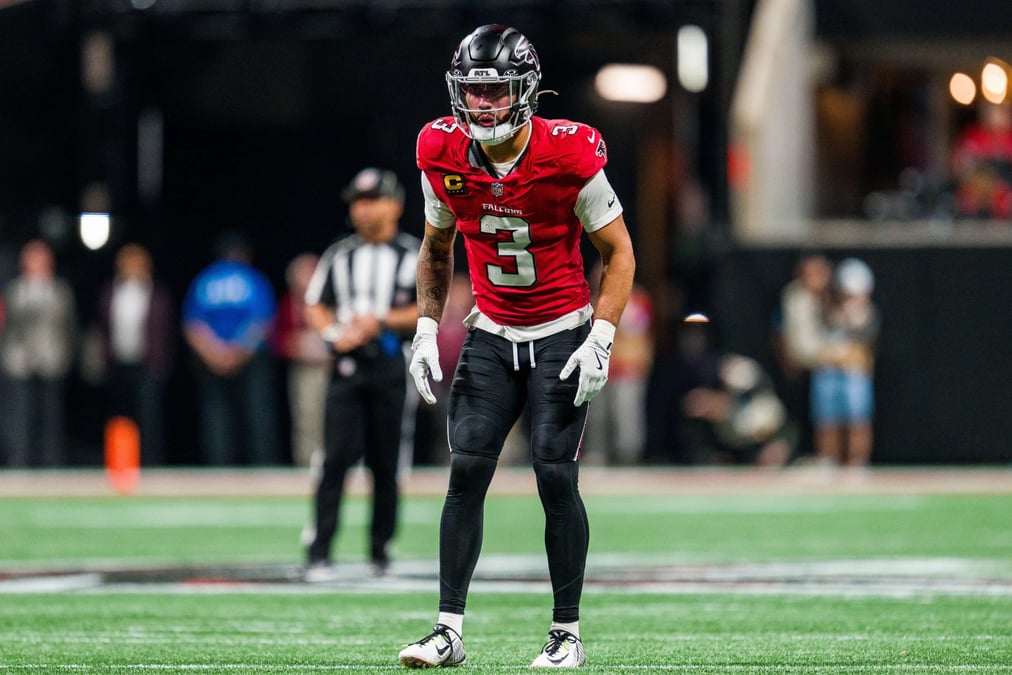
- The 49ers earn the highest mark: San Francisco is the only team to receive an A after landing both DeForest Buckner and Keenan Allen, two veterans still performing at a high level that mitigate positional weaknesses.
- Not what was optimal from the Bengals or Chargers: Cincinnati failed to upgrade a defense with several problems, while Los Angeles did not turn its remaining talent into high-end draft picks.
- Contenders make big splashes: The Bears, Jaguars and Bills all garner praise after parting with sizable draft capital to load up for a Super Bowl 61 run.
After months of speculation and weeks of maneuvering, the 2026 NFL trade deadline is complete. While the actual day of the deadline itself didn’t prompt quite the level of blockbusters we witnessed last season, tons of big names were on the move over the past month, and acquisitions came in a fairly steady stream.
Some teams got noticeably better, making gambles on underlying talent and wagering significant future draft capital. Others either failed to capitalize on their current standing or their need to sell off valuable pieces. Below is how every NFL team fared, rooted in their individual trade grades from PFF’s Trade Tracker — where you can find in-depth analysis of every move.
Click here to jump to a team:
ARI | ATL | BAL | BUF | CAR | CHI | CIN | CLE | DAL | DEN | DET | GB | HOU | IND | JAX | KC | LV | LAC | LAR | MIA | MIN | NE | NO | NYG | NYJ | PHI | PIT | SF | SEA | TB | TEN | WAS
Arizona Cardinals: B+
The Cardinals looked like a clear seller entering Nov. 10, and they did well to acquire top capital for players either performing poorly or with minimal roles. The swap for Marvin Harrison Jr. to the Texans — garnering a second-round pick for a player who had averaged 0.60 yards per route run prior to the trade — was especially strong. However, it does feel like the Cardinals should have tried harder to move other veterans like Zaven Collins, Mack Wilson and Budda Baker to capitalize on their performance while still under contract.
Atlanta Falcons: B-
It was a bit of an odd deadline for Atlanta, which sold off two starters in safety Jessie Bates III and center Ryan Neuzil despite being squarely in the NFC South mix. Losing Bates’ 0.06 PFF Wins Above Replacement — tied for second among all safeties — won’t be easy to recuperate, although Atlanta did well in notching a second-and fifth-round pick for a veteran on an expiring contract. On the other hand, shipping away Neuzil for a sixth and guard Andrew Vorhees was rather puzzling. At 3-6 but not out of the playoff picture, general manager Ian Cunningham was in a bit of a tricky spot and performed to mixed results.
Baltimore Ravens: B-
Despite sitting at 4-5, the Ravens chose to buy in an effort to salvage what’s been a thoroughly disappointing season. Adding Jacoby Brissett (69.2 PFF passing grade) for a fourth-round pick feels like a stabilizing move given Joe Fagnano’s performance (31.1), with the veteran hoping to bridge the gap to a Lamar Jackson return. However, the trade for Cam Jurgens looks a bit overly aggressive considering his career-worst 43.9 overall PFF grade this season. Adding in Ryan Neuzil as depth reinforces the interior of the team’s interior offensive line, where general manager Eric DeCosta has continued throwing darts to overcome injuries.
Buffalo Bills: B+
The Bills came into the deadline with a major need in the secondary, and they filled that in landing Amani Hooker — the league’s fourth-highest-graded safety this season. While Hooker cost a second-round pick, him being under contract through 2028 is a major plus, as is his well-rounded skillset. Perhaps Buffalo could have added another cornerback or pass-rusher, but this feels fairly sufficient for Brandon Beane in making the team better for the postseason.
Carolina Panthers: C
The Panthers sat idle instead of either buying or selling, which two of their divisional counterparts did. If anything, it felt as though Carolina should have acquired a cornerback considering the team’s room sits 30th in overall PFF grade amid the prolonged absences of Mike Jackson Sr. and Jaycee Horn. Further, general manager Dan Morgan would have been wise to beef up his offensive line, particularly a tackle room where both starters own a sub-63.5 PFF pass-blocking grade.
Chicago Bears: A-
The Bears made the headliner move of the deadline, landing All-Pro interior defender Jeffery Simmons from the Titans in exchange for two first-round picks and more. Given Simmons’ 80.9 PFF pass-rush grade in two games with Chicago, the move already seems to be paying dividends to galvanize the franchise’s Super Bowl push. Simmons alone is worthy of high marks, but it’s fair to wonder if Ryan Poles could have explored more defensive help —especially in a secondary that places 31st in overall PFF grade.
Cincinnati Bengals: F
It’s hard to find a team that disappointed more given the circumstances than the Bengals. Cincinnati failed to execute any trade to bolster a roster with title aspirations, not addressing needs at cornerback, linebacker or edge defender. If anything, the team made headlines for the wrong reasons by voiding an acquisition for Arnold Ebiketie after a social media user detected the move would negate Cincinnati’s upcoming compensatory third-round pick. Considering that Joe Burrow looks like the MVP favorite and the Bengals have the best odds to win the AFC North, this was a swing and a miss for a franchise squarely in a championship window.
Cleveland Browns: B-
The Browns neither added nor subtracted before Tuesday’s deadline, which mostly makes sense given the team’s 5-4 record but generally poor outlook as a contender throughout the rest of 2026. However, Cleveland would have been shrewd to try to notch picks for underperforming players who aren’t on long-term contracts, including safety Ronnie Hickman (48.1 PFF coverage grade) and receiver Jerry Jeudy (60.8 PFF receiving grade). Even attempting to move Deshaun Watson (54.0 PFF passing grade) would have been a success given his performance and the chance to evaluate younger passers on the roster.
Click here to subscribe to PFF+
Dallas Cowboys: B+
The Cowboys made an early upgrade at cornerback by snagging Joey Porter Jr. from the Steelers but did little else. While Porter has thrived with a 71.2 PFF coverage grade, his presence alone has failed to transform a Dallas defense that still sits 32nd in EPA per play. Given Jerry Jones’ penchant for giving up critical resources — and his team’s continued inability to string together cogent play — maybe it’s a good thing that the Cowboys didn’t make any other moves.
Denver Broncos: B
Denver entered Nov. 10 with the biggest need at running back but instead acquired linebacker Daiyan Henley from the Chargers. While Henley’s athleticism and sharp tackling should be better than what Alex Singleton and Justin Strnad have provided, paying a fourth- and fifth-round pick for a contract-year player who owns a 38.3 PFF coverage grade is quite aggressive. By not adding any rusher, Sean Payton will count on rookie Jonah Coleman to rescue an offense with the league’s worst PFF rushing grade.
Detroit Lions: C-
The Lions did add another piece to their secondary in safety Andre Cisco, whose 81.1 PFF run-defense grade and ability to play free safety can help as depth with Kerby Joseph still sidelined. Nonetheless, this felt like a missed opportunity for Detroit to add an impact cornerback or linebacker given the team’s glaring needs at the positions. While other teams in both the NFC North and the conference got significantly better, Detroit mostly stayed the same — and now must rely that much more on its juggernaut offense.
Green Bay Packers: C
The Packers did not add any notable players prior to the trade deadline, which was quite disappointing given the season-ending injuries suffered by several defensive starters, an ineffective run game as well as the woes of the league’s lowest-graded offensive line. It’s true that Green Bay will get Micah Parsons back and has worked players like Kevin Zeitler into the mix, but the onus falls that much more on Jordan Love’s heroics and a well-coached defense sitting eighth in EPA per play.
Houston Texans: B-
The lone maneuver the Texans made was acquiring Marvin Harrison Jr. from the Cardinals. Harrison has found some success reunited with C.J. Stroud, averaging 1.94 yards per route run, but the trade-off of the move is relinquishing a second-round pick in a receiver room that’s already incredibly crowded. It didn’t seem overly likely for the Texans to make any other additions, although another running back may not have been unwise given David Montgomery and Woody Marks both posssess a sub-68.0 PFF rushing grade.
Indianapolis Colts: C-
The lowly Colts sold off four quality players in Quenton Nelson, DeForest Buckner, Josh Downs and Keenan Allen, but none fetched more than a third-round pick. In light of the team’s 2-7 record and path toward a rebuild, it felt illogical to retain Jonathan Taylor — for whom teams had reportedly offered a second-round pick — as well as Grover Stewart. Not selling in earnest would have been the worst-case scenario, but Indianapolis didn’t capitalize on restocking its draft capital down a first-round pick.
Jacksonville Jaguars: A-
The Jaguars were the biggest shakers during the deadline, adding three defensive talents in Jessie Bates III, Jordan Davis and Davon Godchaux. While Bates and Davis come at the cost of premium picks, they help fill voids left by Eric Murray and DaVon Hamilton while potentially presenting longer-term upgrades. The uber aggressive James Gladstone only reinforced his budding image by making deals with serious risks — including giving up a first-round pick for an interior defender owning a 63.5 PFF pass-rushing grade — but he also made his team better and went full throttle toward a Super Bowl. Considering the Jaguars enter Week 10 tied for the fourth-best title odds, it’s hard to blame him.
Kansas City Chiefs: A-
The Chiefs simply had to land a receiver before Tuesday evening, and they did just that in Josh Downs — the best wideout who was ultimately moved. Downs’ 76.7 PFF receiving grade against man coverage will provide a boost to a receiving corps that places 25th in overall PFF grade. The move may force Rashee Rice to play more outside and doesn’t quite replace Tyquan Thornton’s verticality, but it is at least a meaningful upgrade in an offense sitting 10th in passing EPA per play.
Las Vegas Raiders: B
The Raiders entered Tuesday with presumably no plans to trade Kirk Cousins, whose 75.5 PFF passing grade ranks 12th among qualifiers. However, turning half a season of a 38-year-old, limited quarterback into a third-round pick is wonderful business. The only gripe for Las Vegas would be potentially not maximizing their leverage enough given how much the Vikings were in demand for a quarterback.
Los Angeles Chargers: F
Every November, the NFL’s worst teams collectively realize that dealing good players — especially those on expiring contracts — is the best way to reset for the long run. The Chargers completely repudiated that ideology, only moving Daiyan Henley. Talents like Tuli Tuipulotu, Khalil Mack, Donte Jackson, Quentin Johnston and more simply should not have been kept on an 0-8 team that will need considerable help at multiple positions moving forward — and which might have a new coaching staff in 2027.
Los Angeles Rams: D
The Rams went into Tuesday down their top two receivers and also without standout corner Jaylen Watson for the season. Instead of plugging those sizable voids, the team did nothing. Perhaps general manager Les Snead did not want to part with more capital after acquiring Myles Garrett in June, or maybe he’s not confident in an injury-laden season actually working out — but his inactivity was puzzling in light of the lengths Snead went to build an all-star lineup this summer. While the 49ers, Seahawks and Bears got better, the unchanged Rams are now relying on a declining Matthew Stafford, paper-thin receiving corps and standout defense to claw them to the postseason.
Miami Dolphins: B-
After trading away most big contracts this offseason, the Dolphins were uncharacteristically quiet this time around. Miami could have moved Zach Sieler, but a season-ending torn biceps obscured any potential move. The fact that the team retained 2027 free agents Josh Uche (66.9 PFF pass-rush grade) and Austin Jackson (45.3 overall PFF grade) was a tad surprising, but there also wasn’t a wild sense of urgency considering the team’s lack of outright healthy stars.
Minnesota Vikings: B
Minnesota had almost no choice but to find a quarterback or running back before Nov. 10, and it did that in adding Cousins. The former Viking will be a legitimate upgrade over Kyler Murray and Carson Wentz, and landing the sixth-best quarterback by WAR for only a third-round pick was savvy. It would have been prudent to see Minnesota also find a solution at running back given the team’s 23rd-ranked offense by PFF rushing grade, but at least something was done to address the offensive calamities.
New England Patriots: B
The Patriots, in a bit of purgatory, didn’t make any trades on Tuesday — and it didn’t feel like they totally had to. Maybe New England could have obtained more offensive line depth given the injuries to the team’s guards, but Matt Pryor (76.1 overall PFF grade) has been a worthwhile fill-in for Mike Onwenu. With the Patriots also in the playoff picture, trading away someone like Christian Barmore would have only lowered those postseason odds.
New Orleans Saints: A-
Like lots of other teams on this list, the Saints probably weren’t good enough to be buyers but weren’t quite looking to sell, either. The lone move New Orleans made was a fruitful one, landing a sixth-round pick for rotational interior defender Davon Godchaux. With Jordyn Tyson, Kelvin Banks Jr. and Travis Etienne Jr. all slated to return soon, it’s understandable why the 3-5 Saints didn’t get overly aggressive.
New York Giants: A-
The Giants got the trade party started when they added J.J. McCarthy from the Vikings in September. The move already possessed little risk given it cost a fifth-round pick, and McCarthy (78.5 PFF passing grade) has helped keep New York afloat in a porous division. With a backup quarterback for 2026, it would have been foolish for the Giants to make other noisy trades, although landing Jonathan Taylor would have presented a multi-year answer to an uncertain running back room.

New York Jets: C-
The Jets have looked hapless for much of Aaron Glenn’s second season, but the only player that they turned into draft capital was Andre Cisco. Given how willing general manager Darren Mougey was to move two blue-chip talents last year, not letting up names like Will McDonald, Kingsley Enagbare and Brandon Stephens was curious at best. The same applies for Geno Smith, whose 81.2 PFF passing grade would have generated a good return on a quarterback who’s likely a patchwork solution.
Philadelphia Eagles: A-
It’s always tough to get a read on what Howie Roseman will do, and it would have been surprising if the league’s most forward-thinking general manager didn’t sell off at least one marquee player. Retrieving a first- and second-round pick for Davis, who owns the 24th-ranked overall PFF grade at his position, was outstanding. Yet Roseman also probably should have dealt pending free agents like Riq Woolen, Dallas Goedert and Arnold Ebiketie, if not considered trading major names like Zack Baun and Cooper DeJean.
Pittsburgh Steelers: C
The Steelers came into the trade deadline in pursuit of more depth at receiver and cornerback but ended up empty-handed, only moving on from Porter prior. While Pittsburgh figures to return Michael Pittman Jr. and Roman Wilson, its receiver room ties for last in collective PFF receiving grade and has had trouble both catching the ball and finding consistent separation. Further, rookie Daylen Everette (70.8 overall PFF grade) has flashed in limited snaps, although the Steelers lack much depth behind Jamel Dean. General manager Omar Khan wasn’t compelled to make a move, but the Steelers stayed stagnant while other likely AFC playoff teams got better.
San Francisco 49ers: A
The 49ers recognized their deficiencies and attacked them head-on over the last few weeks. A reunion with Buckner (72.5 PFF pass-rush grade) provides another talented presence along a defensive line that lacked legitimate threat. Meanwhile, Allen (72.3 PFF receiving grade) will bring reliable hands and work against zone coverage to an injured receiving corps. While John Lynch didn’t necessarily hit a home run, he did make his roster that much more primed for a title run.
Seattle Seahawks: B+
The Seahawks executed a stunner when they nabbed All-Pro guard Quenton Nelson from the Colts. Seattle paid a hefty price tag for a 30-year-old guard in the final year of his contract, but Nelson’s 87.5 overall PFF grade — the second-best at the position — helps solidify one of the only weak points on the team’s roster, along with possibly a pass-rushing edge defender and running back. Buoyed by his resounding history of midseason trades, general manager John Schneider struck again in the hopes of getting Seattle back to the playoffs.
Tampa Bay Buccaneers: B-
The Buccaneers, like basically every other team in the NFC South, were stuck between a rock and a hard place at the deadline. It wouldn’t have made much sense for 3-6 Tampa Bay to buy, but making yourself worse in a spirited division race also doesn’t feel optimal. The Buccaneers probably should have dangled pending free agents like Yaya Diaby, Al-Quadin Muhammad and A’Shawn Robinson, but not moving one of them isn’t cataclysmic for a team that could wind up as the NFC’s No. 3 or 4 seed.
Tennessee Titans: B
The uninspiring Titans were right to net what they could for multiple standouts before Tuesday afternoon. Turning Simmons and Hooker into two first-round picks, a second and a fourth was tremendous work by general manager Mike Borgonzi, who recognized that his team was better off establishing its future roster. However, keeping veterans Tony Pollard (86.5 PFF rushing grade) and Calvin Ridley (52.8 overall PFF grade) detracted from the team’s overall operation, as both veterans likely won’t have a role moving forward and could have provided more resources.
Washington Commanders: C+
The Commanders did not make the most of their opportunity to be sellers, particularly given the players at their disposal that would have returned what would presumably have been at least moderate capital. Losing Daron Payne to a season-ending foot injury may have taken some wind out of the trade sails, but Stefon Diggs (70.1 PFF receiving grade), K’Lavon Chaisson (65.6 overall PFF grade), Frankie Luvu (62.6 overall grade) and Rasul Douglas (66.7 overall grade) are all veterans on one-year contracts who don’t look to be multi-year solutions. Washington wouldn’t have converted any of those names into a top-50 pick, but retaining them doesn’t mesh with the team’s 2-5-1 start.

 © 2026 PFF - all rights reserved.