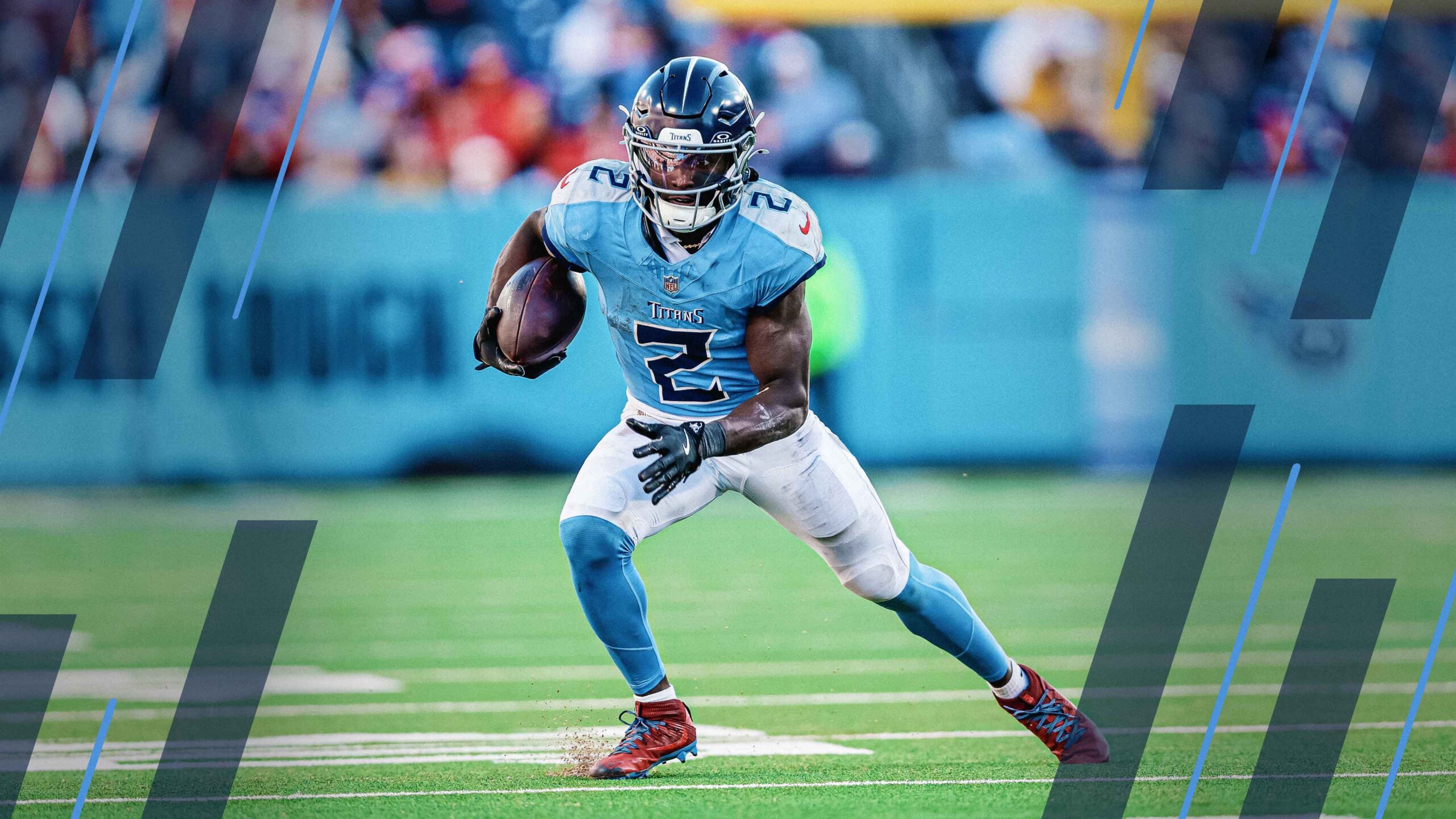
- The Tennessee Titans need an offensive weapon: The Titans have the fourth overall pick in the draft, and will ideally select a running back or wide receiver to help Cam Ward.
- The Cleveland Browns need at least one wide receiver: The Browns had the lowest graded wide receiver room last season and haven’t made any changes to the room yet.
- 2026 NFL Draft season is here: Try the best-in-class PFF Mock Draft Simulator and learn about 2026's top prospects while trading and drafting for your favorite NFL team. Get 25% off your PFF+ annual subscription with code PFFFANTASYPODCAST25.
Estimated Reading Time: 18 minutes
The bulk of free agency that impacts fantasy football has come and gone, and most of the obvious team needs have been filled. The majority of teams that needed a quarterback or running back either made a trade or added a free agent to fill that need. There was minimal movement at tight end, leaving every team with either their same receiving tight end from last season or a new one from free agency.
A few teams that needed a wide receiver found a free agent, but with a deep draft class, most teams have opted to wait for the draft.
Regardless of the position, here are the teams that are most likely to draft a quarterback, running back, wide receiver or tight end and how good that landing spot would be for fantasy purposes. Opportunity for playing time and touches was weighed more heavily than potential new teammates.
Running Back
1. Tennessee Titans
The Titans have spent the last two seasons using a two-man backfield of Tony Pollard and Tyjae Spears. The duo finished in the bottom half of the league in terms of team offensive grade at running back each of those seasons.
Both players are in the final year of their contract. If the Titans invest heavily enough in a running back in the draft, then either Pollard or Spears could be released for some cap savings with minimal dead money. The Titans also changed coaching staffs this offseason, further suggesting the team might want to go in another direction at running back.
The Titans have the fourth pick in the draft, putting them in a prime position to select Jeremiyah Love. Other teams that had a top-10 pick and needed a running back already addressed the position in free agency.
2. Cincinnati Bengals
Most teams had a running back with at least a 77.0 PFF offensive grade, at least an 81.0 PFF run grade, recently invested a first or second round draft pick on a running back, or added a new running back in free agency or through a trade. The only exceptions are the Titans and the Bengals.
Chase Brown has been the Bengals' lead running back and has been very successful from a fantasy perspective. He’s finished among the top five running backs in receptions and receiving touchdowns each of the last two seasons, but his receiving grade has been on the decline each year. While the Bengals like him, a good young running back would be capable of winning the job and seeing similar, or even better, fantasy production.
Cincinnati made no changes to its backups. Samaje Perine has been the third-down back and will turn 31 years old before the season. His playing time rose as the season progressed. Tahj Brooks was the third-string running back, but Cincinnati only ever trusted him on offense when one of the other running backs was injured.
A rookie should be able to earn the primary backup job on early downs. If he’s playing well enough or if Brown suffers an injury, then they will have a chance to start.
3. Seattle Seahawks
The Seahawks had a two-man committee of Kenneth Walker III and Zach Charbonnet last season. Walker left for the Kansas City Chiefs in free agency, while Charbonnet suffered a torn ACL in January and didn’t have surgery until February. That puts his return timeline between late October and December, and he might not be at 100% even when he’s able to play.
The Seahawks' only free-agent addition was Emanuel Wilson, the former backup for the Green Bay Packers. They have plenty of other options, including Kenny McIntosh, George Holani, Cam Akers and Velus Jones Jr., but it’s possible a rookie could beat out all of them for the Week 1 starting role. If they play well enough, they could remain a large part of the offense, similar to Walker, even when Charbonnet is back.
4. Indianapolis Colts
The Colts have struggled to find a backup for Jonathan Taylor in recent seasons. Zack Moss, Trey Sermon, Tyler Goodson and Ameer Abdullah are the top four running backs in snaps outside of Taylor in the last three seasons, and all four are free agents. Last season, they took swings at D.J. Giddens and Khalil Herbert, but ended up with 32-year-old Abdullah as the backup.
Currently, Giddens and Ulysses Bentley IV are the only other running backs on the roster. Any rookie drafted in the first four rounds would immediately land second on the depth chart.
Taylor has missed time in three of the last four seasons and has run over 300 times each of the last two years. There is a solid chance Taylor will miss at least some time next season due to an injury, in which case the backup will be playing behind one of the better run-blocking offensive lines.
5. Atlanta Falcons
Several teams signed free agent running backs who could arguably still need a running back, but they would be part of three or four-man committees. There are also a few other teams with a clear need for a backup, including the Dallas Cowboys and Las Vegas Raiders. The Falcons are the best landing spot among the teams that need a clear backup.
For all three teams, their top running back will remain their top running back when healthy for the foreseeable future. Javonte Williams with the Dallas Cowboys is most in danger of losing his starting job, but he also signed a contract that will leave him in Dallas for at least the next two seasons.
Atlanta is the most attractive spot thanks to the offensive line. The Falcons ranked 10th in run block grade last season, but they didn’t have Kaleb McGary for the entire season, and he should be back this season. Atlanta moved on from Tyler Allgeier, and the only other running backs on their roster outside of Bijan Robinson are former undrafted rookies with minimal experience on offense.
Wide Receiver
1. Cleveland Browns
Last season, 10 teams had a team PFF wide receiver receiving grade below 70.0. Seven teams have made one or more moves in free agency to improve their team, and two teams dealt with significant injuries at the position. The one wide receiver room that looks similar to last season is the Browns, and they had the lowest team PFF receiving grade of the group.
Jerry Jeudy, Cedric Tillman, Isaiah Bond, Malachi Corley, Gage Larvadain and Jamari Thrash were the six wide receivers for Cleveland last season, and they remain the top six on the depth chart at the moment. Corley was the only one with a PFF receiving grade above 60.0, at 65.1, but he only caught 11 passes for 789 yards. Jeudy was the only wide receiver with more than 25 receptions, and he caught 50 for 602 yards.
If the Browns spend a first-round pick on a wide receiver, he would likely end up as the top wide receiver on the depth chart. Cleveland could also spend multiple draft picks on wide receivers and have two rookies in the top three on the depth chart.
2. Miami Dolphins
The Dolphins recently had one of the best wide receiver rooms with the duo of Tyreek Hill and Jaylen Waddle, but Miami released Hill and traded Waddle this offseason. Nick Westbrook-Ikhine, Cedrick Wilson Jr. and D’Wayne Eskridge are among the veterans who ran at least 50 routes for Miami last season and are no longer on the roster.
This left Malik Washington as the most notable wide receiver remaining on the roster, but Miami only trusted the 5-foot-8 receiver in three wide receiver sets out of the slot. At a 5.1-yard average depth of target, Washington fills a specific role.
Miami added two veteran wide receivers in free agency. Jalen Tolbert, who had fallen to fifth on the Dallas Cowboys‘ depth chart over the second half of the season, and Tutu Atwell, who fell to sixth on the Los Angeles Rams ‘depth chart. Luckily, from trading Waddle, among other trades, Miami has seven picks in the first three rounds, giving the team a chance to add multiple rookie wide receivers.
3. Las Vegas Raiders
The Raiders had a great wide receiver duo at the start of the 2024 season in Davante Adams and Jakobi Meyers, but both were traded away. Tre Tucker, who started that 2024 season as the third wide receiver, served as the Raiders' top wide receiver at the end of last season.
Las Vegas spent two early picks on wide receivers last season in Jack Bech and Dont’e Thornton, but neither was able to consistently maintain a starting job. They were held to a combined 30 receptions.
The Raiders made one free agent addition in Jalen Nailor, who had been the Minnesota Vikings‘ third wide receiver. He is the highest graded wide receiver currently on the roster, but he’s never had a game of more than five receptions in his four NFL seasons.
Las Vegas takes the second spot because there is an opportunity for a rookie to end up leading the wide receiver room in receiving production. However, the Raiders won’t draft a wide receiver in the first round, and if they wait until the third round, they might not crack the top three spots on the depth chart.
4. New York Jets
The Jets had eight different wide receivers run at least 150 routes last season, but half are no longer on the roster. The only wide receiver from the group with a 62.0-plus PFF receiving grade was Garrett Wilson, but he ended last season due to a knee injury. Wilson's presence was enough to disqualify the Jets from either of the top two spots.
The next two players on the depth chart are Adonai Mitchell and Isaiah Williams. They both started the 2025 season with different teams and ended the season as starters. Arian Smith is penciled in to the fourth spot on the depth chart, but he only caught seven passes despite leading the wide receiver room in routes at 245.
The Jets have the second, 16th, 33rd and 44th picks in the NFL draft and could pick two wide receivers who would likely start the season as second and third on the depth charts. Unlike the Browns and Raiders, the Jets don’t have a tight end with a high target rate, so a rookie wide receiver may end up second on the team in targets.
5. Tennessee Titans
The Titans have an interesting collection of wide receivers, including veteran Calvin Ridley coming back from injury, free agent newcomer Wan’Dale Robinson, and former fourth-round picks entering their second season in Chimere Dike and Elic Ayomanor.
On one hand, the Titans are more likely to enter the season with these four wide receivers than the other teams on this list will enter with their current slate of receivers. On the other hand, the Titans have a clear need for a top overall wide receiver. Dike and Ayomanor didn’t do anything to show they could be top wide receivers last season, and Robinson is more of a slot receiver than a number one option.
While Ridley has acted as a team’s top option at times, his receiving grade has been below 75.0 in six of his seven NFL seasons, and the one exception was 2020. If the Titans don’t use their first-round pick on Jeremiyah Love, then it’s possible they stand pat or trade back and select a wide receiver. Even a second-round pick could eventually emerge as the top player on the depth chart.
6. New Orleans Saints
The Saints started last season with Chris Olave, Rashid Shaheed and Brandin Cooks as their top wide receivers but moved on from Shaheed and Cooks midseason. Olave is a fine WR1 option.
New Orleans traded for Devaughn Vele before the season, and for a short time, he was the Saints' WR2. He was held to 15 yards or fewer during his first 10 games with the team, but he caught 19 passes for 239 yards over his final four games before injury cut his season short. Vele has graded well enough to be their WR2, but that grade has come on a relatively small sample size.
The Saints are the team most in need of a WR3. Mason Tipton, Kevin Austin Jr. and Ja’Lynn Polk are their top options on the roster. However, if the team drafts someone as the third option, there is a chance they could overtake Vele for the second option.
Chris Olave has a history of concussions, tight end Juwan Johnson will be 30 years old before the start of the season, and head coach Kellen Moore has a history of limiting receiving usage for running backs. There is a possibility that a Saints rookie wide receiver leads the room in receiving yards.
Tight End
1. Denver Broncos
There was minimal movement among the top receiving tight ends in free agency. Baltimore Ravens backup tight end Isaiah Likely now leads the New York Giants, while Tennessee Titans receiving tight end Chig Okonkwo has taken over for Zach Ertz with the Washington Commanders. The Titans were already moving more towards Gunnar Helm. That means there is no team with a glaringly obvious spot open for a new lead receiving tight end.
That leaves the teams that had the least production out of their tight ends. The Broncos were one of five teams with 800 or fewer yards and six or fewer touchdowns by their tight ends. The Detroit Lions are another, but Sam LaPorta dealt with an injury. The New York Jets are another, but they spent a second-round pick on Mason Taylor last season. The Tampa Bay Buccaneers are a third, but they just signed Cade Otton to a three-year contract.
This leaves the Broncos as one of two teams with the least production and no reason to expect improvement next season. Evan Engram was the Broncos' receiving tight end last season, but he only had one game of more than 45 yards and one touchdown on the season. He will also be 32 years old before the start of the season. Engram has a 64.3 PFF receiving grade over the last two seasons, ranking ninth-lowest among those with at least 500 routes. Five of the eight below him are no longer starting NFL tight ends.
While a rookie tight end might not be able to immediately overtake Engram for the receiving role, the opportunity to catch passes from Bo Nix and play with Sean Payton, who has a solid history of receiving production from tight ends, is enough to put the Broncos in the top spot.
2. Carolina Panthers
The Panthers are the other team with minimal production from their tight ends haven't made changes from last season.
The Panthers have spent the last two seasons with Tommy Tremble and Ja’Tavion Sanders as their two receiving tight ends. Thirty-seven tight ends have run 500 or more routes over the last two seasons, and they have the two lowest grades from that group.
Carolina is the best spot for a rookie tight end to have an immediate impact, but they might not have as much upside as in Denver. During head coach Dave Canales’ two seasons as head coach of the Panthers, as well as his one year as the offensive coordinator of the Tampa Bay Buccaneers, his teams have ranked among the bottom four in target rate to tight ends. Ideally, a better tight end would change that, but there’s no guarantee that would happen.
3. Kansas City Chiefs
Travis Kelce has decided to return for another NFL season, which immediately puts a ceiling on any tight end who lands in Kansas City, but there is still more of an opportunity in Kansas City than in most other teams.
The Chiefs are one of three teams to use 12 personnel for at least 30% of their pass plays over the last two seasons. The others are the Baltimore Ravens, who had Mark Andrews and Isaiah Likely, and the Las Vegas Raiders with Brock Bowers and Michael Mayer.
Noah Gray has been the second receiving tight end for Kansas City, but his PFF receiving grade suggests Kansas City could go with another option. The addition of Kenneth Walker III could further increase their 12-personnel usage. Kansas City has also tended to use more 12 personnel when it is thin at wide receiver, and that could be the case for the entire 2026 season.
That means that Kansas City could be the top team in receiving 12 personnel usage. It’s exceptionally rare for a team to have two fantasy-relevant tight ends, but it’s possible if the Chiefs offense is living up to its potential.
At worst, a tight end drafted here would need to learn a year or two behind Kelce and then take Kelce’s spot.
Quarterback
1. Las Vegas Raiders
Almost every team that had an obvious need for a quarterback addressed the position in free agency, but one exception was the Raiders. Las Vegas has the first overall pick, and its lack of interest in free agent quarterbacks has made it even clearer that Fernando Mendoza will be the first overall pick of the draft.
Now that the starting quarterbacks for up to 30 teams are likely under contract, we can still expect the Raiders to have a veteran for the start of the season. Regardless, the Raiders are the only spot where a rookie is expected to start this season, making them the obvious best spot for a rookie.
2. Pittsburgh Steelers
The Steelers' depth chart currently consists of Mason Rudolph and Will Howard. While there is a general expectation that Aaron Rodgers will re-sign with the Steelers, that is no guarantee. The possibility that Rodgers doesn’t re-sign is enough to put the Steelers in the second spot.
In that scenario, the Steelers will likely turn to a different veteran quarterback rather than a rookie. Kirk Cousins, Tyrod Taylor, Jimmy Garoppolo, Russell Wilson, Joe Flacco, Derek Carr and Carson Wentz are among the several veteran quarterbacks on the market.
Regardless of who is starting for Pittsburgh, they will be among the oldest starting quarterbacks in the NFL, unless they stick with Rudolph or go with Howard. If the Steelers aren’t doing well, then they could be one of the top potential teams to turn to a rookie late in the season.
3. Arizona Cardinals
The only other team with a decent chance of a quarterback starting this season without an injury is Arizona. The Cardinals moved on from Kyler Murray, likely leaving Jacoby Brissett as the Week 1 starter. Brissett will be 34 years old by the end of the season and is not the long-term solution.
If the Cardinals draft a rookie quarterback in the second, third or fourth round, it wouldn’t be surprising to see them starting at some point this season if the Cardinals aren’t in the playoff picture. Arizona signed Gardner Minshew II to be its backup quarterback, so it’s also possible that the Cardinals draft a quarterback who ends up third on the depth chart.
The New York Jets are the only other team who don’t have their long-term quarterback on the roster, as Geno Smith will be 36 years old by the end of the season. The Jets have three first-round picks in 2027, making it very likely they draft a quarterback next year. The fact that they are unlikely to prioritize a quarterback this season keeps them out of the top three.
It’s also worth noting there are a few teams like the Los Angeles Rams, Green Bay Packers and Tampa Bay Buccaneers, who are all in need of backup quarterbacks. An argument could be made that it would be better to be a potential injury away from leading one of those offenses rather than a potential late-season starter for Arizona.

 © 2026 PFF - all rights reserved.