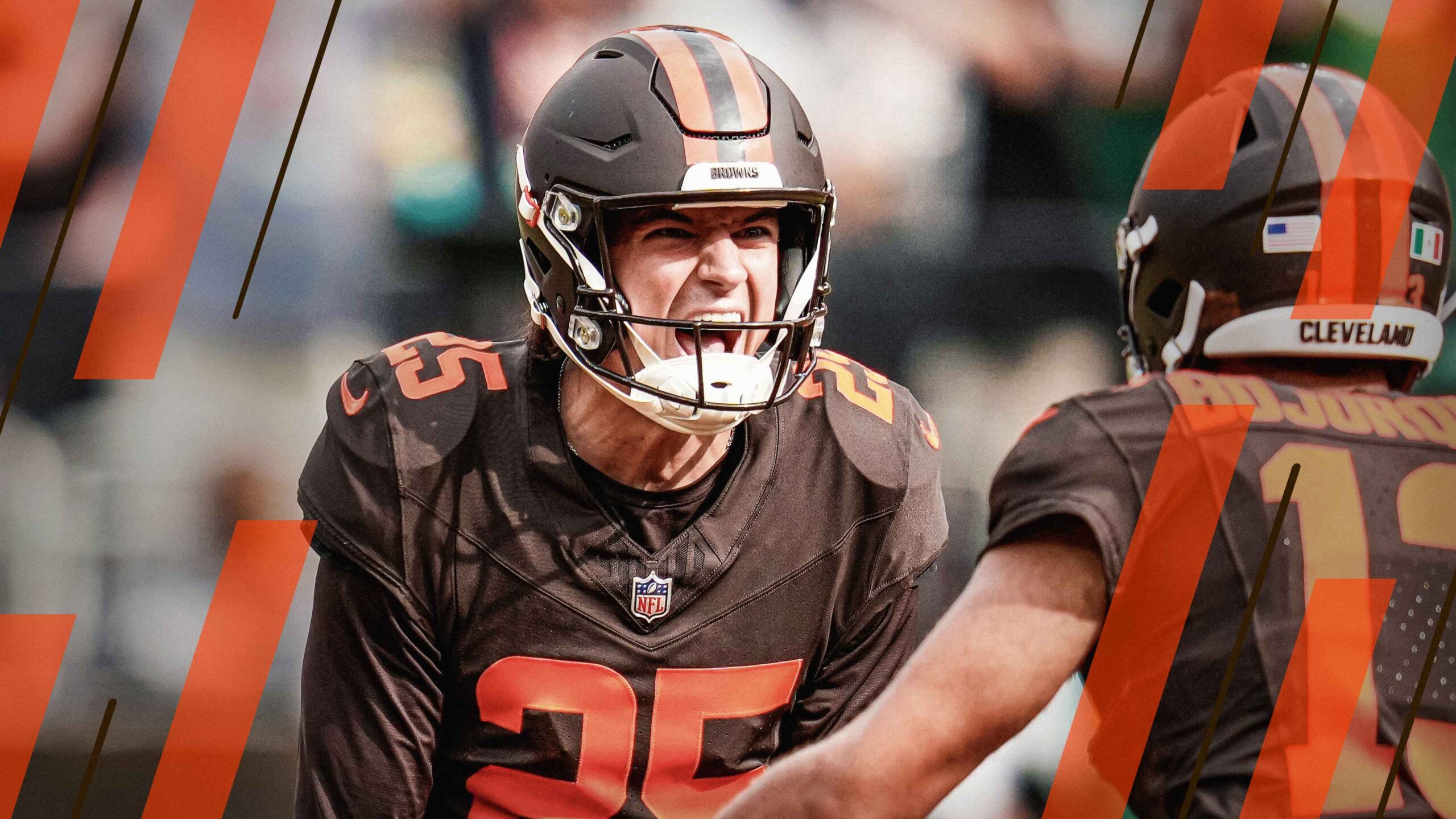
- The Browns’ pass rush stifles the Packers: The Browns shocked the Packers in Week 3 thanks to a strong effort from the pass rush.
- Sam Darnold continues to impress: Darnold has had an excellent start to the season and earned a 91.0 overall PFF grade against the Saints.
- Unlock your edge with PFF+: Access Premium Stats, dominate fantasy with in-season tools and projections and make smarter bets with the new PFF Player Prop Tool.
Estimated Reading Time: 12 minutes

Buffalo Bills 31, Miami Dolphins 21
Why the Bills won: Josh Allen put together a very uncharacteristic performance, but one that still helped lead the Bills to victory. Allen got the ball out hot and fast and excelled in the clean pocket created by his offensive line. When kept clean, Allen completed 20-of-22 pass attempts for 199 yards and three touchdowns, posting an 86.7 overall PFF grade. His 3.1-yard average depth of target from a clean pocket was exceptionally low, and Allen completed just two passes beyond 10 yards, but he was still effective in the win and was pressured on just 28.1% of his dropbacks.
Why the Dolphins lost: The formula for beating and disrupting the Dolphins' offense was the decisive factor once again. The Bills' defense pressured Tua Tagovailoa on 42.1% of his dropbacks on Thursday night; Tagovailoa struggled to keep things ticking over in those moments, completing 53.3% of his pass attempts for 49 yards, a touchdown and an interception on a 42.6 overall grade. The Bills forced Tagovailoa off his spot — when pressured, his average time to throw was 3.53 seconds, compared to 2.16 seconds when kept clean.
Jacksonville Jaguars 17, Houston Texans 10
Why the Jaguars won: It wasn’t a pretty performance from the Jaguars' offense, but things were clicking enough in the short passing game, allowing the offense to get in position to score two rushing touchdowns. Around 50% of Trevor Lawrence’s throws were between zero and nine yards. On those attempts, he completed 14-of-20 pass attempts for 149 yards, good for an 81.3 PFF passing grade, while seven of those pass attempts were first down conversions.
Why the Texans lost: The Texans’ offensive line continues to be a major issue for the team. C.J. Stroud was pressured on 32.6% of his dropbacks, and the Texans allowed 16 pressures and three sacks in pass protection. Rookie left tackle Aireontae Ersery struggled, permitting five pressures and a sack on a 57.7 PFF pass-blocking grade, while left guard Laken Tomlinson — who rotated snaps with Juice Scruggs — compiled a 29.2 pass-blocking grade across 21 pass-blocking snaps.
Cleveland Browns 13, Green Bay Packers 10
Why the Browns won: The Browns pass-rush was a force in this game, helping shut down one of the best offenses in the NFL and winning the fight in the trenches against a great Packers offensive line. The Browns pressured Jordan Love on 45.4% of his dropbacks — 22 times in total — and sacked the Packers quarterback seven times. As usual, Myles Garrett led the way with four pressures and a sack, but 10 different defenders collected a pressure, while six defenders notched a sack.
Why the Packers lost: The Packers' run game has been an efficient point of emphasis in their start to the season, helping control the clock while also effectively moving the ball. However, Green Bay struggled to move the ball against a strong Browns run defense. The Packers averaged -0.177 EPA per rushing play, their worst mark of the season, and averaged just 2.6 yards per carry. Lead back Josh Jacobs, carried the ball 16 times for 30 yards, and the Packers amassed just one carry of over 10 yards.
Pittsburgh Steelers 21, New England Patriots 14
Why the Steelers won: Questions have been asked about a Steelers defense that has struggled through the first two weeks of the season, but it bounced back with a strong performance against the Patriots. The pass rush pressured Drake Maye 21 times throughout the game on 31.9% of his dropbacks, with Cameron Heyward, Nick Herbig and T.J. Watt combining for 14 pressures. Heyward and Herbig earned 84.3 and 83.5 PFF pass-rushing grades, respectively, while Herbig led the way with six pressures.
Why the Patriots lost: The Patriots ran more offensive plays, averaged more yards per play and totalled more yards, but were undone by five offensive turnovers throughout the game. That’s enough to stick the fork in any team. Running backs Rhamondre Stevenson and Antonio Gibson combined for three fumbles, with Stevenson fumbling twice. Maye, who registered a 56.4 overall PFF grade, threw an interception and had a costly fumble. Turnovers kill games.
Indianapolis Colts 41, Tennessee Titans 20
Why the Colts won: Jonathan Taylor is truly back. The veteran running back was the star of the show against the Titans, rushing 17 times for 102 yards and three touchdowns on a 77.1 PFF rushing grade. Taylor’s juice looks restored, as he averaged five yards after contact per attempt while forcing six missed tackles. Taylor kept the Titans' defense scrambling, and is looking as good as ever.
Why the Titans lost: Sunday was a bad day for the Titans' offensive line, a unit that was predicted to be far better in 2025. The Titans allowed 17 pressures and five sacks in pass protection, as Cam Ward was pressured on 40% of his dropbacks. In his third NFL start, Ward was ineffective under pressure, completing 41.7% of his pass attempts for 32 yards on a 48.3 overall PFF grade.
Tampa Bay Buccaneers 29, New York Jets 27
Why the Buccaneers won: The Buccaneers are 3-0 after some late shenanigans against the New York Jets, and they have their quarterback, Baker Mayfield, to thank in large part. Mayfield was excellent in a clean pocket, completing 72.7% of his pass attempts for 177 yards and a touchdown, posting a 92.5 overall PFF grade while adding three big-time throws.. Of Mayfield’s six incompletions, four were credited as dropped passes, demonstrating his elite performance.
Why the Jets lost: Tyrod Taylor played serviceably in his first start of the season, but was predictably felled by a blitz-heavy approach from Todd Bowles. The Buccaneers defense blitzed Taylor on 55.3% of his dropbacks and pressured Taylor on 48.9% of them. When blitzed, Taylor averaged just 4.2 yards per attempt, completing 12-of-19 pass attempts for 79 yards, a touchdown and an interception, receiving a 58.7 overall PFF grade. He was also sacked three times against the blitz.
Carolina Panthers 30, Atlanta Falcons 0
Why the Panthers won: Sunday proved to be a strong day for the Panthers in pass protection, especially against a Falcons defense that has started the season hot. Bryce Young was pressured on just 29.6% of his dropbacks, as Carolina surrendered just six total pressures and a sack — which was on a blitz pickup by Rico Dowdle. The Panthers’ starting offensive line yielded just five pressures as a unit, with center Cade Mays earning an 83.1 PFF pass-blocking grade across a clean sheet.
Why the Falcons lost: Week 3 was simply a rough outing for Falcons quarterback Michael Penix Jr., who compiled a 27.9 overall grade in the loss. Penix completed 18-of-36 pass attempts for 172 yards and two interceptions — one of which was returned for a touchdown. His accuracy was off all game, and it looked like the second-year starter struggled to see the field. One to forget.
Philadelphia Eagles 33, Los Angeles Rams 26
Why the Eagles won: The passing game lives. The Eagles struggled early without right tackle Lane Johnson, who left the game in the first quarter with a stinger, but the offense stepped up in the second half, especially once A.J. Brown got involved. The superstar receiver was targeted 10 times by Hurts, catching six passes for 109 yards and a touchdown on an 83.6 PFF receiving grade. Brown is one of the best receivers in the league, and he flashed his ability to win downfield in single coverage on a 36-yard deep pass from Hurts. The Philadelphia offense came to life when Brown was involved.
Why the Rams lost: The Rams' offense stalled in the second half against the Eagles, but the field goal unit might be the big reason the Rams aren’t 3-0 right now. Kicker Joshua Karty converted on 4-of-6 field goals in the game, posting a 65.1 PFF grade. Los Angeles had two kicks blocked, including the potential game-winning attempt, which was returned for a touchdown.
Washington Commanders 41, Las Vegas Raiders 24
Why the Commanders won: Week 3 was an excellent return to the NFL as a starter for Marcus Mariota, who helped lead the Commanders to a big win against the Raiders. Mariota was decisive and assured, while still showing off his ability to scramble. Mariota received an excellent 93.3 overall PFF grade when kept clean, completing 12-of-16 pass attempts for 135 yards, adding two big-time throws.
Why the Raiders lost: The Raiders' offensive line has been problematic to start the season, and that has left Geno Smith scrambling for his life at times. Smith was pressured on 58.8% of his dropbacks, but still completed 9-of-15 pass attempts for 99 yards. However, Smith was sacked five times and pressured 26 times in total by the Commanders' defense. That’s no way to live.
Minnesota Vikings 48, Cincinnati Bengals 10
Why the Vikings won: This will be remembered as the Isaiah Rodgers game. The Vikings' cornerback garnered a perfect 99.9 overall PFF grade in the rout, scoring two defensive touchdowns while forcing two fumbles. Rodgers’ performance was the standout in an all-around great Vikings contest.
Why the Bengals lost: On the other end of the Vikings' excellent performance was the Bengals turning the ball over five times. Jake Browning notched a 64.7 overall PFF grade, throwing two interceptions, while the offense fumbled the ball an additional three times. This game was over early on, but the Bengals' offense hardly got out of its own way.
Los Angeles Chargers 23, Denver Broncos 20
Why the Chargers won: The Chargers came back late in the fourth quarter to steal a win against the Broncos, and there might be no better quarterback in the NFL right now than Justin Herbert. The Broncos' defense got after Herbert all afternoon, pressuring him on 49.1% of his dropbacks and sacking him five times, but Herbert and the passing attack kept responding. Herbert secured a 64.3 overall PFF grade when pressured but tossed two big-time throws, one of which was a big touchdown pass to Keenan Allen to get the Chargers level.
Why the Broncos lost: The Broncos' passing game hasn’t found its groove yet in 2025, and Denver struggled to move the ball through the air without the use of play action. Bo Nix earned a 48.2 overall PFF grade on non-play-action throws, completing 10-of-19 pass attempts for 65 yards and averaging 3.2 yards per pass attempt. His connection with Courtland Sutton flourished, but without the play-action fake opening up the field, Nix and the Broncos’ offense floundered.
Seattle Seahawks 44, New Orleans Saints 13
Why the Seahawks won: How about Sam Darnold? The Seahawks quarterback has kicked off the season strong and was at his best when Seattle kept him clean against the Saints. Darnold wasn’t disrupted on 66.7% of his dropbacks, completing 11-of-12 passing attempts for 135 yards and two touchdowns on a 91.0 overall PFF grade. The Seahawks’ offense is beginning to roll with its new leader.
Why the Saints lost: The Saints' rushing attack felt the brunt of the Seahawks' defense on Sunday. New Orleans rushed for 79 yards on 27 carries, averaging just 2.9 yards per attempt as a team. The Seahawks defense tallied 17 run stops in the game as well, shutting down lead running back Alvin Kamara to just 42 yards on 18 carries on 2.3 yards per attempt.
San Francisco 49ers 16, Arizona Cardinals 15
Why the 49ers won: Mac Jones is at his best dinking and dunking his way through defenses, getting the ball out fast to his receivers to create yards-after-catch opportunities. Against the Cardinals, Jones was allowed to mostly operate on short throws, completing 20-of-21 pass attempts between zero and nine yards for 154 yards and a touchdown. Jones secured an 85.7 PFF passing grade on those throws.
Why the Cardinals lost: The Cardinals' defense played well for most of the game, but allowed six explosive passing plays for 127 yards and struggled to slow down 49ers receiver Ricky Pearsall. Pearsall picked on Cardinals cornerback Kei’Trel Clark when given the opportunity, catching all three targets for 56 yards, including a big 34-yard gain.
Chicago Bears 31, Dallas Cowboys 14
Why the Bears won: Caleb Williams and the Bears' offense clicked on Sunday, and it was courtesy of the deep ball that it did. Williams completed 3-of-4 passing attempts over 20 yards for 129 yards and two touchdowns, burnishing a 92.6 deep PFF passing grade. The Bears continued to create explosive passing plays, too, racking up 201 total yards on passing plays of over 20 yards.
Why the Cowboys lost: On the flip side, it was yet another tough day in coverage for the Cowboys' defense. Dallas permitted five explosive passing plays for 201 yards, and six Cowboys defenders were given sub-50.0 PFF coverage grades.
Kansas City Chiefs 22, New York Giants 9
Why the Chiefs won: The Chiefs' offense has spluttered its way through three weeks, but Tyquan Thornton played a big role once again against the Giants. Thornton caught five receptions for 71 yards and a touchdown on a 72.5 overall PFF grade. The former Patriot led the team in targets with nine, and he converted four of his five receptions into first downs.
Why the Giants lost: The Chiefs‘ defense got after Russell Wilson, pressuring him on 54.1% of his dropbacks; at this stage in Wilson’s career, that’s not something he can handle every week. Wilson earned a 40.1 overall PFF grade when pressured, completing 5-of-15 pass attempts for 33 yards and averaging 2.2 yards per attempt.
Detroit Lions 38, Baltimore Ravens 30
Why the Lions won: The Lions' rushing game was back to its best. The one-two punch of David Montgomery and Jahmyr Gibbs combined for 218 yards and four touchdowns on 34 carries. Montgomery was the star of the show, generating an 89.8 overall PFF grade while forcing three missed tackles and tacking on four rushes of over 10 yards. The blocking from the offensive line was on another level, too, as tackle Penei Sewell secured a near-perfect 99.3 PFF run-blocking grade.
Why the Ravens lost: Monday proved tough game for the Ravens' rushing attack, as Lamar Jackson and Derrick Henry combined for 85 yards on 19 rushing attempts, averaging just 4.2 yards per carry as a duo. Aside from a first-quarter touchdown run, Henry struggled to assert himself against a tough Lions defensive front and posted a 43.6 overall PFF grade while losing a costly fumble once again. The Ravens seemed unstoppable rushing the ball to start the season. Now, they’re struggling.

 © 2026 PFF - all rights reserved.