- Unlock your edge with PFF+: Access Premium Stats, dominate fantasy with in-season tools and projections and make smarter bets with the new PFF Player Prop Tool. Get 25% off your PFF+ annual subscription with code PFFFANTASYPODCAST25.

Last year, I introduced a new framework for understanding wide receiver play, quarterback decision-making and offensive potential. This framework relies on an XGBOOST model and PFF’s impressive collection of route-level data. Using machine learning and this breadth of PFF data, we can create models with the goal of predicting where a target should go on a given play.
The resulting metrics, Share of Predicted Targets and Share of Predicted Air Yards, are both more stable than their “actual” counterparts.
Week 9 Recap
- Chris Olave: 8 targets – 30.77% target share (1 touchdown)
- D.K. Metcalf: 7 targets – 25.0% target share
- Tyler Warren: 10 targets – 38.46% target share
- Jalen Coker: 4 targets – 17.39% target share
- Sterling Shepard: 4 targets – 9.3% target share
- Cooper Kupp: 2 targets – 16.67% target share (only 12 total team pass attempts)
- Kendrick Bourne: 1 target – 2.7% target share
The model had a fantastic week predicting high-target-share players. Kupp almost scored a touchdown but got stopped three yards short on a huge 67-yard play.
Potential Breakouts: Week 11
These are players who were open far more often than they were targeted in Week 10. In general, players who show up on this list see an uptick in targets per route run and target share relative to both themselves and all players with similar target shares.
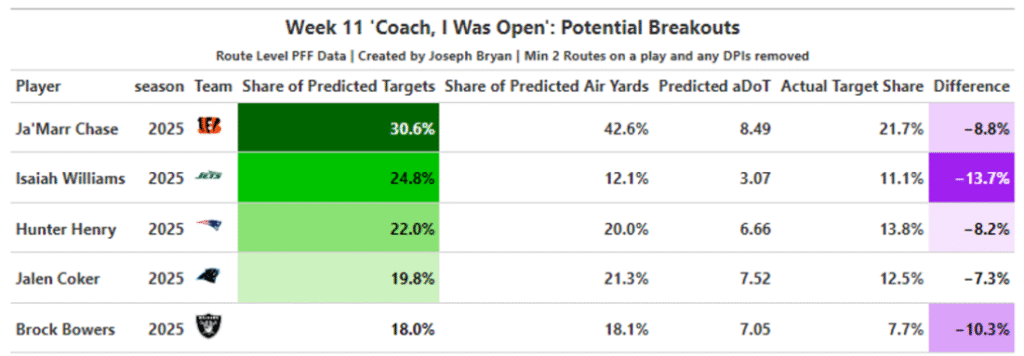
When big names show up on this list, I pay close attention. Ja’Marr Chase and Brock Bowers are standouts who typically garner an immense target share on their respective teams. Last time Chase and the Bengals played the Steelers, he received 23 targets for an incredible 48.9% target share.
Predicted Targets Per Route Run
Looking at predicted targets as a share of the team’s figure allows for increased weekly stability and predictive capabilities, but it also creates a dynamic where a team has a heavy influence on a player’s share of predicted targets (SoPTs). A player like Puka Nacua (23.4% SoPTs) has to compete with Davante Adams (22.6% SoPTs) for predicted targets, while Wan’Dale Robinson (26.0% SoPTs) has to battle with Darius Slayton (14.5% SoPTs). All are NFL wide receivers, but Adams is a future Hall of Famer known for his ability to get open — thus lowering Nacua’s share of predicted targets.
To nullify this effect, we can look at predicted targets per route run, honing in on how well that player is doing for themself.
Share of Predicted Targets = [Player’s Predicted Targets]/[Team’s Predicted Targets]
Predicted Targets Per Route Run = [Player’s Predicted Targets]/[Player’s Routes Run]
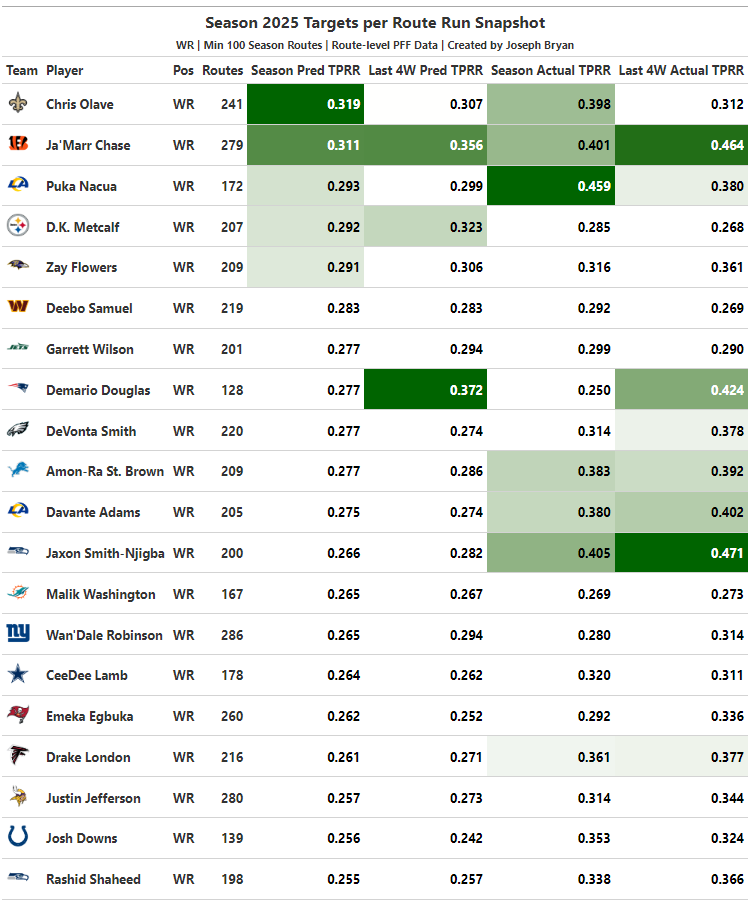
As we hypothesized, focusing on the player’s routes run as the denominator allows Nacua to move from outside the top 20 share of predicted targets to a top-three predicted targets per route run earner. While Robinson is garnering targets better than other players on his team, Nacua is simply tallying more targets every time he is running a route.
The Saints traded away Rashid Shaheed for a 2026 fourth-round pick and a 2026 fifth-round pick. With Shaheed being the 20th-best wide receiver this season at earning predicted targets on a per-route basis, this seems like fantastic value for Seattle. The Seahawks’ passing attack becomes even better with an elite separator like Shaheed on the other side of Jaxon Smith-Njigba and is a legitimate boost to an incredibly efficient passing unit.
The most surprising names to see on this list were Demario Douglas, Malik Washington and Josh Downs. All are primarily slot receivers with at least a 50% share of slot snaps on their respective teams. This highlights how effective the slot position as a whole can be at generating open wide receivers.
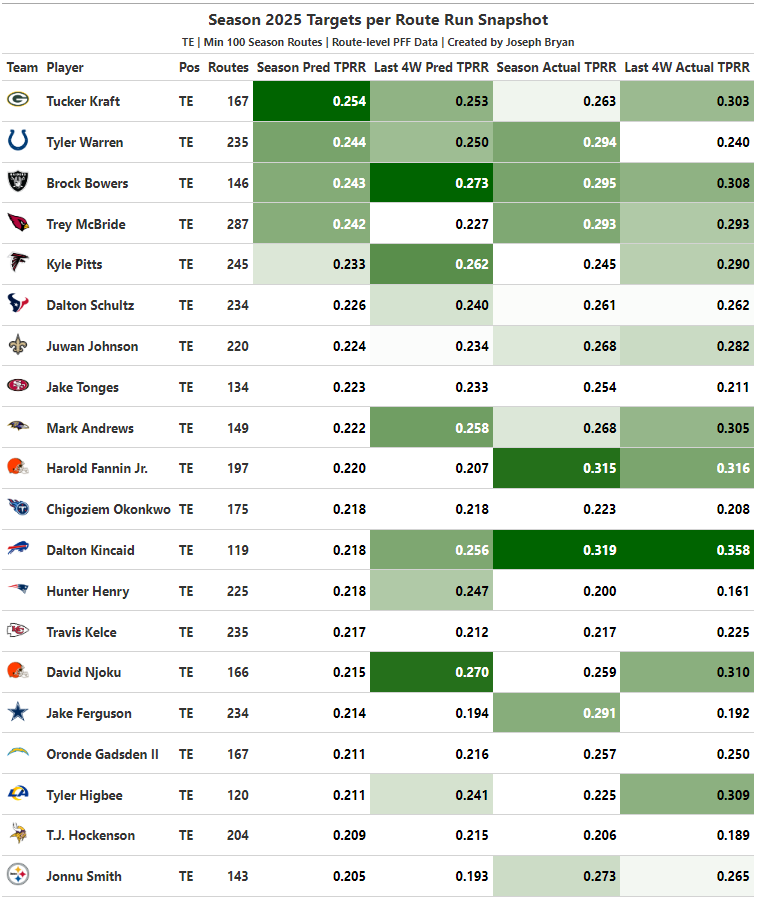
Tucker Kraft was on his way to a potential top-three finish in fantasy at the tight end position before going down with a season ending ACL injury. He was also putting up elite predicted target numbers, suggesting there was no slowdown imminent.
Brock Bowers showed us what he was capable of two weeks ago against the Jaguars. His predicted targets per route run imply that he is going to keep getting open. As long as the Raiders are willing to pass it, and he is on the field running routes, I expect a fantastic second half of the season for him.
Kyle Pitts is having the quietest phenomenal season I can remember. He is getting open better than most other tight ends in the NFL, but ranks as the TE15 in PPR points scored. Pitts does rank fifth in total targets for tight ends, but likely should have more based on his ability to get open this season.
“Coach, I Was Open” Week 10 Review
The Vikings enter this play losing by 8 points with 52 seconds left in the game. It’s second-and-6, and big plays are the priority. After J.J. McCarthy takes the snap, the focus of this play is on the right side of the field, where Jalen Nailor is running an “Over” route and Jordan Addison is running a “Go” or clearout route.
Baltimore is playing ‘Cover 1’ and rushes four without generating immense quick pressure.
As McCarthy begins his throwing motion, he seems to stumble forward, and the pass is inaccurate. I do want to focus on the decision here more than anything. McCarthy chooses to target Nailor on this play and, Nailor is the only eligible receiver on the field not considered “Open”.
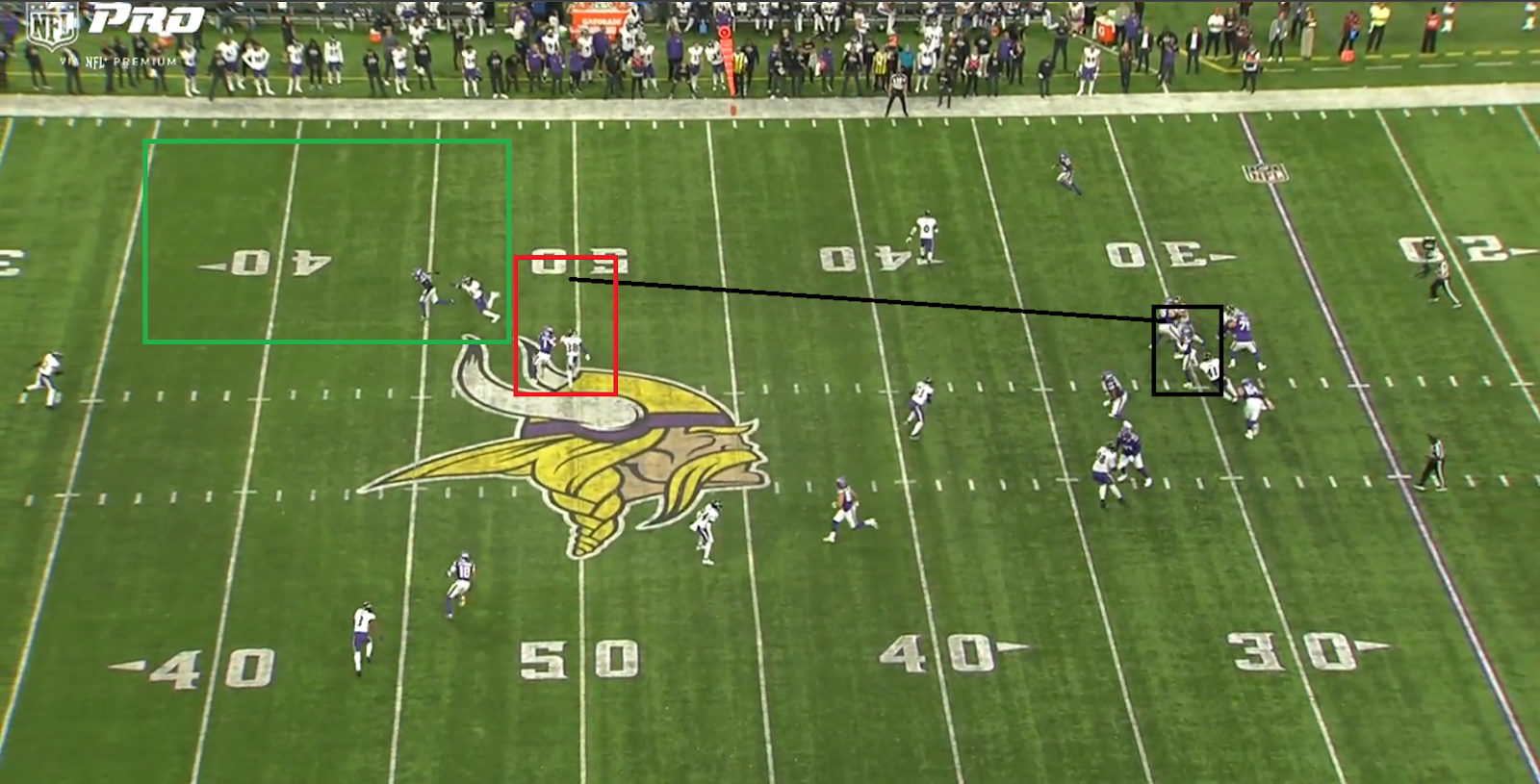
Aaron Jones and T.J. Hockenson are mostly untargetable in this situation, as a big play is necessary. However, both Addison (42% target probability) and Justin Jefferson (20%) are running wide open with high target probabilities. Nailor was given a similarly high 20% target probability, but was pretty well-covered on this play. This play in particular had a -0.44 EPA mark.
A better decision here might result in a touchdown to Addison or a massive gain to Jefferson. Ultimately, the Vikings were not able to finish this drive and lost the game.

 © 2026 PFF - all rights reserved.