- The Lions need Cade Mays to play well: The team's new center will be tasked for improving an interior offensive line that struggled.
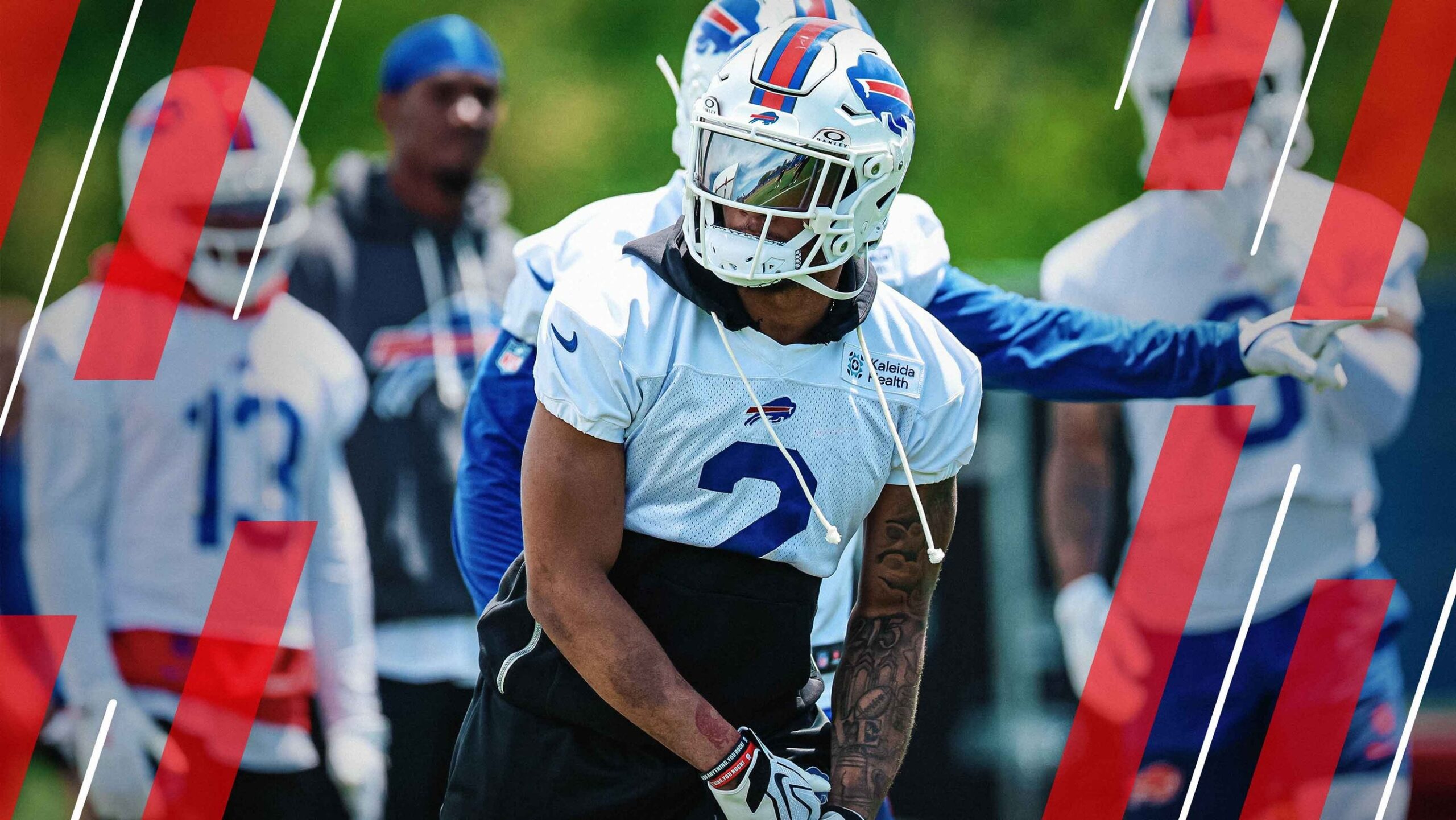
- D.J. Moore heads to Buffalo with high expectations: Given the Bills‘ issues at receiver last season and the cost to acquire him, Moore looms as a big piece for the team's success.
- The Eagles are relying on a breakout from Andrew Mukuba: Philadelphia's safety unit was the lowest-graded in the league last season, and the second-year Mukuba will assume a larger role given departures.

Given the volume of not only a football season, but also a roster, it’s difficult for one player to almost single-handedly affect an entire year’s worth out of outcomes. Although quarterbacks bear the most responsibility of any player, even their efforts alone don’t dictate every result — which weighs not only defensive work but also the performance of offensive lines and skill-position groups.
Nevertheless, certain non-quarterbacks have magnified spotlights to play at a high level going into the 2026 season. That’s especially true for teams with playoff aspirations, whose success could very well hinge on how certain positions hold up.
If these 10 players turn in strong 2026 campaigns, it could take their team from one fighting for a playoff spot to a Super Bowl contender. On the other hand, an underwhelming season could legitimately derail contending hopes altogether.
C Cade Mays, Detroit Lions
As the Lions look to return to the playoffs following a down 2025 season, there are multiple areas of the team under the microscope in 2026. In particular, the focus is on the newcomer Mays.
One of the biggest reasons why Detroit took a step back last year was the play of its interior offensive line, a group that tumbled to 24th in overall PFF grade. Center was a particular problem, with Graham Glasgow finishing with a 56.8 grade prior to being released this offseason.
In order to fill its void up the middle, Detroit signed Mays to a three-year, $25 million contract this spring. Over the last two seasons, Mays has shined in pass protection, ranking in the top 10 in both pressure rate (3.0%) and PFF pass-blocking grade (72.0) among qualified centers. However, his run-blocking has been less effective with a 62.5 grade in that span.
If Mays can help shore up Detroit’s offensive line, then the Lions should return to the offensive juggernaut we’re accustomed to; staying on schedule will be key given the team’s 12th-ranked success rate in 2025. However, if Mays gets off to a bad start on his new team, it certainly won’t help Dan Campbell’s bunch.
WR D.J. Moore, Buffalo Bills
The Bills failed to advance out of the AFC yet again last postseason. While there were several fingers to blame, a focal one was at wide receiver — which Moore arrives to correct.
Buffalo’s offense ranked second in EPA per play in 2025, but the team’s receiving corps was a real problem. Bills wideouts earned the 24th-ranked PFF receiving grade, including tying for the eighth-most drops of any unit. The only Bills receiver to play in at least eight games and post at least 1.30 yards per route run was the consistent Khalil Shakir.
Bills general manager Brandon Beane acquired Moore from the Bears in exchange for a second-round pick, a price that was met with skepticism given how Moore played in 2025 as well as his monstrous contract. Indeed, Moore’s 67.9 receiving grade and 1.24 yards per route run were both career lows, and he regularly seemed out of sync with Caleb Williams.
Overarchingly, the Bills loom as Super Bowl contenders in 2026. If Moore can turn back the clock now that he’s reunited with former offensive coordinator Joe Brady, it might make them outright AFC favorites — but if he struggles again, then Buffalo could very well face similar limitations in helping Josh Allen.
T Jordan Morgan, Green Bay Packers
A mantra for the Packers this offseason has been putting additional trust in its young players. That’s certainly the case for Morgan.
As a first-round pick in 2024, Morgan played only 186 snaps that year while operating as a backup. That number vaulted to 819 in his second season, seeing time at four offensive line spots. Morgan yielded a 62.0 overall PFF grade, although his 68.8 PFF pass-blocking mark was encouraging.
With longtime left tackle Rasheed Walker now in Carolina, Morgan will presumably take over as the team’s regular blindside protector for Jordan Love. If the 24-year-old performs admirably, he’ll help render Green Bay as dangerous as it looked before injuries derailed last year. Yet if Morgan experiences a learning curve, it’ll throw more cold water on the team’s adjusted offense — and could dash the Packers’ chances in a tough division.
CB Jaylon Johnson, Chicago Bears
Johnson was once regarded as one of the premier cornerbacks in football, but his stock has only fallen since. He’ll need to regain form to help the Bears beef up their questionable defense.
After leading qualified corners with a 90.3 overall PFF grade in 2023, Johnson has only seen that number decline. The low came in 2025, when Johnson graded at only a 58.7 across just 406 snaps due to a lingering groin problem. While Johnson wasn’t targeted much due to his elite profile, he surrendered catches on 61.5% of his targets. Further, Johnson was susceptible to big plays, allowing a league-high 18.6 yards per reception.
The Bears added multiple secondary contributors this offseason in Coby Bryant, Dillon Thieneman and Malik Muhammad. Nevertheless, the team is counting on Johnson to return to lockdown form, especially given its inconsistent health in the corner room. If Johnson looks like an All-Pro, he’ll help Chicago offset regression concerns — but if he’s poor yet again, the team’s defense might not improve from below-average.
CB Deommodore Lenoir, San Francisco 49ers
It’s still remarkable that the 49ers reached the divisional round given their defense finished 31st in success rate. While injuries and issues affected almost every level of the unit, Lenoir was also more ineffective than usual.
The fifth-year corner led San Francisco in defensive snaps, although he deviated from the strong form we’ve seen in the past. Lenoir’s 65.7 PFF coverage grade sat in the 62nd percentile, but his 99.8 passer rating when targeted was the 20th-highest among qualified corners, and he finished in the 51st percentile in coverage at outside corner. Also, Lenoir was flagged a career-high 10 times, and his PFF run-defense grade fell to a personal-low 44.3 mark.
The 49ers signed veterans Nate Hobbs and Jack Jones this spring, but Lenoir is still positioned to start next to Renardo Green and Upton Stout. The trio was responsible for the 28th-ranked cornerback unit by overall grade in 2025, not to mention the 25th-placed team PFF coverage grade.
Lenoir and the rest of San Francisco’s defense will benefit from the returns of Fred Warner, Nick Bosa and Dre Greenlaw, plus hiring Raheem Morris as defensive coordinator. However, the onus is also on Lenoir to individually improve if the 49ers want to get back to, and even win, the Super Bowl.
T Jaylon Moore, Kansas City Chiefs
The 2025 season was a very uncharacteristic one for the Chiefs, who missed the playoffs altogether for the first time since 2014. Multiple players will need to step up to avoid the same fate this year, including Moore.
After inking a two-year, $30 million contract with Kansas City, Moore didn’t perform excellently in his first year with the Chiefs. Appearing on a career-high 427 snaps while starters dealt with injury, Moore compiled a 63.1 overall PFF grade. The former 49er was at his worst in pass protection, allowing 27 pressures on only 257 opportunities — good for a 93.8 pass-blocking efficiency score, tied for the eighth-worst among qualified tackles.
With longtime right tackle Jawaan Taylor traded to the Falcons and the team bypassing tackle in the draft, Moore pencils in as Patrick Mahomes’ starting right tackle. Players like Josh Simmons, Rashee Rice and Xavier Worthy also carry a big burden in 2026, but Moore’s play will also dictate whether or not the Chiefs’ offense can hum more like what we’ve seen in prior years.
G Wyatt Teller, Houston Texans
After a disappointing playoff run that ended in the divisional round, the Texans return a solid nucleus for 2026. However, Houston is counting on its offensive line to get better, and that includes Teller.
Even with Ed Ingram breaking out, the Texans’ offensive line was still below-average in 2025, owning the 23rd overall PFF grade and sitting no better than 20th in either blocking category. Houston invested via both free agency and the draft, including nabbing Teller on a two-year, $16 million deal to presumably start at left guard.
Teller was long a reliable and consistent guard in Cleveland, playing at least 825 snaps with no worse than a 70.3 overall PFF grade from 2019-23. However, his play has slipped in the past two seasons, including to a 62.2 mark last year. Pass protection was Teller’s largest weakness, with his 53.1 PFF pass-blocking grade tying for 46th out of 53 qualified guards.
As the Texans continue to seek offensive line stability, Teller looms large. If the 31-year-old fares poorly yet again, Houston’s offense may not be able to keep weight with its ferocious defense. But if the three-time Pro Bowler flourishes, it could help the Texans get further than ever — including to the Super Bowl.
C Ethan Pocic, Baltimore Ravens
Following a trying 2025 campaign, the Ravens look to get back to being a formidable force in 2026 under new head coach Jesse Minter. Several factors should help Baltimore get on track, but its interior offensive line is a serious question mark.
Ravens guards and centers continued to underperform last season, compiling the 18th overall PFF grade even with Tyler Linderbaum shining. With Linderbaum heading west and the team’s guards rather unsuccessful, Baltimore overhauled the group — including drafting Olaivavega Ioane as well as signing Pocic and John Simpson.
Pocic performed like a quality center in 2022 and 2023, but his grades have waned since. He hasn’t exceeded a 63.8 overall mark in the last two years, including sitting 17th among 31 qualifiers in 2025. Pocic also played only 826 snaps while suffering an Achilles tear in Week 14.
With minimal competition at the position, all signs point to Pocic being the Ravens’ starting center if healthy. Replacing Linderbaum seems like a Herculean feat, but Baltimore would really benefit from Pocic turning in at least a decent season to support Lamar Jackson and Derrick Henry.
Read more
Read more5 underappreciated acquisitions during the 2026 NFL offseason
(opens in new tab)S Andrew Mukuba, Philadelphia Eagles
It’s been a chaotic offseason in Philadelphia, with the Eagles trading away A.J. Brown and acquiring Jonathan Greenard. Lost in the shuffle has been the team’s safety room, which desperately needs Mukuba to dominate.
Vic Fangio’s defense remained sound in 2025, sitting in the top 10 in both EPA per play and success rate. Yet Philadelphia’s safeties were inferior, earning the worst PFF grade at the position. No Eagles safety earned even a 60.5 grade for the year.
A second-round pick last spring, Mukuba played 672 snaps before incurring an ankle and fibula fracture. While Mukuba proliferated his strong run defense from his days at Texas, his coverage wasn’t satisfactory: Mukuba’s 46.9 PFF coverage mark was the 11th-worst among qualified safeties. The rookie also allowed a 117.7 passer rating when targeted.
The Eagles lost Reed Blankenship in free agency and dealt Sydney Brown, but didn’t make any legitimate additions to their safety room. That leaves Mukuba and Marcus Epps as the projected starters. With a tremendous young core, Philadelphia figures to field a strong defense in 2026, but the unit (and team) would return to title contender status if Mukuba can break out.
T Max Iheanachor, Pittsburgh Steelers
The Steelers have retooled their roster in their first offseason under Mike McCarthy, adding talent on both sides of the ball. Yet Pittsburgh’s offense line is mired in uncertainty, including what will happen with Iheanachor.
Former first-round pick Broderick Jones suffered a season-ending neck injury in Week 12 of last season, plus has never secured even a 59.0 overall PFF grade in any campaign of his three-year career. Whether or not Jones will play in 2026 (or beyond) is unknown, but his absence has created ripple effects. That includes Troy Fautanu moving to left tackle — and potentially invites Iheanachor to start at the other slot.
Pittsburgh took Iheanachor with the 21st overall pick in April as a player teeming with potential. The Arizona State tackle started to round into form in pass protection, allowing only 14 pressures and zero sacks during the 2025 campaign. While Iheanachor is more green in the run game with a career 63.4 PFF run-blocking grade, he possesses upside given his frame and balance.
Any first-round pick is innately saddled with expectations out of the gate, but the stakes feel especially large for Iheanachor. Although it’s yet to be determined how much the 22-year-old will start, his ability to step in as a protector for Aaron Rodgers will be key on a team that eyes another playoff berth.

 © 2026 PFF - all rights reserved.