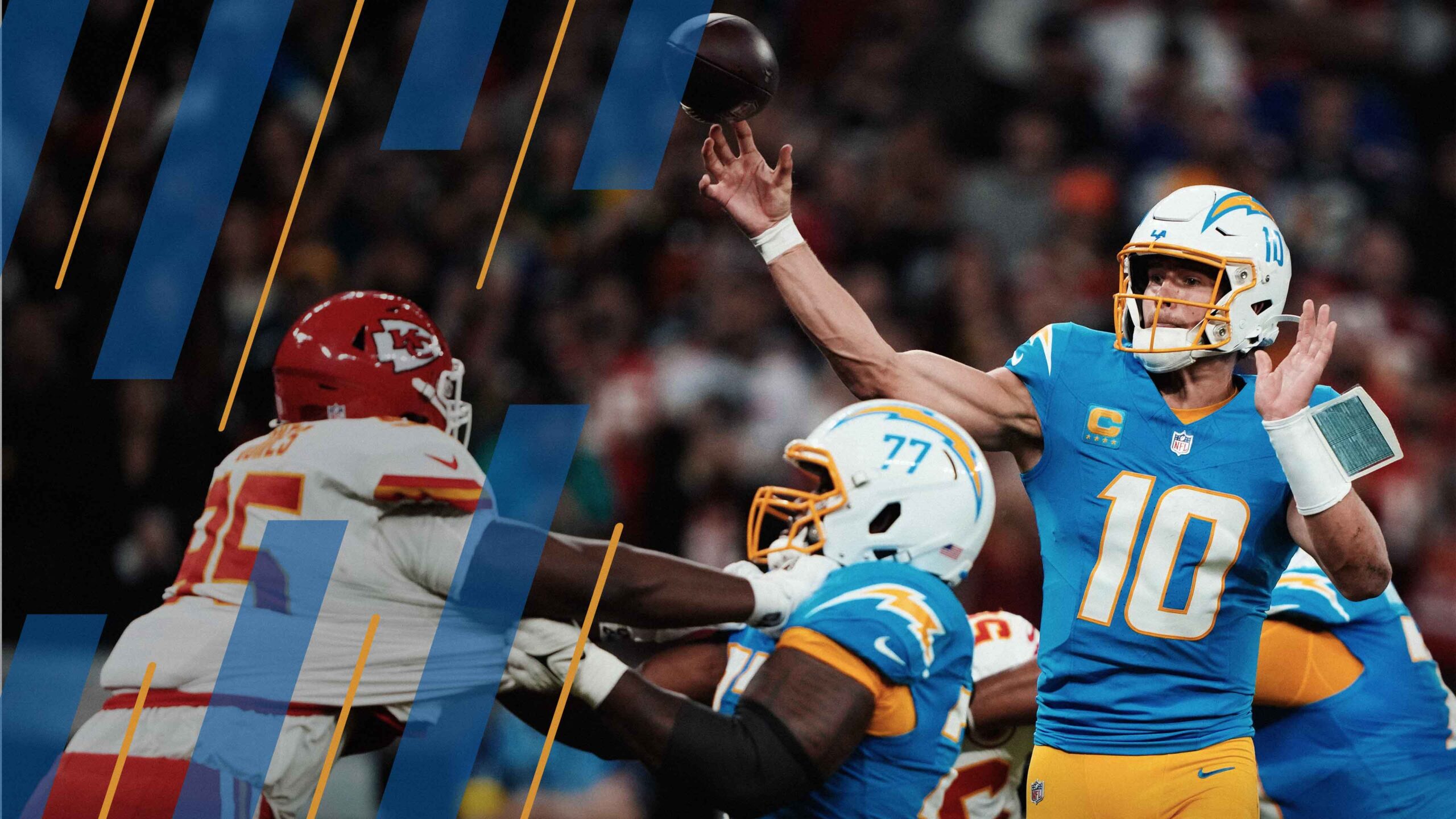
- Chargers, Bills, Rams lean on their star quarterbacks: All three teams started the year with wins, and all three teams will be grateful for the play of their quarterbacks.
- Early struggles for the Dolphins: The Dolphins were blown out in their season opener, with Tua Tagovailoa earning a 52.5 overall PFF grade.
- Unlock your edge with PFF+: Access Premium Stats, dominate fantasy with in-season tools and projections and make smarter bets with the new PFF Player Prop Tool.
Estimated Reading Time: 13 minutes

Philadelphia Eagles 24, Dallas Cowboys 20
Why the Eagles won: The Eagles’ offense had its moments in Week 1, but it found real success through Jalen Hurts’ legs. Hurts rushed for a game-high 62 yards on 14 attempts, adding two touchdowns on the ground, while posting a 90.7 PFF rushing grade. Hurts scrambled on nine occasions for seven first downs, and his ability to hold the ball deep into the snap and make plays happen with his legs proved important for an Eagles offense that wasn’t at its best.
Why the Cowboys lost: Some key drops in big moments stopped Dak Prescott from having an even stronger game, but in the wake of the Micah Parsons trade, it was the lack of consistent pass rush that hampered the Cowboys the most. Though the Cowboys had 20 total pressures, only Solomon Thomas recorded a pass-rush win rate of 20% or higher, and only Kenny Clark had a PFF pass-rushing grade of over 65.0. The Cowboys were unable to win early in the snap against a strong Eagles offensive line, and that allowed Hurts to scramble and make plays happen out of the pocket.
Los Angeles Chargers 27, Kansas City Chiefs 21
Why the Chargers won: Justin Herbert excelled in Brazil. The Chargers quarterback earned an 84.0 overall grade, completing 73.5% of his passes for 318 yards and three touchdown passes. What really stuck out, alongside his willingness to scramble, was how well he targeted the intermediate areas of the field. Herbert was 9-of-11 for 155 yards and three touchdowns on throws between 10 and 19 yards, compiling an 88.5 PFF passing grade when targeting those intermediate areas.
Why the Chiefs lost: It’s been a bane of this Chiefs offense for a while, but there’s a real concern that this team struggles to make explosive plays in the passing game. Mahomes had his moments, including an excellent scramble and bomb downfield to Marquise Brown, but just 20.6% of Mahomes’ passing attempts went beyond 10 yards. The early injury to Xavier Worthy likely changed the Chiefs’ game plan and their ability to stretch the field, but allowing the Chargers’ defense to play with everything in front of it stifled the Chiefs' offense.
Arizona Cardinals 20, New Orleans Saints 13
Why the Cardinals won: The Cardinals opened the season with a professional performance, especially from the offensive line. Kyler Murray was sacked five times in the game, though he was responsible for all five. In reality, the Cardinals' offensive line allowed just three total pressures in the game, with Paris Johnson Jr. permitting zero pressures across 38 pass-blocking snaps — good for an 88.4 PFF pass-blocking grade.
Why the Saints lost: The Saints held their own in the home-opener, but struggled to contain an efficient Cardinals run game. The Cardinals rushed the ball 27 times for 146 yards, averaging 5.4 yards per attempt. Additionally, the Saints yielded four explosive rushing plays for 88 yards and had seven missed tackles against the run.
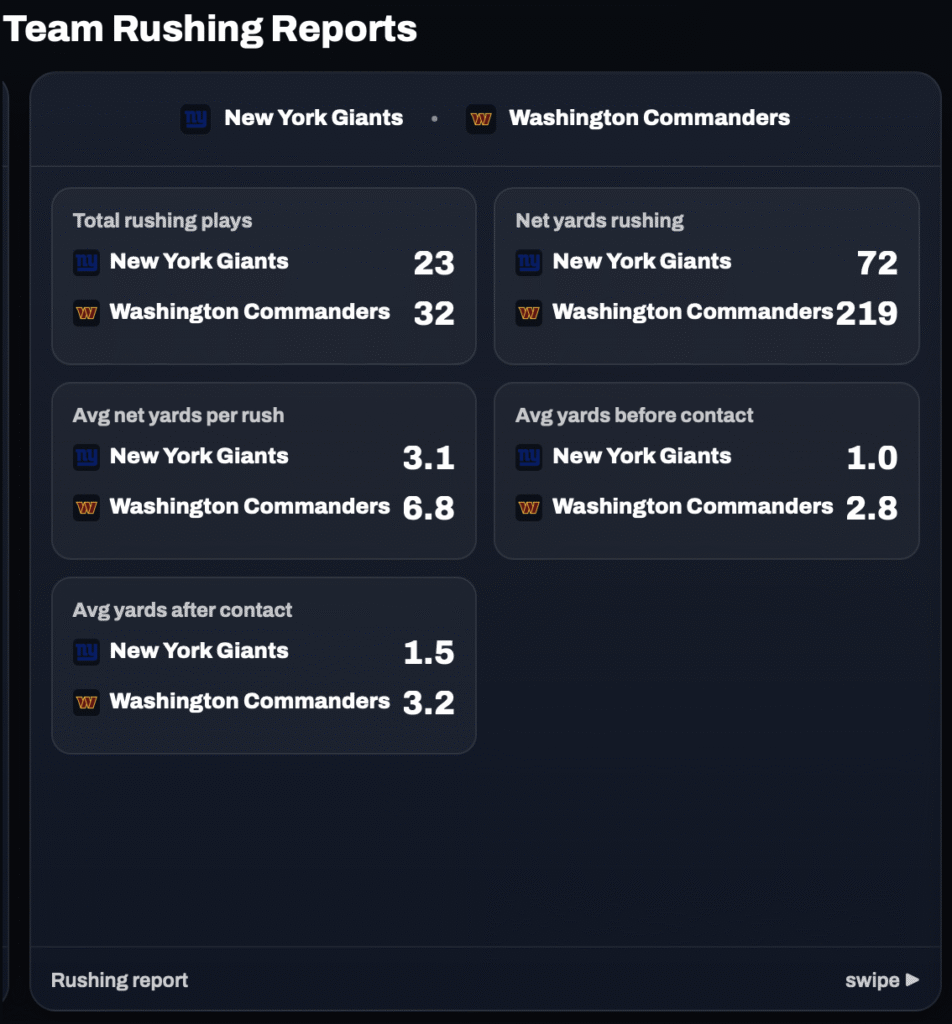
Washington Commanders 21, New York Giants 6
Why the Commanders won: The Commanders were comfortable in their season opener against the Giants, and were able to consistently create explosive plays in the run and pass games. The offense tallied 14 total explosive plays — eight rushing and six passing — for 262 yards, while rookie Bill Croskey-Merritt and Jayden Daniels both had three explosive rushes each as the Commanders earned 6.9 yards per attempt on the ground.
Why the Giants lost: Giants quarterback Russell Wilson was pressured on 37.8% of his dropbacks and struggled in those moments. Wilson generated a 46.0 overall PFF grade when pressured, completing just 38.5% of his passing attempts for 51 yards and averaging 3.9 yards per attempt. Expectations for the Giants' offense were relatively muted heading into 2025, and the early signs failed to lift those projections.
Pittsburgh Steelers 34, New York Jets 32
Why the Steelers won: Aaron Rodgers had four touchdown passes in his first start for the Steelers, completing 73.3% of his passes for 244 yards and four touchdowns, although he compiled only a 54.5 PFF passing grade. However, Rodgers was helped along by his receivers creating yards after the catch. The Steelers averaged 7.8 yards after the catch per reception, with DK Metcalf — who posted a 75.6 overall grade — leading the way with 16.8 yards after the catch per reception. Those big plays led to points on the board for the Steelers.
Why the Jets lost: Aside from Sauce Gardner, who was good for a 90.1 PFF coverage grade, it was a tough day for the Jets’ secondary. Gardner allowed just one reception on four targets, forcing two incompletions, but the rest of the defense permitted 21 catches on 24 targets for 233 yards and four touchdowns. Free-agent cornerback Brandon Stephens surrendered two touchdowns in coverage.
Indianapolis Colts 33, Miami Dolphins 8
Why the Colts won: The Colts took advantage of a weak Dolphins secondary in Week 1, with quarterback Daniel Jones having one of the best games of his career in his first start for the team. Jones and the Indianapolis passing attack consistently found ways to create explosive plays against the Miami defense, racking up 168 passing yards on eight explosive passes. Jones averaged 9.4 yards per pass attempt in the win.
Why the Dolphins lost: The concerns surrounding the Dolphins’ offense in the offseason were entirely on show in the blowout loss to the Colts. Dolphins quarterback Tua Tagovailoa amassed a 52.5 overall grade while completing 60.9% of his passes for 114 yards, a touchdown and two interceptions. Both interceptions were ugly, and Tagovailoa racked up four turnover-worthy plays in the game — the most of any quarterback in Week 1. Not protecting the football or seeing the field cost Tagovailoa and the Dolphins.
Las Vegas Raiders 20, New England Patriots 13
Why the Raiders won: Geno Smith gave Raiders fans a glimpse of his talent in the win against the Patriots, and he was at his best in a clean pocket. Smith earned a 91.5 overall grade when kept clean, completing 20-of-25 pass attempts for 290 yards, a touchdown and an interception. The veteran quarterback tossed two big-time throws against the Patriots and averaged 11.6 yards per attempt. Smith was slinging it.
Why the Patriots lost: A tough day for the new-look Patriots offensive line. The unit allowed 18 total pressures, and quarterback Drake Maye was sacked four times and pressured on 39.6% of his dropbacks. Rookie guard Jared Wilson struggled in his first career start, finishing with a 33.8 PFF pass-blocking grade and allowing six pressures, while veteran right tackle Morgan Moses permitted five pressures himself.
Jacksonville Jaguars 26, Carolina Panthers 10
Why the Jaguars won: The Jaguars' rushing attack immediately benefited from the Liam Coen bump after struggling in 2024. The offense carried the ball 32 times for 200 yards, averaging 6.0 yards per attempt, with Travis Etienne leading the way with 143 yards on 16 attempts and a 76.8 PFF rushing grade. Not only did they consistently rush the ball well, averaging 0.111 EPA per rushing play, but the Jaguars tallied five explosive rushes for 122 yards.
Why the Panthers lost: Trevor Lawrence didn’t set the world on fire, but the lack of pressure up front from the Panthers' defense made life a lot easier for the former No. 1 pick. The Carolina defense generated just five total pressures, and Lawrence was pressured on four of his 33 dropbacks. Carolina’s pass rush will need to be better.
Cincinnati Bengals 17, Cleveland Browns 16
Why the Bengals won: The Bengals' offense struggled to move the ball, gaining seven total yards in the second half against the Browns, but the pass rush showed up when it mattered the most. The defense earned 25 total pressures against the Browns, with Trey Hendrickson leading the way off the edge with eight pressures and a sack, worthy of a 90.2 overall PFF grade. Hendrickson had a 41.7% pass-rush win rate and was constantly a presence in the Browns' backfield.
Why the Browns lost: The Browns’ second-half defensive performance was up to scratch, holding the Bengals to just three points, but the offense's inability to hold up its end of the bargain, especially in the run game, left the team smarting. The Browns carried the ball 24 times for just 49 yards, averaging a lowly 2.0 yards per attempt, while failing to register any explosive rushes. Cleveland’s longest rush went for just five yards.
Tampa Bay Buccaneers 23, Atlanta Falcons 20
Why the Buccaneers won: The Buccaneers' defense had a tough task in store by having to defend one of the NFL’s most efficient rushing attacks from a year ago. However, their performance against the run was exactly what helped lift the team to victory. The defense held the Falcons to just 69 total rushing yards on 2.5 yards per rushing attempt, and the bunch earned a 75.6 PFF run-defense grade.
Why the Falcons lost: The Falcons’ offensive line struggled on the edges, with tackles Jake Matthews and Elijah Wilkinson — who stepped in for the injured Kaleb McGary — struggling, allowing nine total pressures and a sack between them. Wilkinson received a 36.5 PFF pass-blocking grade on true pass sets, and center Ryan Neuzil — who replaced Drew Dalman — also earned a 36.0 PFF pass-blocking mark. A rusty start for a usually dependable unit.
San Francisco 49ers 17, Seattle Seahawks 13
Why the 49ers won: Though he was pressured on 43.6% of his dropbacks, Brock Purdy helped lift the 49ers to an opening-day victory on the road, especially when his offensive line kept the pocket clean. Purdy worked in a clean pocket on 56.4% of his dropbacks and was at his decisive best in those moments, completing 85.7% of his passes for 222 yards and a touchdown, adding three big-time throws. It wasn’t an all-around perfect game from Purdy, but when he was allowed to get the ball out fast, the offense hummed.
Why the Seahawks lost: The Seahawks' passing game existed solely through the Jaxon Smith-Njigba and Sam Darnold connection against the 49ers. Smith-Njigba caught 9-of-13 pass attempts for 124 yards, securing a 76.1 overall PFF grade, but Darnold struggled to move the ball when not targeting his third-year wideout. The rest of the receiving corps caught seven passes for just 26 yards. The Seahawks will need more from the rest of the unit, and Darnold will need to build trust, too.
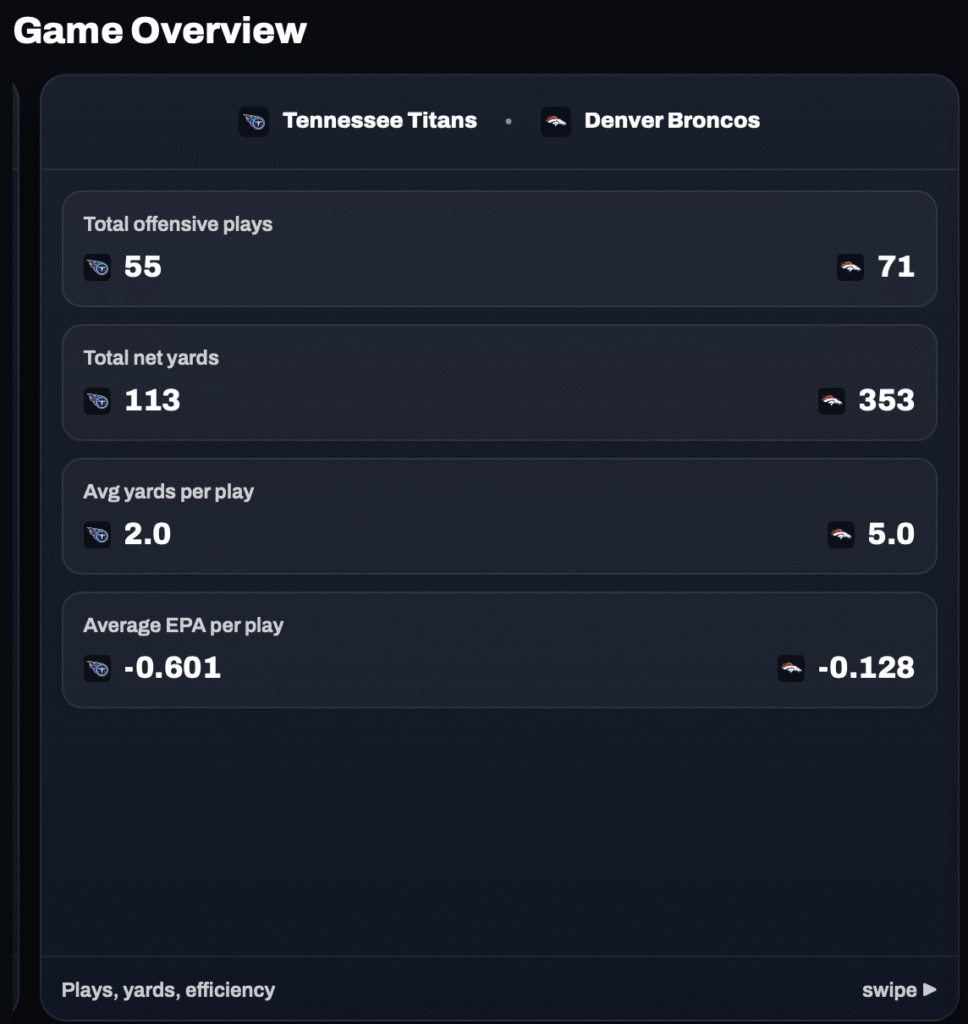
Denver Broncos 20, Tennessee Titans 12
Why the Broncos won: The Broncos' defense was one of the best in the NFL in 2024, and the unit took little time to carry on from where it left off in Week 1. The pass rush exploded, sacking rookie quarterback Cam Ward six times while generating 28 total pressures. The team’s top rusher, Nik Bonitto, celebrated his new extension by securing a 91.6 PFF pass-rushing grade, accumulating six pressures and sacking Ward once.
Why the Titans lost: Ward had an up-and-down affair in his first NFL start, but things broke down when the rookie quarterback tried to push the ball past the sticks. He performed to a 76.1 overall PFF grade on short throws — completing 80% of his attempts for 65 yards — but struggled to connect with his receivers on throws of 10 yards or more, completing 1-of-12 attempts for 16 yards. That’s not entirely on Ward, as the Titans' receivers had three drops in the game.
Los Angeles Rams 14, Houston Texans 9
Why the Rams won: Matthew Stafford showed little sign of carrying a back injury that put his Week 1 start in jeopardy, delivering an excellent performance against a strong Texans defense. Stafford received a 92.9 overall PFF grade, completing 72.4% of his pass attempts for 245 yards and a touchdown. The veteran added five big-time throws in the win, with four of those throws coming on deep attempts. Stafford remains one of the NFL’s top quarterbacks.
Why the Texans lost: The Texans' secondary was pegged as one of the best in the NFL ahead of the 2025 season, but the group struggled in the Week 1 opener. Star cornerback Derek Stingley Jr. especially languished in coverage, allowing five receptions on seven targets for 56 yards with a 34.3 PFF coverage grade. In total, the defense allowed 21-of-27 catches for 245 yards and a 47.6 PFF coverage grade.
Green Bay Packers 27, Detroit Lions 13
Why the Packers won: The Packers' defense stepped up to the plate against one of the best rushing attacks in the NFL, surrendering just 46 yards on 22 rushing attempts. Star linebacker Edgerrin Cooper collected three stops against the run, and the defense had 13 stops in total. Holding the likes of Jahmyr Gibbs to 2.1 yards per attempt is a huge win for the defense, and it set the tone for the game.
Why the Lions lost: It was an all-around tough day for the Lions' offense, and a lot of their issues stemmed from a lack of interior presence. The new starting guard duo, Christian Mahogany and Tate Ratledge, struggled, conceding a combined seven pressures and three sacks. Mahogany earned a 43.9 PFF pass-blocking grade, while rookie Ratledge was at a 39.2 mark. The offensive line ceded four sacks in total, and it looks as if the revamped unit will take some time to settle in.
Buffalo Bills 41, Baltimore Ravens 40
Why the Bills won: The Buffalo Bills have a superhuman at quarterback. Josh Allen completed 71.7% of his pass attempts for 394 yards and two touchdowns in the comeback win, earning an 87.0 overall grade while adding two rushing touchdowns and four big-time throws. Allen and the Buffalo passing attack exploded in the second half, and the team rallied for 16 points in the final four minutes of the game. There are few quarterbacks capable of lifting the Bills like Allen did against the Ravens.
Why the Ravens lost: On the other end of a classic was the Ravens’ defense struggling to hold it all together, especially against the pass. The Bills accounted for 11 explosive passing plays for 270 yards, and the Ravens were unable to slow down the passing attack as the Bills went searching for a major comeback. There will be major concerns over the outside starting cornerback spots, especially opposite second-year corner Nate Wiggins. Jaire Alexander mustered a 28.9 PFF coverage grade in his Ravens debut.
Minnesota Vikings 27, Chicago Bears 24
Why the Vikings won: The Vikings' defense looked the part in Week 1, and got after Bears quarterback Caleb Williams at every opportunity. Williams was pressured a total of 30 times, with 13 of those pressures coming from interior defenders Javon Hargrave and Jonathan Allen. All told, the Vikings pressured Williams on 45.5% of his dropbacks.
Why the Bears lost: The Bears' offensive line was completely revamped in the offseason, and while the unit will absolutely improve, it struggled in Week 1. The line allowed 23 total pressures and a sack. Right guard Jonah Jackson posted a 22.6 PFF pass-blocking grade, permitting five pressures on 46 pass-blocking snaps.

 © 2026 PFF - all rights reserved.