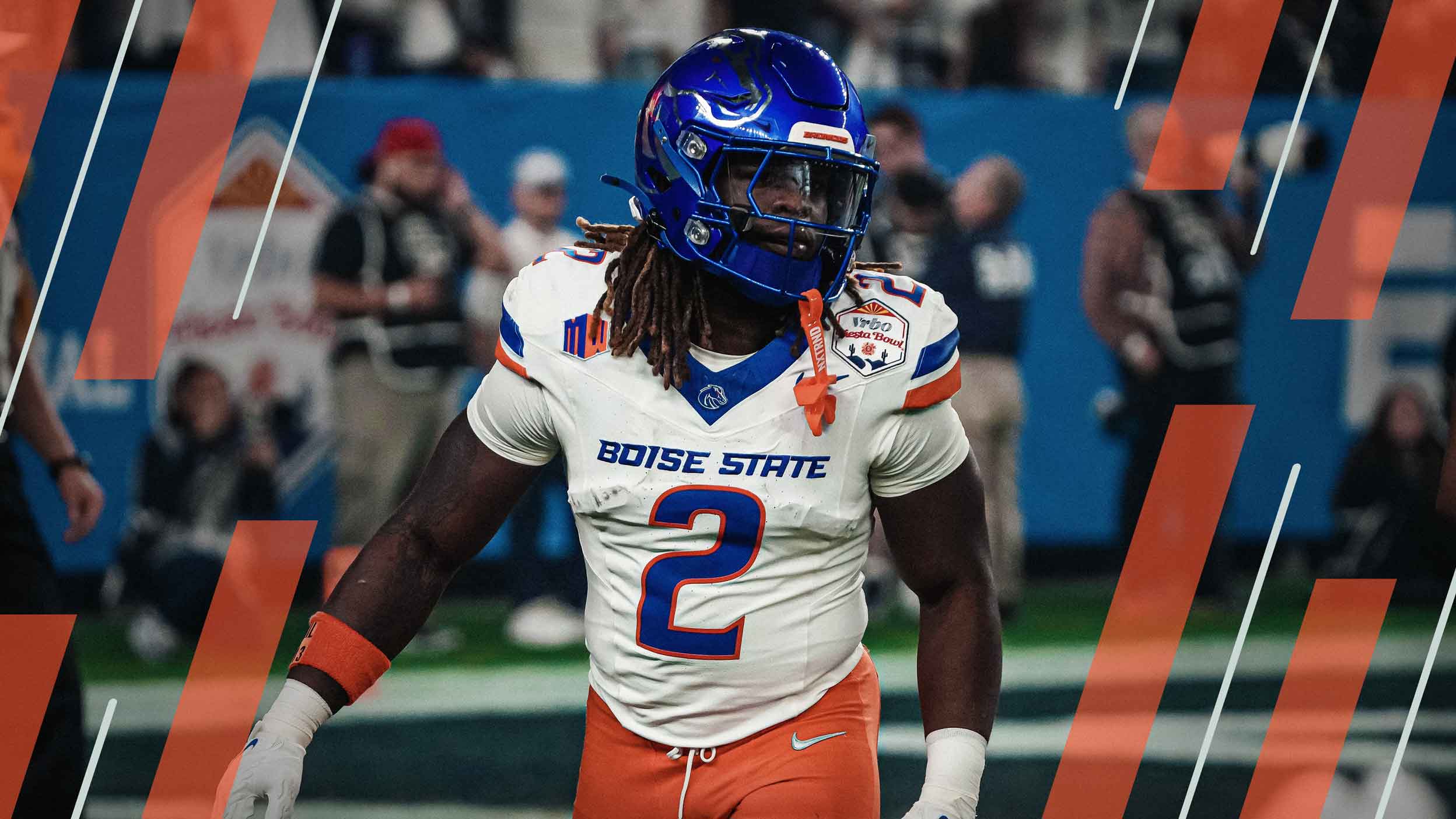
- Ashton Jeanty‘s 2024 season won't be forgotten: Although Jeanty just missed out on the trophy, he established numerous single-season PFF running back records.
- Ohio State had two contenders in 2019: Quarterback Justin Fields and edge rusher Chase Young both separated themselves during a stellar year for the Buckeyes.
- Quinnen Williams makes the cut: Williams' 2018 season culminated in the second-highest overall PFF grade ever awarded to a defensive player.

Across the duration of a long college football season, the evolution of storylines remains second-to-none. From distinguishing between anticipated national contenders to unsung schools building a resume to names getting recognition, the unpredictability of a campaign is constantly compelling.
Much of the same applies to the Heisman Trophy race. The 2025 season is a perfect example, when Indiana’s Fernando Mendoza — far from a projected winner — surged to the top of the leaderboard as the Hoosiers continued to perform week in and week out.
While one player ultimately hoists the 45-pound trophy every winter in New York City, a slew of phenomenal campaigns shouldn’t be forgotten despite not winning such hardware. Weighing advanced PFF metrics (which date back to 2014 for college football), here are 10 elite years that didn’t finish with the Heisman.
RB Ashton Jeanty, Boise State Broncos – 2024
Although Jeanty lost out on the Heisman to two-way Colorado star Travis Hunter, his campaign was astronomical. That was reflected in an extremely close vote, which Jeanty lost by only 214 total points.
During a magical season for the College Football Playoff-bound Broncos, Jeanty produced a 96.6 PFF rushing grade with 1,970 yards after contact and 152 missed tackles forced. All of those are single-season PFF records, and his 63 carries of at least 10 yards are the second-most ever.
Although Jeanty wasn’t nearly as dynamic in the receiving game by averaging only 0.84 yards per route run, his season was historic — and would’ve won the award in almost any other circumstance.
RB Christian McCaffrey, Stanford Cardinal – 2015
McCaffrey’s tenure at Stanford was something to behold, and his best year yet came in 2015. Although McCaffrey didn’t actually lead the country in overall or rushing grades — that honor belonged to Leonard Fournette — he was elite as both a runner and receiver.
McCaffrey’s 93.1 PFF receiving grade was the highest in the nation for any skill-position player, averaging 3.27 yards per route run with an unreal 13.2 yards after the catch per reception. As a runner, he notched an 85.6 PFF rushing mark, forcing 71 missed tackles and tallying 56 explosive runs.
All told, McCaffrey’s 2015 campaign produced the most ever PFF Wins Above Average (WAA) for a running back. It culminated in a second-place Heisman finish, although it may have been analytically superior to winner Derrick Henry’s year.
Most single-season WAA by college running back in PFF history
| Player | School | Season | WAA | Overall PFF Grade | Snaps |
|---|---|---|---|---|---|
| Christian McCaffrey | Stanford | 2015 | 0.87 | 91.7 | 647 |
| Ezekiel Elliott | Ohio State | 2014 | 0.72 | 90.6 | 811 |
| Kareem Hunt | Toledo | 2016 | 0.71 | 93.2 | 544 |
| Malcolm Perry | Navy | 2019 | 0.65 | 89.4 | 615 |
| Clyde Edwards-Helaire | LSU | 2019 | 0.63 | 84.1 | 740 |
| Cam Skattebo | Arizona State | 2024 | 0.62 | 93.3 | 696 |
| Najee Harris | Alabama | 2020 | 0.57 | 89.8 | 627 |
| Ashton Jeanty | Boise State | 2023 | 0.55 | 94.9 | 511 |
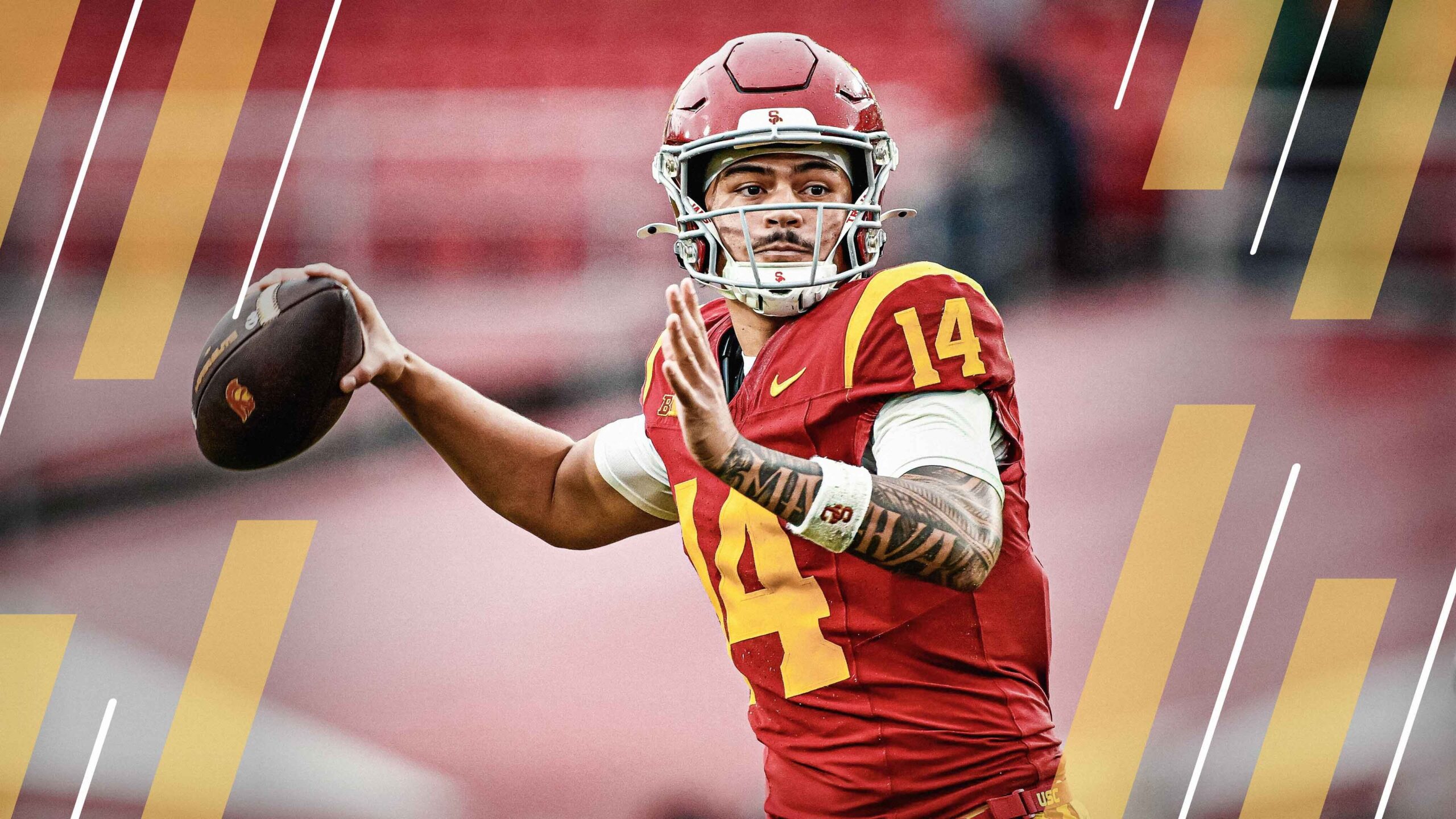
QB Mac Jones, Alabama Crimson Tide – 2020
The 2020 national champions fielded the Heisman winner in receiver DeVonta Smith, who assembled a year for the ages. But Smith’s quarterback was nearly as phenomenal that same season.
Jones accrued a 95.8 overall PFF grade and a 94.8 PFF passing grade, which both led the nation. Although he wasn’t first in either big-time throw or turnover-worthy play rates, Jones sat in the top nine in both, reflecting his balanced approach. Jones’ 84.2% adjusted completion rate is second to only Bo Nix since 2014, and his 1.94 WAA is the fifth-most for a quarterback in a single season.
It would’ve been difficult to hand Jones the trophy over his running mate, but the eventual 11th overall pick certainly dazzled in his own right for Alabama.
EDGE Aidan Hutchinson, Michigan Wolverines – 2021
Hutchinson’s run at Michigan led to him being the second overall pick in the NFL Draft, not to mention an elite pro at that. After a steady climb, he reached his zenith during an unbelievable 2021 campaign.
Across 794 snaps, Hutchinson compiled a 94.5 overall PFF grade, the highest for a defensive player in the country. The All-American was one of two qualified players with a 90.0-plus grade as both a pass-rusher and run-defender, including his national-high 93.4 PFF pass-rush grade on true pass sets.
All told, Hutchinson produced 0.85 WAA in 2021, the most ever for an edge rusher. That season, Hutchinson’s mark was well ahead of Will Anderson Jr. in second place with 0.48. To even come in second place in Heisman voting as a defensive player is a remarkable achievement, but Hutchinson was worthy.
RB Blake Corum, Michigan Wolverines – 2022
Also part of a loaded Michigan squad, Corum made his mark in Ann Arbor — and especially during the 2022 season. That year, he set a PFF positional record with a 96.2 overall PFF grade, amassed across 453 snaps.
Corum led the country with a 96.2 PFF rushing mark, a figure that trails only Jeanty since 2014. Part of that was powered by fumbling just once over 248 carries, in addition to turning 38.7% of his carries into first downs.
Although Corum wasn’t as much of a weapon in the receiving game with a 69.2 PFF receiving grade, he also led qualified backs with a 78.2 PFF pass-blocking grade. The former Wolverine concluded the season seventh in Heisman voting but arguably could have been higher.
QB Baker Mayfield, Oklahoma Sooners – 2016
Mayfield claimed the Heisman Trophy in 2017, but his prior two years were almost on par. That’s definitely true of 2016.
That season, Mayfield topped all qualified quarterbacks in overall (93.8) and PFF passing (94.6) grades. In fact, that passing mark was higher than his during the decorated 2017 campaign (94.4). While Mayfield’s big-time throw rate was lower, his 2.3% turnover-worthy play rate was better — and tied for fourth nationally.
Mayfield’s second year at Oklahoma yielded 1.82 Wins Above Average, a number that led all of college football. That’s not quite as prestigious as the 2.08 WAA posted a year later, but considering the caliber of quarterbacks in 2016, that’s still a noteworthy accomplishment.
Read more
Read moreCollege Football: 8 teams who could make their first College Football Playoff appearance in 2026
(opens in new tab)RB Bijan Robinson, Texas Longhorns – 2022
The same campaign as Corum also saw the best form of another budding star in Robinson. The Longhorn great trailed Corum in overall and PFF rushing grades, but his respective 95.3 and 96.1 marks are still thoroughly elite.
The All-American placed in the top three in yards after contact per carry (4.17) and missed tackles forced (96) while also sitting top-11 in explosive carries (41) and first downs gained (79). As has been true at the next level, Robinson was also effective as a pass-catcher by averaging 1.52 yards per route run, the second-best among running backs.
While Robinson’s holistic grades weren’t quite as prolific as Corum’s, he actually netted more WAR (0.48) than Corum (0.44). The ultimate eighth overall pick was also worthy of seeing a bump from ninth in the final Heisman tally.
EDGE Chase Young, Ohio State Buckeyes – 2019
Young’s final season was an unbelievable one, which cemented him as the second overall pick in the following draft. Over 576 snaps, he netted a 96.0 overall PFF grade, tied for the second-best ever for a defensive player with at least 500 snaps in a season.
Young was especially unguardable as a pass-rusher. He totaled 56 pressures on 320 pass-rush snaps, and his 96.4 PFF pass-rush grade and 26.6% pass-rush win rate were also the best for qualified defenders.
The final book on Young’s 2019 season was 0.60 WAA — a figure not quite mirroring Hutchinson’s, but one that’s still memorable.
QB Justin Fields, Ohio State Buckeyes – 2019
Fields’ transfer from Georgia to Ohio State was a watershed moment in his career, not to mention during the burgeoning stages of the portal. The move proved wondrous for Fields, who was arguably slightly superior in 2019 compared to 2020.
While Fields’ overall grade in 2019 (91.5) was lower than the next season (93.5), he was notably better as a passer. Across 430 dropbacks, Fields generated a 92.4 PFF passing grade that trailed only Joe Burrow. His 8.7% big-time throw rate actually led the country, and his 2.4% turnover-worthy play rate tied for 12th.
Fields was a more efficient rusher in 2020, but his larger sample size and amplified work throwing the ball gave him a higher 1.50 WAA in 2019. That helped the Buckeye finish third — and one spot ahead of his teammate Young — in Heisman voting.
Dl Quinnen Williams, Alabama Crimson Tide – 2018
For a true defensive lineman to even be in the Heisman conversation, they have to assemble a truly special season. Williams did just that in 2018.
Prior to being the third overall pick in April, Williams registered a 96.0 overall PFF grade — tying Young for second all-time for a defensive player. Williams was a monster against the run with a 96.5 PFF run-defense grade — the highest ever for a defender with 200-plus run-defense snaps — and an accompanying 14.2% run stop rate. On top of that, the Alabama stud added a terrific 92.5 PFF pass-rush grade.
Since 2014, Williams is one of only three interior defenders to finish top-10 in Heisman voting. His season distinguished itself from fellow finalists Jordan Davis and Jonathan Allen, not to mention sensational backs like Cam Skattebo and Jeremiyah Love.

 © 2026 PFF - all rights reserved.