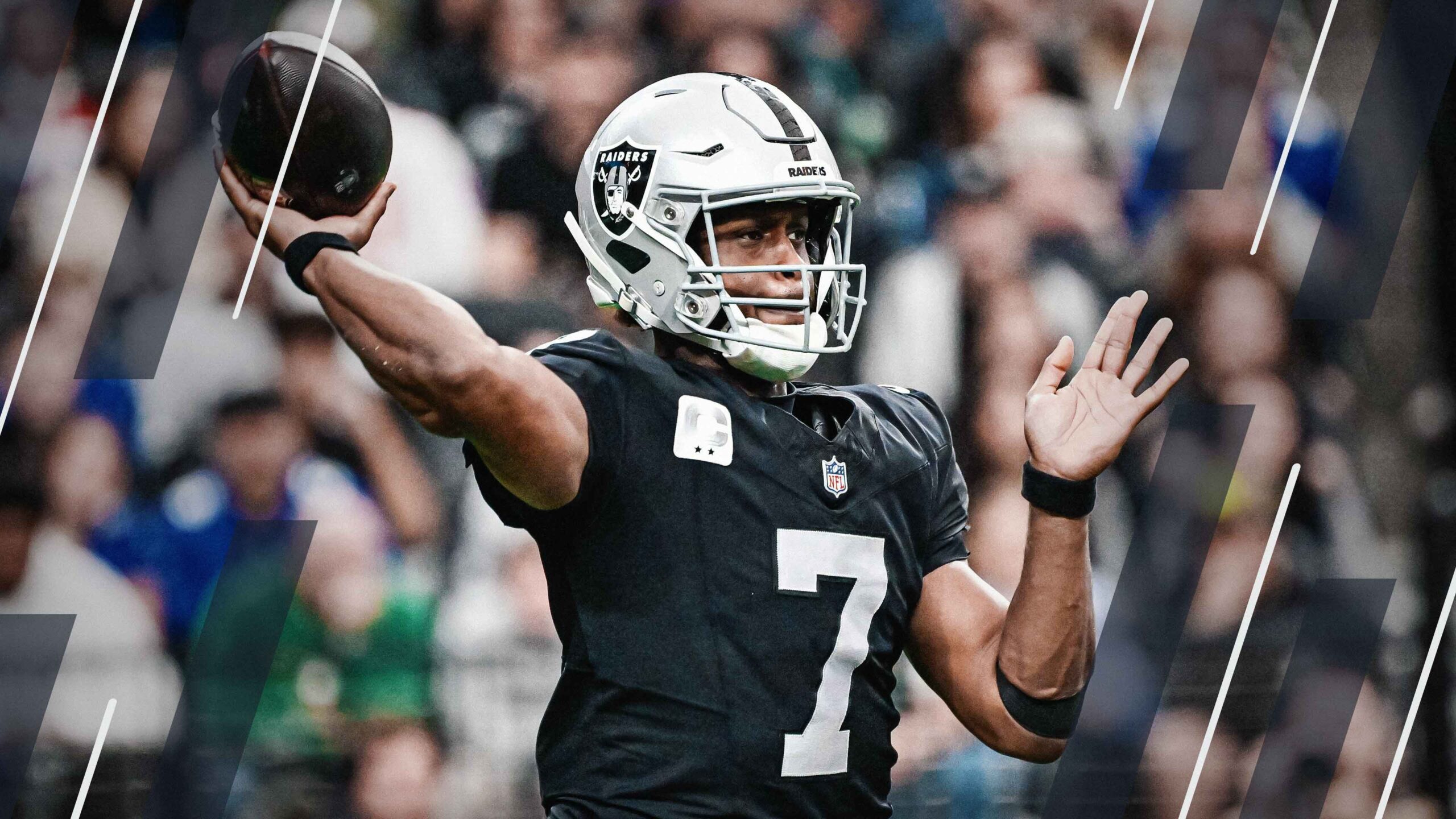
- Could the Bears make a surprise move? Even after a career-best season in 2025, the Bears could move on from D’Andre Swift this offseason.
- Geno Smith and Tua Tagovailoa are likely movers: If the Raiders and Dolphins can’t find trade partners, cutting their quarterbacks is on the horizon.
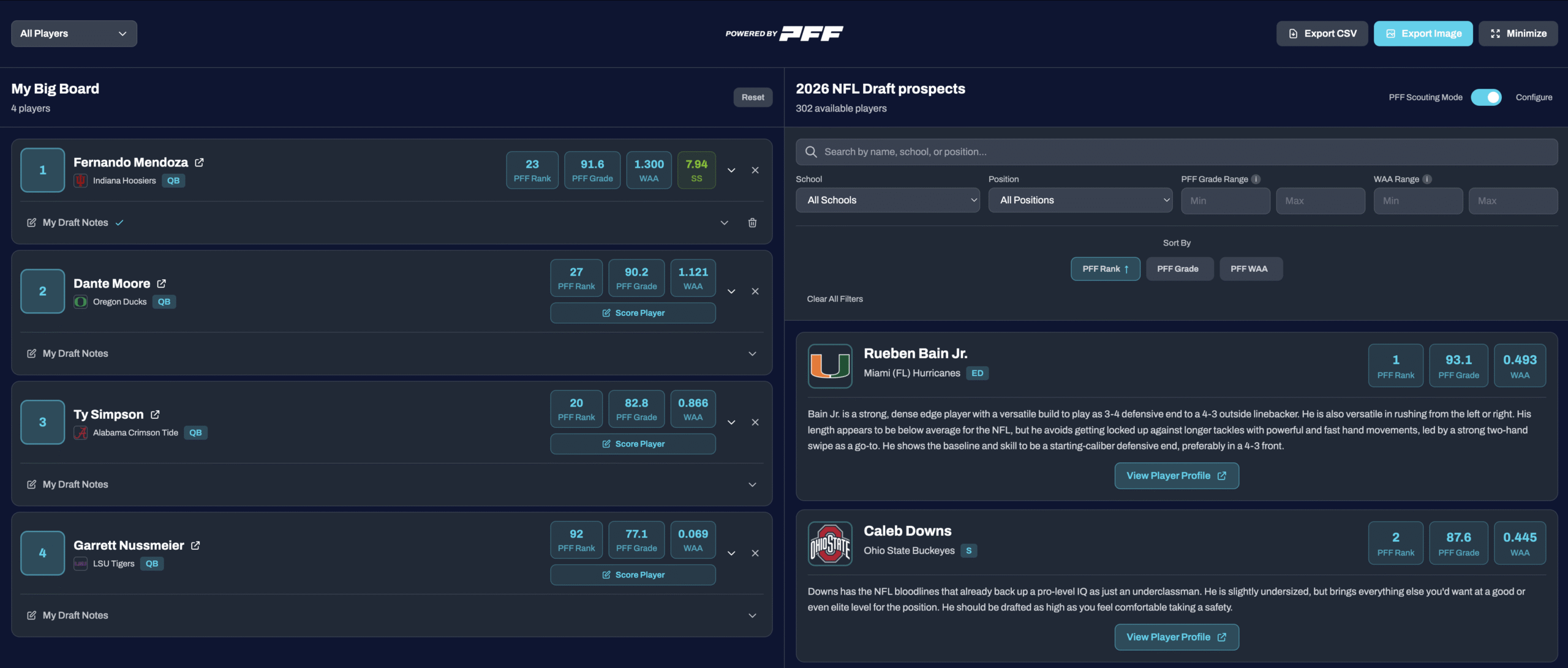
- 2026 NFL Draft season is here: Try the best-in-class PFF Mock Draft Simulator and learn about 2026's top prospects while trading and drafting for your favorite NFL team.
Estimated Reading Time: 31 minutes
With free agency right around the corner, every NFL team is pulling levers and all of the necessary switches to create cap space for the season ahead, as well as the future. For some teams, that’s an easy task. For others, big decisions have to be made.
Regardless, players will unfortunately be used as facilitators in cutting cap. Here are cut candidates for all 32 NFL teams.
Click here to jump to a team:
ARZ | ATL | BAL | BUF | CAR | CHI | CIN | CLE | DAL | DEN | DET | GB | HOU | IND | JAX | KC | LV | LAC | LAR | MIA | MIN | NE | NO | NYG | NYJ | PHI | PIT | SF | SEA | TB | TEN | WAS
Arizona Cardinals: RB James Conner
James Conner has been an excellent veteran leader for the Arizona Cardinals over the last five seasons and became one of the most reliable running backs in the NFL in that time, but his 2025 was cut short due to a major foot injury. Sadly, that could partly spell the end of Conner’s time in Arizona.
He’ll be 31 when the 2026 NFL season rolls around, and coming back from a severe injury at that age, especially at running back, is a tough task. Cutting Conner could save the Cardinals $7.5 million while also opening the door for Trey Benson to take on a larger role in 2026.
Atlanta Falcons: WR Darnell Mooney
The Falcons got ahead of this article by announcing their intentions to release Kirk Cousins at the start of the new league year. Instead, if Atlanta wants to open up more cap space, it could look to move on from receiver Darnell Mooney.
The former fifth-round pick earned a 52.5 PFF grade in 2025, the lowest of his career, while catching 32 passes for 443 yards and a touchdown. Cutting Mooney would take on $11 million in dead cap but would save $7.42 million against the cap.
Baltimore Ravens: RB Justice Hill
Justice Hill’s 2025 season was limited after a neck injury landed him on injured reserve, but even before the unfortunate injury, Hill’s role within the Ravens’ offense was reduced. Third-year running back Keaton Mitchell took on a larger workload behind Derrick Henry, while Rasheen Ali was solid in pass protection when called upon.
That leaves Hill as the odd man out. Hill has just one year remaining on his contract, and cutting him would save the Ravens $3.1 million.
Buffalo Bills: WR Curtis Samuel
Curtis Samuel has one year left on his three-year $24 million contract, but the veteran Bills receiver might not see the deal out. He played a bit-part role in a Bills receiving room that needed some juice in 2025, playing just 185 total snaps. Multiple injuries broke up his season, and Samuel only suited up in seven total games, and he caught just eight of 12 targets for 83 yards and a touchdown in those contests.
The Bills need more receiving help, and newly-appointed head coach Joe Brady and general manager Brandon Beane will look to improve the roster in the offseason. Samuel hasn’t lived up to his contract and could be on the way out. Cutting him would free up $6 million in cap space.
Carolina Panthers: DI Bobby Brown III
The Panthers signed Bobby Brown III to a three-year, $21 million contract a year ago, but the former Rams defensive tackle struggled in his first season in Carolina. Brown compiled a 56.7 PFF grade, 74th among defensive tackles, and had the lowest PFF run-defense grade of his career (61.1).
Brown is at the bottom of the pecking order on a Panthers defensive line that still needs some work, and cutting him could save the team $4.3 million against the cap. He’ll get a fresh start elsewhere.
Chicago Bears: RB D’Andre Swift
D’Andre Swift had the best season of his career in 2025. The former Eagles and Lions running back rushed for a career-high 1,217 yards and 10 touchdowns this past season, earning a career-best 83.0 PFF grade that placed ninth among running backs. Despite that, he could still be a cut candidate.
Swift is set to make $7.5 million in 2026, the final year of his contract, but the Bears could save $7.4 million by moving on from him. Chicago’s offensive line is one of the best in the NFL, and it can drop a cheaper option in behind that bunch. Swift would likely get interest on the open market after a strong campaign.
Cincinnati Bengals: DI T.J. Slaton
The Bengals signed T.J. Slaton to a two-year, $14 million contract last season in one of a few moves to help improve a despondent defense. Slaton and the Bengals’ defense underperformed in 2025, and the former Giant compiled a 44.0 PFF grade that was 112th among defensive tackles.
Moving on from Slaton in the final year of his deal would save the Bengals $6.4 million, and they could also part ways with a defender who didn’t provide much oomph in 2025.
Cleveland Browns: T Cornelius Lucas
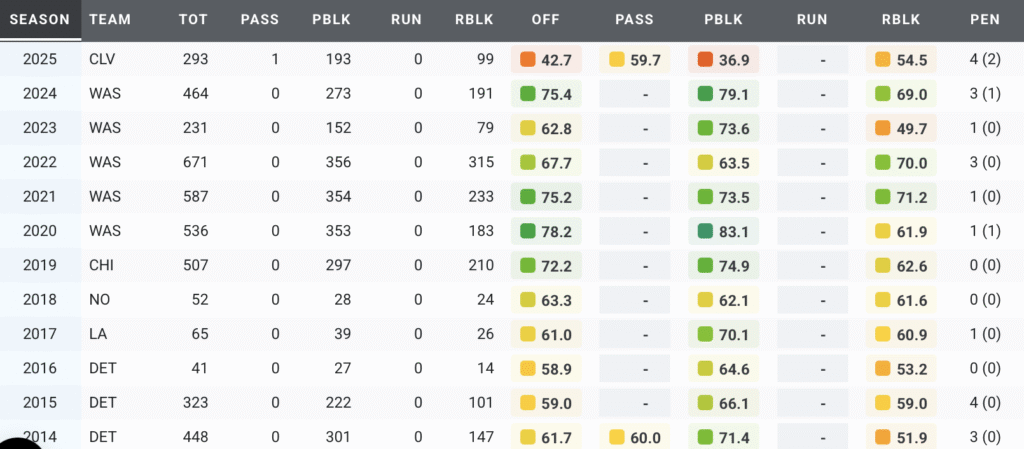
The Browns' offensive line requires a major overhaul this offseason. The unit was among the worst in the NFL in 2025 with a 49.7 PFF pass-blocking grade, the lowest in the league. A large chunk of the team's offensive linemen are free agents this offseason, but the changes shouldn’t stop there. If the Browns want to free up some more cap space, they’ll move on from Cornelius Lucas.
The veteran swing tackle was poor for the first half of the season before suffering an injury. Lucas registered a 42.7 PFF grade in 2025, and the Browns would save $1.85 million by moving on from him.
Cornelius Lucas' Career PFF Grades
Dallas Cowboys: S Malik Hooker
In terms of cap space, moving on from Kenny Clark would yield the Cowboys more room to make some deals. But Clark could still be an important interior presence on the defensive line along with Quinnen Williams. Instead, the choice here is safety Malik Hooker. The former first-round pick was a part of a Cowboys secondary that needs a revamp in 2026.
Hooker earned a 60.8 PFF grade but would save nearly $7 million in cap space. He’ll be 30 years old heading into the new season but could land with a new team in free agency.
Denver Broncos: S Brandon Jones
The Broncos will have some tough decisions to make in 2026, especially if they have designs on extending Bo Nix in the near future. If that’s the case, veteran safety Brandon Jones could be a surprising cut candidate this offseason. Jones compiled a 64.2 PFF grade in 2025, but with sufficient depth in the secondary, the Broncos could move on from him.
Cutting Jones would save the Broncos $7.5 million and allow them a little more flexibility to approach younger additions in free agency or set up for some timely extensions in the near future.
Detroit Lions: C Graham Glasgow
The interior of the Lions’ offensive line was a weak spot in 2025, and tweaks could be coming. Veteran center Graham Glasgow especially underwhelmed this season. His 56.8 PFF grade was his lowest since his rookie season. If a retool is coming, expect Glasgow to be sacrificed.
Glasgow will be 34 at the start of the 2026 NFL season, and the Lions can save $5.5 million by cutting the former Bronco and start to build their offensive line back into a strength once again.
Green Bay Packers: DI Karl Brooks
There aren’t many obvious cut candidates for the Packers heading into the offseason. Veteran running back Josh Jacobs is an option, but he still has more than enough left to give the Packers’ offense, especially after posting an 85.8 grade this past year. Karl Brooks was the Packers’ sixth-round pick in the 2023 NFL Draft and could be the name to watch.
Brooks played to a 46.3 PFF grade in 2025, and moving on from him would save the Packers a modest but equally important $3.6 million in cap space.
Houston Texans: RB Joe Mixon
From the not-so-obvious to the glaringly clear. Joe Mixon missed the entire 2025 NFL season with a foot injury and reportedly hadn’t been seen by the team in some time.
In his heyday, Mixon was a reliable starter and likely would have helped a bad Texans running game in 2025 if he had seen the field. But a whole season without football, and potential cap savings of around $8 million if the Texans decide to move on from him, mean that Mixon will likely be hunting for a new team this spring.
Indianapolis Colts: LB Zaire Franklin
Zaire Franklin has been a leader for the Colts’ defense over the last few years and is naturally a fan favorite, but he suffered a drop in production in 2025. His 38.4 PFF grade was the lowest of his career and 87th out of 88 linebackers, and Indianapolis could look to cut Franklin this offseason.
Moving on from Franklin would leave a hole in the middle of the team’s defense, but it would save $5.7 million in cap space.
Jacksonville Jaguars: S Eric Murray
Like a few other teams across the NFL, the Jaguars don’t have too many cut candidates on the roster. One name that does creep up is veteran safety Eric Murray.
Murray played in 12 games for the Jaguars in his first season with the team after signing a three-year, $19.5 million contract last offseason, but the breakout of Antonio Johnson means Murray might not have as big a role in 2026 and 2027. If that’s the case, moving on doesn’t open up too much cap space — just $759k — but every little bit helps, and it would free up a roster spot for another position of need.
Kansas City Chiefs: CB Kristian Fulton
Kristian Fulton has bounced around the league in the last three seasons after a strong start to his NFL career. The former second-round pick signed a two-year contract with the Chiefs last offseason, but was a healthy scratch at times during 2025 while also dealing with an ankle injury. A fresh free-agent signing being a healthy scratch is ominous.
Cutting Fulton would incur an $8 million dead cap hit, but would also save $5 million against the cap. Things haven’t worked out for Fulton, who played just 208 snaps for Kansas City in 2025.
Las Vegas Raiders: QB Geno Smith
How much of the blame does Geno Smith deserve for the Raiders’ abysmal season in 2025? There’s no right answer, but what is clear is that the Raiders will have a new starting quarterback in 2026.
If that’s the case, Smith could be on the move. The Raiders will explore a potential trade for the veteran, but if that doesn’t arise, they could cut him — which likely suits both parties. Cutting Smith would leave the Raiders with a dead cap hit of $18.5 million in 2026, but would also save them $8 million. Smith would get to play football elsewhere, and the Raiders can prepare for a new era.
Los Angeles Chargers: TE Will Dissly
Will Dissly played in just nine games for the Chargers in 2025, with injuries slowing him down. The emergence of rookie tight end Oronde Gadsden II also meant that Dissly was sparsely used when he returned to the lineup.
The Chargers could move forward with Gadsden as their starting tight end in 2026, which means Dissly could be on the way out. If the Chargers cut Dissly, who is two years into a three-year, $14 million contract, they’ll save $4 million in cap space while incurring $1.5 million in dead money.
Los Angeles Rams: CB Darious Williams
The Rams were one of the best all-around teams in the NFL in 2025, but their one weakness was the secondary. Veteran cornerback Darious Williams was a decent role player, compiling a 64.7 PFF grade in 2025. If the Rams need a cut candidate, he potentially fits the bill — especially if reinforcements are coming to the secondary.
Williams is heading into the final year of his three-year, $22.5 million contract. Cutting ties with him would provide Los Angeles with $7.5 million in cap space, with a low dead-money hit of $1.1 million.
Miami Dolphins: QB Tua Tagovailoa
New Dolphins general manager Jon-Eric Sullivan suggested that nothing is off the table in terms of quarterback Tua Tagovailoa, including a trade. If the Dolphins do have designs on moving on from Tagovailoa this offseason, a trade makes the most sense, but it also means they’ll potentially have to give up a pick to sweeten any deal. If that doesn’t come to fruition, they could still cut the cord.
Tagovailoa is in the middle of a four-year, $212 million extension, and moving on from him won’t be cheap. If the Dolphins release him, they'll be hurt financially, taking on $67.4 million in dead money if they’re able to designate him as a post-June 1 cut. If not, they’ll struggle to make it happen.
Minnesota Vikings: TE T.J. Hockenson
Once a tight end at the top of his game, T.J. Hockenson hasn’t been the same player since suffering a torn ACL and MCL in 2023. Hockenson played the entire 2025 season, compiling a 61.2 PFF grade — his lowest since his rookie year — while catching 51 passes for 438 yards and three touchdowns. The veteran could be on the move this offseason.
The Vikings are well over the NFL’s salary cap and have some decisions to make, and cutting Hockenson could be one of them. They’ll save $8.9 million while taking on $12.4 million in dead money if they do.
New England Patriots: EDGE Anfernee Jennings
Anfernee Jennings was an early trade candidate at the start of the Mike Vrabel era. After staying put, he notched a 67.1 PFF grade in 2025, coming up with 20 pressures from Week 12 until the Super Bowl. Jennings was an important pass-rusher at times, but the team could still move on from him this offseason.
Jennings is just one of a few cut candidates who make sense for the Patriots. Releasing him will save just $3.8 million, but it might be necessary if the team hands K’Lavon Chaisson a big extension.
New Orleans Saints: RB Alvin Kamara
The Saints are the unfortunate poster boys of cap malfeasance. They’ve kicked the can down the road for so long and enter the offseason with negative cap space. There aren’t many cut candidates that make sense, but cutting veteran running back Alvin Kamara could be the solution.
Kamara’s 51.7 PFF grade was dead last among 59 running backs in 2025, and by far the lowest of his career. His production has dropped off in recent seasons. If the Saints want to get younger and save $8.5 million, they could designate Kamara as a post-June 1 cut. This would be the avenue to take.
New York Giants: G Jon Runyan
The Giants had little guard depth in the 2025 season, meaning veterans Greg Van Roten and Jon Runyan started the entire year and each played over 1,000 snaps. Runyan’s 52.9 PFF grade was 65th out of 79 guards, and though he could remain as valuable depth for an offense that needs it, the Giants could aim to move on from him and address their needs at guard in the draft and free agency.
Cutting Runyan would save the Giants a valuable $9.25 million as they veer toward free agency. There’s every chance they could take an offensive lineman in their first few picks, even with the No. 5 selection in the 2026 NFL Draft.





New York Jets: QB Justin Fields
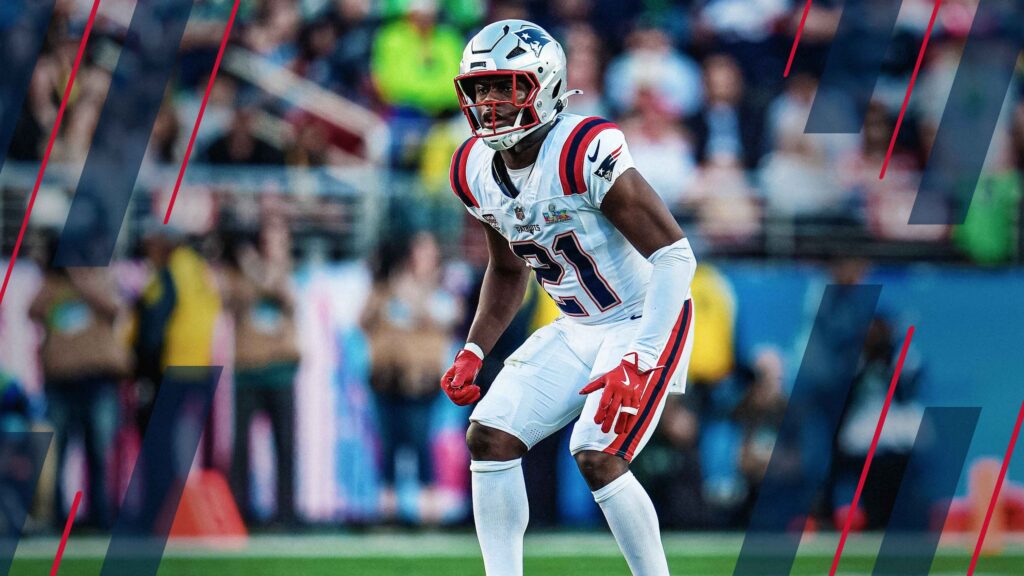
The Jets signed Justin Fields hoping that he could, at the very least, be a bridge starter to their next long-term quarterback. It took only nine starts to figure out that wouldn’t be the case. Fields’ 67.3 PFF grade was 30th out of 38 quarterbacks, and the former No. 11 pick recorded just 6.2 yards per pass attempt — the lowest of his career.
A fresh start across the board is needed. Fields likely doesn’t have any trade suitors, so cutting him and taking on $22 million in dead money is the possible move. If the Jets wait until after June 1st, those cap savings go up to $10 million. Either way, Fields hits the open market once again.
Philadelphia Eagles: CB Michael Carter
The Eagles enter the offseason with notable doubts, but Howie Roseman and the front office always find a way to make things work out. Cutting Michael Carter II is an easy way to free up some cap space. The former fifth-round pick was traded to the Eagles, from the Jets, at the 2025 trade deadline, but only played meaningful snaps on defense in two games, compiling a 78.9 PFF grade.
Help is needed in the secondary, and Carter playing more frequently could provide some assurances on that end, but the Eagles would save $8.7 million if they were to move on from Carter. There aren’t many other avenues for them to create cap space outside of restructures.
Pittsburgh Steelers: TE Jonnu Smith
Whether it’s Jalen Ramsey, Patrick Queen, or Jonnu Smith, the Steelers have a few different paths they can take to open up cap space. Ramsey and Queen are still potential contributors to the Steelers’ defense, but Smith’s lack of production, and a new head coach and offensive coordinator means he could meet his maker. Smith averaged 4.6 yards after the catch per reception in 2025, the lowest mark of his career, and his 46.8 PFF grade was 74th out of 75 tight ends.
Cutting Smith would take on $3.8 million in dead money but free up $7 million in cap savings. He still has a lot to give somewhere else, but with Pat Freiermuth and Darnell Washington both on the roster, and Arthur Smith out the door, a place for Smith is harder to justify.
San Francisco 49ers: WR Brandon Aiyuk
The repercussions of cutting Brandon Aiyuk will be complicated, but it’s as good as done. The 49ers and Aiyuk’s falling out has been on the horizon for a while. Aiyuk missed the entire 2025 NFL season and had his guarantees for the year voided, so it’s not clear just how much the 49ers will save, but there’ll likely be a heavy amount of dead money.
Aiyuk compiled a 74.6 PFF grade in seven games in 2024 before tearing his ACL and MCL against the Chiefs. What comes next is anyone’s guess.
Seattle Seahawks: QB Drew Lock
The Seahawks don’t have any glaringly obvious cut candidates. They could move on from Anthony Bradford, who compiled a 48.9 PFF grade in 2025, but the 2023 fourth-round pick could yet improve. Moving on from backup quarterback Drew Lock could be a lever to pull to free up some cap space. Lock had just three pass attempts in 2025, and parting ways with him would save $2.25 million.
The move would also allow 2025 third-round pick Jalen Milroe to take on the role as the team’s primary backup quarterback.
Tampa Bay Buccaneers: LB Anthony Nelson
The Buccaneers feel like a team in limbo. They could be on the verge of a reset in the next few seasons, or could kick on and continue to challenge in the NFC South. Either way, they’ll be looking to create as much cap space as possible. It isn’t entirely possible, unless the team feels compelled to move on from Vita Vea. They shouldn’t. Instead, Anthony Nelson’s $1.9 million in cap savings could provide some respite.
Nelson played his lowest snap count since 2020 this season, earning a 65.5 PFF grade while generating 23 pressures and three sacks. The Buccaneers need help on defense, and Nelson has provided valuable special teams reps, but it’s an avenue they can explore.
Tennessee Titans: CB L’Jarius Sneed
The Titans made a big splash trading for L’Jarius Sneed ahead of the 2024 NFL season, but unfortunately, the move just hasn’t worked out. Sneed has played just 12 games in two years for the Titans and missed the entire second half of the 2025 NFL season. If Sneed can’t stay healthy, then it’s time to cut the cord.
Cutting him will incur a dead money charge of $8.1 million, but will give the Titans savings of $11.4 million. Sneed compiled a 50.4 PFF grade in his seven games played in 2025.
Washington Commanders: CB Marshon Lattimore
Injuries have limited Lattimore’s impact since arriving in Washington, and the former Defensive Rookie of the Year suffered a torn ACL against the Seahawks in 2025, cutting his season short. In nine games, Lattimore’s 52.1 PFF grade was the lowest of his career, but the veteran cornerback still had five PBUs.
Moving on from him can’t happen without an injury settlement, but if it happens, the Commanders would save $18.5 million in cap space without incurring any dead money.

 © 2026 PFF - all rights reserved.