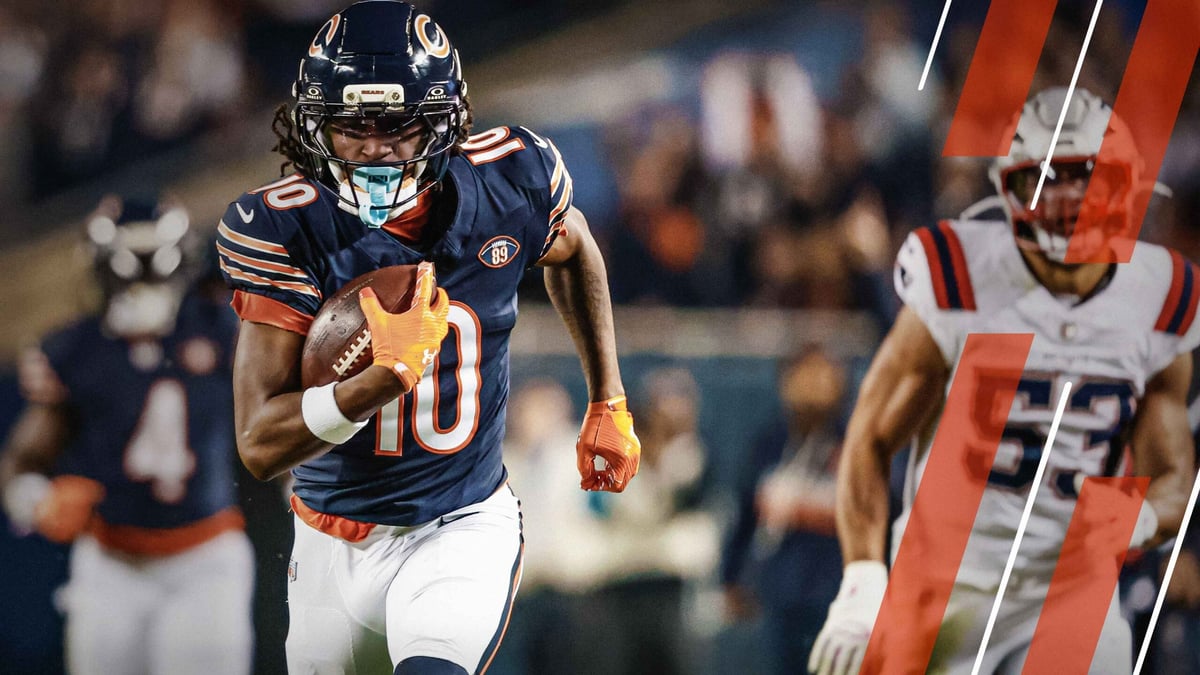
- Luther Burden III and Colston Loveland live up to their offseason hype: The two combined for nearly 200 yards and two touchdowns to lead the Chicago Bears offense.
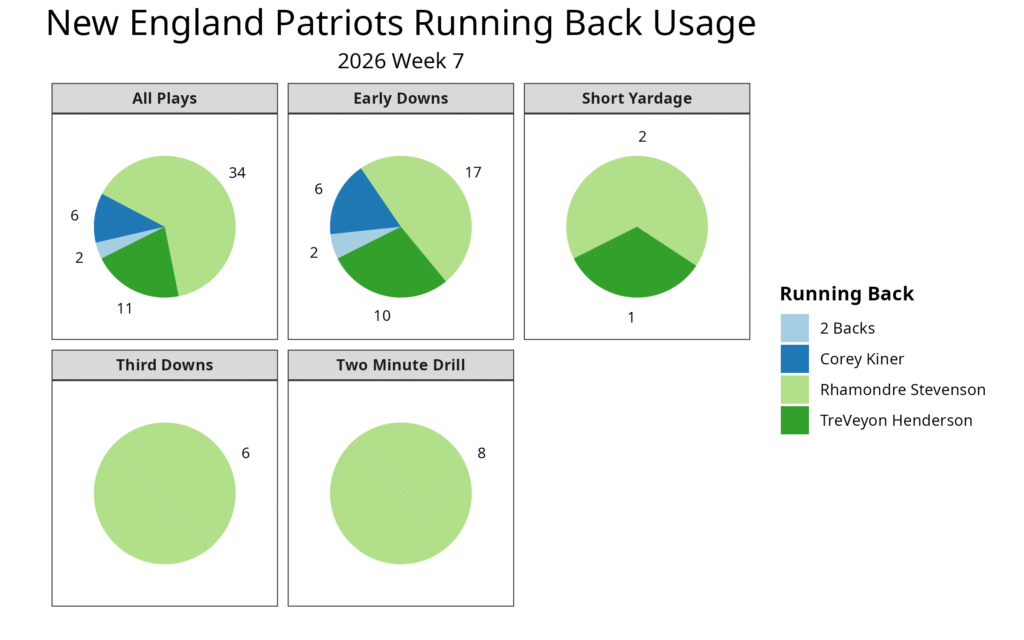
- Rhamondre Stevenson leads a three-man rotation: While the New England Patriots running back didn’t do a lot on the ground, he led the Patriots in receiving yards at 92, in part thanks to a touchdown to end the first half.
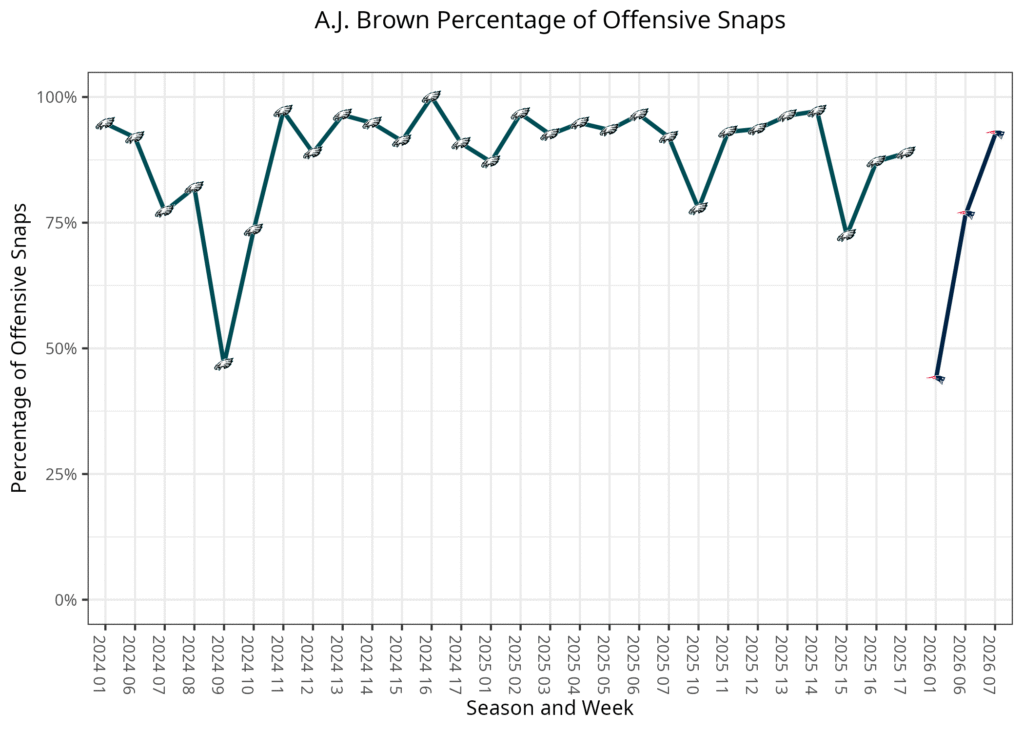
- A.J. Brown’s playing time is back, but not his production: Brown’s snap rate was the highest it’s been since he joined the Patriots, but he only caught three passes for 48 yards.

PFF's fantasy football recap focuses on player usage and stats, breaking down all the vital information you need to achieve fantasy success in 2026.
For fantasy players looking for additional data and tools, PFF+ provides access to fantasy and betting resources, the Mock Draft Simulator and more for $9.99 per month or $99.99 per year. Those who want to dive even deeper can sign up for PFF Pro, which comes with an upgraded Premium Stats Pro experience, revamped player and team pages, enhanced data and visualizations and programmatic data access for modeling.
New England Patriots @ Chicago Bears
Corey Kiner remains part of the running back rotation for New England: The former Arizona Cardinals running back has turned the Patriots' backfield into a three-man committee.
The Patriots were unsettled at their third running back spot during training camp, leading the team to trade for Kiner on cutdown day. He played eight snaps in Week 1 while TreVeyon Henderson was out with injury. Kiner played four normal snaps and 10 garbage time snaps over the following three weeks.
Henderson suffered a high ankle sprain in Week 5, leading Kiner to play 15 snaps. While Henderson was able to play last week, Kiner was surprisingly still part of the rotation with 12 snaps. All of those snaps occurred in the last 17 minutes of the game, but he played well in his opportunity.
This week, New England continued to play consistently on third downs, during two-minute drills and in short-yardage situations. Outside of that, New England often had one primary running back on each drive. Stevenson handled the first drive, Henderson the second and Kiner the third. Kiner only played two snaps on that possession, so New England brought him back on the fifth drive. The Patriots were playing from behind throughout the second half, causing the team to primarily focus on Stevenson.
So far, this has only hurt Henderson’s playing time, and not Stevenson’s. Henderson was a full participant in practice all week, so it’s unclear if Kiner’s increased usage is just related to Henderson’s injury or if Henderson just has a smaller role now. There were also times last season when Henderson made some nice plays, but then saw a decreased workload for several weeks in a row.
As long as this trend continues, Stevenson can remain in fantasy starting lineups as long as the matchup is fine, while Henderson can’t be in starting lineups. If this sustains after New England’s extended time off, Henderson can be released in some smaller leagues.
Patriots adjust without Romeo Doubs: The Patriots' second wide receiver option landed on injured reserve on Monday.
The Patriots' wide receiver room only stayed intact a few quarters in Week 1 before the depth chart started taking hits. A.J. Brown was placed on injured reserve after Week 1, Mack Hollins a few weeks later and now Doubs, their top three outside wide receivers.
The good news is Brown, who only played 77% of snaps last week, was a full participant in practice on Wednesday. He was able to play a more regular workload for this matchup, only occasionally leaving the field for short-yardage, obvious run situations. Similar to last week, once Doubs left with an injury, Efton Chism III played in 12 personnel and some of the early-down 11 personnel snaps, while Kyle Williams played more of the clear passing-down sets. This was similar to how Hollins and Doubs played in Week 1, with Chism in Hollins' role and Williams in Doubs' role.
Douglas has spent all season as the Patriots' slot receiver in 11 personnel. He received a few snaps in 12 personnel after not playing at all in 12 personnel last week.
As long as New England's wide receivers continue in this role, it will be impossible to trust anyone other than Brown for fantasy purposes. In this game in particular, it was Rhamondre Stevenson and the tight ends who garnered most of the receiving production.
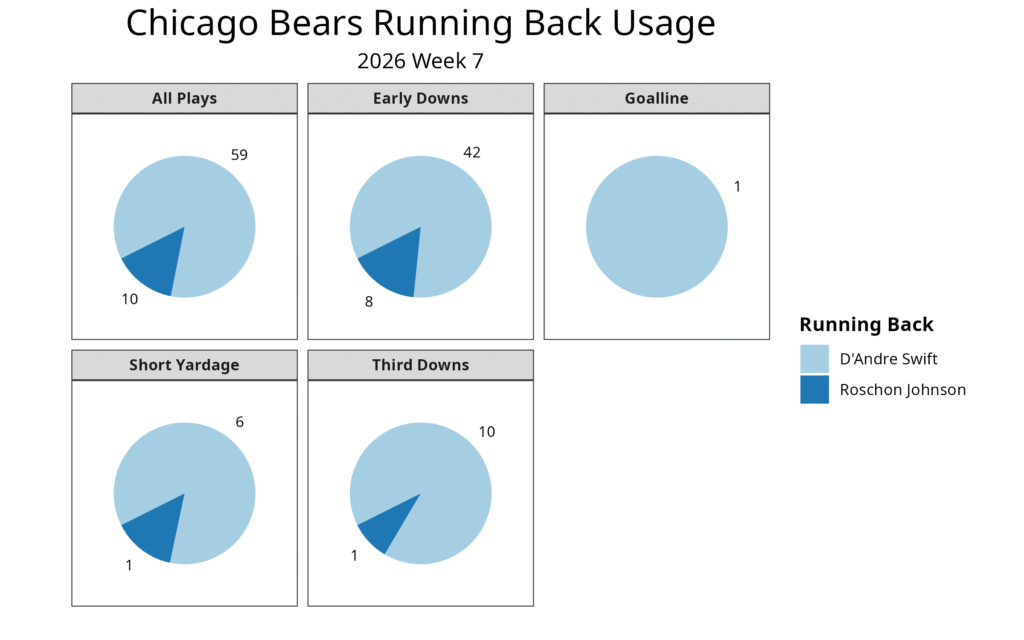
Chicago leans more on D’Andre Swift: Swift reached a season high in snap rate.
Swift typically heads a two-man rotation with Kyle Monangai, with the two being used interchangeably. Monangai has missed the last three games due to thumb and toe injuries, and wasn’t able to practice all week. Unfortunately, Swift also hasn’t been 100%, appearing on the injury report heading into Weeks 4 and 5 with hip and knee injuries.
Swift’s playing time dropped from 65% over the first three weeks to 50% over the last three, despite not having to rotate with Monangai. Roschon Johnson has been the backup running back, while Zavier Scott was elevated from the practice squad again to be the Bears' third back.
Swift wasn’t on the injury report this week, so he stayed on the field more often. He played each of the first 20 snaps of the game over the first four drives despite taking a helmet to the knee. Swift was already a safe start, but now his upside will be even higher, at least until Monangai is closer to 100%. Some are optimistic Monangai will be ready next week.
Those who were desperate for a running back may have started Johnson. Johnson shouldn’t be in starting lineups regardless of where he sits on the Bears‘ depth chart next week.
Monitor Cole Kmet’s health: Kmet suffered a knee injury late in the fourth quarter and was carted off the field.
Kmet has spent the season as Chicago’s second tight end, playing 63% of the Bears' offensive snaps over the first six weeks. He’s played 100% of 12 and 13 personnel snaps, and has taken some reps from Loveland on early downs. He caught a touchdown in Week 1, but otherwise hasn’t been fantasy-relevant. He set season highs in receptions (3) and yards (28) in this game.
Luckily, Chicago invested a third-round pick in tight end Sam Roush, who has played 100% of the 13 personnel snaps this season. He slid into Kmet’s role to close out this game and will allow Chicago to continue to play a high rate of 12 personnel for as long as Kmet is out. Chicago can still use 13 personnel if it wants, with Stephen Carlson on the practice squad or other free-agent options.
Kmet being out would have a minimal fantasy impact on the rest of the Bears' offense. It could mean potentially a little less rotating out Colston Loveland in 11 personnel, and possibly less 13 and 12 personnel, leading to a little more playing time by Luther Burden III and Kalif Raymond.
Miscellaneous Notes
- Luther Burden III saw an uptick in snaps in 12 personnel, even though Kalif Raymond is still playing more snaps. Burden’s route participation in this game was similar to his season average, around two-thirds of passes. His target rate was lower than his season average; he just made big plays whenever he was given a chance.
- Colston Loveland’s playing time has been consistent all season, but his target rate has been much higher the last two weeks than his average over the first five.
- The Patriots continued their recent tight end rotation, with Hunter Henry leading in 11 personnel on early downs and dominating snaps on third down, while the Eli Raridon joined him significantly in 12 personnel. Raridon’s target rate was higher than usual, sparking his big game. His route participation isn’t good enough to start considering him in fantasy starting lineups, but heRaridonremains the top tight end to target for someone who could break out in the second half of the season.
- New England tight end Tanner Arkin was back in the lineup after being a healthy inactive last week.
Table Notes
• Snaps include plays called back due to penalties, such as offensive holding or defensive pass interference. The other three stats exclude these plays.
• Targets may differ from official NFL sources. The most likely discrepancy is a clear thrown-away pass, where the NFL may give the target to the nearest receiver, while this data will not.
• Carries are only on designed plays. Quarterback scrambles won’t count toward the total number of carries in the game.

 © 2026 PFF - all rights reserved.