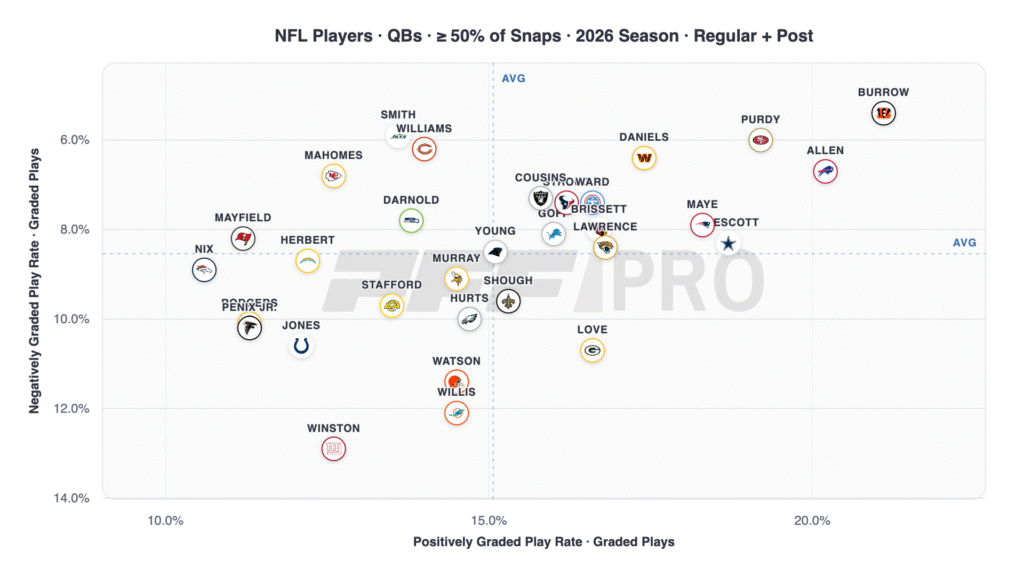
- A nightmare year for Justin Herbert: Instead of possibly stepping up to the MVP level, Herbert has instead produced the third-worst turnover-worthy play rate among qualified passers.
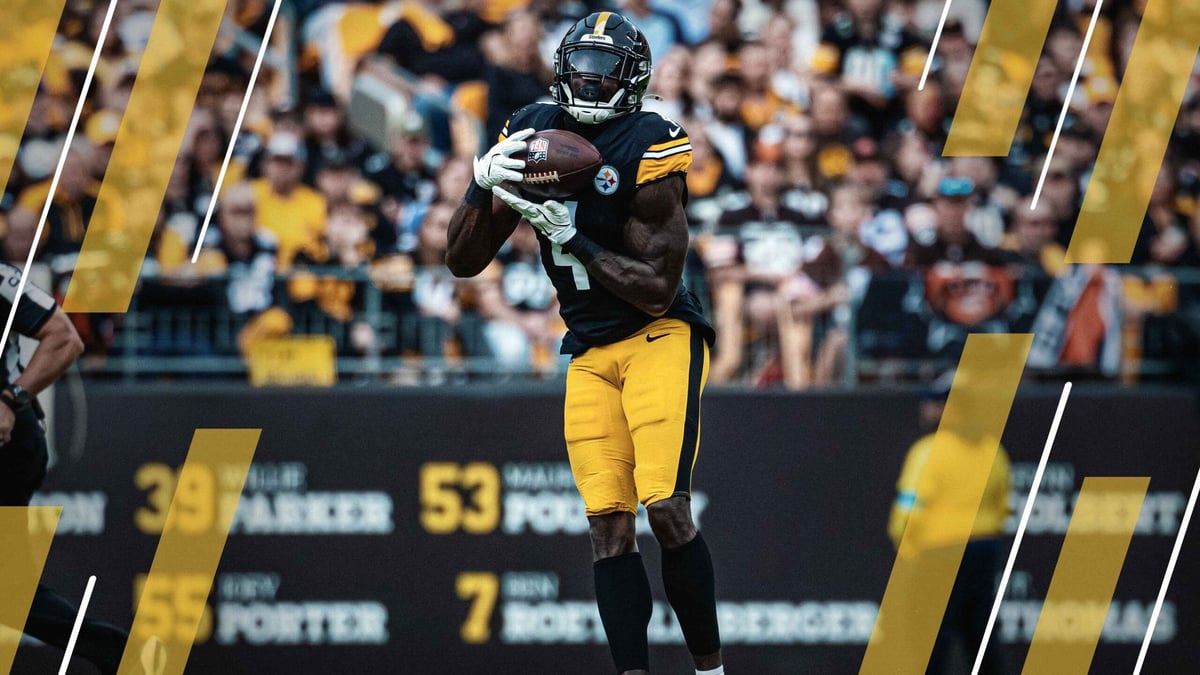
- D.K. Metcalf has been a problem for the Steelers: Metcalf's lofty drop rate and poor separation have held back a stagnant passing game.
- Two young Eagles defenders experiencing rare struggles: Cooper DeJean has been vulnerable in coverage and as a tackler, while Jalen Carter has not affected quarterbacks at an efficient level.
Arguably the best part of every NFL season are the players and teams that find ways to stand out, making a name for themselves in a league where the elite often remain entrenched. For instance, the emergence of players like Ventrell Miller and Caleb Williams, not to mention teams like the Vikings and Raiders, has added an unexpectedly fresh feel to the 2026 season.
On the flip side, every year inevitably brings names who fail to reach lofty expectations. From injuries to different systems to simply worse individual results, a perfect storm can brew that results in a star player not matching their usual level of performance.
Through eight weeks of the 2026 campaign, these 10 players have turned in significantly worse showings than we’ve grown accustomed to seeing in recent years. While it’s not too late to rewrite the script, it’s undeniable that their mid-season results are not what they anticipated.
QB Justin Herbert, Los Angeles Chargers
For the vast majority of Herbert’s career, he played like a top-tier quarterback held back by limited schemes. Over his first six seasons, Herbert notched at least a 77.9 overall PFF grade every time, finishing with a turnover-worthy play rate no higher than 2.6% while making throws that were borderline robotic week in and week out.
Expectations were sky-high for Herbert pairing with offensive mastermind Mike McDaniel, but the results have been cataclysmic for the 0-7 Chargers. Herbert’s 42.6 PFF passing grade is the worst among qualified passers, and his 6% turnover-worthy play rate is the third-highest in that group.
While Herbert’s surroundings have done him no favors, he’s also made consistent head-scratching decisions in a system that hasn’t melded well at all. It’s definitely not yet time to fully write off the 28-year-old talent, but his 2026 season is at least raising serious questions about his future — including whether or not he’ll remain in Los Angeles next season.
WR D.K. Metcalf, Pittsburgh Steelers
Metcalf has been a mercurial player in the past, but his talent has generally risen above all. Over the first seven seasons of his pro career, the former Seahawk has notched at least a 71.1 overall PFF grade, including in his first year in Pittsburgh in 2025.
However, Metcalf has been one of the league’s least effective receivers in 2026 despite his gaudy $33 million annual average value. His 59.9 overall and 60.2 PFF receiving grades are each last among qualified wideouts. Drops have been the main culprit, with Metcalf failing to reel in 15.4% of his catchable targets — the second-highest mark at the position. On top of that, his failure to consistently separate has him averaging just 1.20 yards per route run while simultaneously not bringing in contested catches.
When the Steelers surrendered a second-round pick for Metcalf, they expected him to be a game-changing player. Instead, that deal is looking like a sunk cost, so much so that Pittsburgh will likely look to find even more receiver help both before Nov. 10 and in the coming offseason.
CB Cooper DeJean, Philadelphia Eagles
After falling to the second round of the 2024 NFL Draft, DeJean burst onto the scene and immediately played like one of the better defensive backs in football. Over his first two seasons, his 87.1 overall PFF grade was the second-best among all cornerbacks, a mark upheld by limiting receptions in coverage and mixing in splash plays as a run defender with thorough tackling.
Things have fully flipped for DeJean in 2026, though. He’s notched a 54.6 overall PFF grade, ranking 101st out of 131 qualified defensive backs. The big issue has, paradoxically, been DeJean’s tackling, with his 12 missed tackles tied for the league lead. On top of that, DeJean has let up a 101.4 passer rating into his coverage, and he’s surrendered three touchdowns — two more than he had prior throughout his whole career.
If DeJean continues to underperform, the Eagles will face a crossroads with him this offseason when he’s eligible for an extension. In many ways, he’s a sleeper to be dealt at the trade deadline for a franchise looking to reload amid a disaster season.
QB Sam Darnold, Seattle Seahawks
Darnold’s past two seasons were one of remarkable individual triumph. Despite playing with two different teams, he finally put his tremendous talent together, exorcising the demons that haunted most of his career. Indeed, Darnold’s 81.9 PFF passing grade ranked eighth among passers with 500-plus dropbacks from 2024-25, where his 68 big-time throws trailed only Matthew Stafford and Josh Allen.
After winning the Super Bowl in February, Darnold’s play has since cratered. His 63.5 passing mark this year is 22nd, tallying more turnover-worthy plays (12) than big-time throws (11). Likewise, Darnold hasn’t been nearly as surgical, owning the fourth-highest uncatchable throw rate (21.9%) among qualifiers while placing 21st in completion percentage over expectation (-0.6%).
The Seahawks have various reasons for sitting at 4-4 through Week 8, from a stagnant run game to a new scheme to an offensive line that’s below-average in pass protection. However, Darnold is also front and center for the team’s title hangover — and his play looms large in the second half if Seattle is to qualify for the postseason.
Dl Jalen Carter, Philadelphia Eagles
Much like DeJean, Carter had played like an outright star from the get-go for Philadelphia’s defense. From his debut in 2023 until last season, Carter’s 89.5 PFF pass-rush grade was the fifth-best among qualified interior defensive linemen, and his 13.5% pass-rush win rate sat 11th. That work getting after the quarterback was enough to mitigate below-average run defense.
Yet Carter has not found the same type of efficacy as a pass-rusher in 2026. His 57.1 PFF pass-rush grade is 40th out of 48 qualified interior defenders, and his 5.9% pass-rush win rate ranks 44th. Coupled with a 26.1% missed tackle rate and a 58.5 PFF run-defense grade, Carter has simply not met the standards accompanying the four-year, $152 million extension he signed this offseason.
Based on his efforts as well as his contract, Carter’s name continues to be floated in trade talks before Nov. 10. It’s not overwhelmingly likely that Philadelphia would suddenly give up on the 25-year-old so soon after rewarding him with a record deal, but he certainly bears lots of blame for the Eagles’ defense ranking 29th in pass-rush grade and 28th in EPA per play.
CB Jaylon Johnson, Chicago Bears
From 2023-24, Johnson played like one of the premier cornerbacks in football. His 1.20 PFF Wins Above Replacement were the fifth-most at the position, powered by a cumulative 90.9 PFF coverage grade — the third-best among any corner in the league.
Johnson’s 2025 season didn’t go according to plan, in part due to injury but also individual struggles. Things have only been exacerbated in 2026, with his 32.1 PFF coverage grade the second-worst among 75 qualified cornerbacks. Johnson’s stats of a 71.9% completion percentage allowed, 375 yards into his coverage and 16.3 yards allowed per catch are all bottom-12 marks at the position.
The Bears gave Johnson a four-year, $76 million extension in March 2024, seemingly locking down one of the top cornerbacks in football. Now, the deal is aging horrifically, leaving Johnson as a legitimate vulnerability on a team that has the talent to compete for the Super Bowl.
EDGE Jared Verse, Cleveland Browns
Point blank, there weren’t many more dominant edge defenders than Verse over his first two seasons as a pro. From 2024-25, his 89.7 overall PFF grade ranked 11th at the position, and his 17% pressure rate tied for fifth among several elite counterparts.
After landing in Cleveland as part of a summer blockbuster, Verse has regressed in a major way. He’s earned only a 59.1 PFF pass-rush grade, collecting just 13 pressures over 200 pass-rushing snaps. Likewise, Verse’s 10.4% pass-rush win rate is in the 46th percentile.
When the Browns landed Verse via their Myles Garrett trade, they felt confident they had acquired a young, star replacement for the two-time Defensive Player of the Year. But as of now, Verse has failed to represent any kind of surplus, let alone equivalent, value as Cleveland continues its rebuild.
RB J.K. Dobbins, Denver Broncos
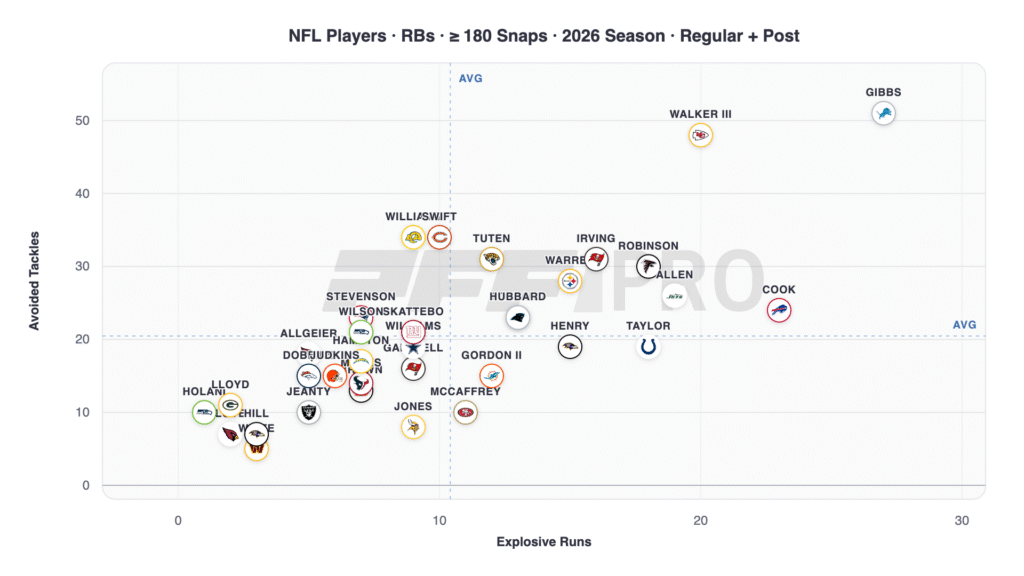
Dobbins was limited to 341 total snaps in his first season with the Broncos, but he was dynamic when on the field. He generated an 80.8 PFF rushing grade, forcing 32 missed tackles and accumulating 21 explosive runs over 153 attempts.
Despite staying healthy and appearing in every game this year, Dobbins has fallen to one of the league’s least efficient rushers. His 57.8 PFF rushing grade ranks 24th out of 26 qualified backs, and his 2.43 yards after contact per attempt are last. Dobbins has also ripped off just five runs of 10-plus yards, tied for the fewest in the group.
The Broncos bestowed upon Dobbins a two-year, $16 million extension to keep him this offseason, a deal that already looked steep based on his extensive injury history. Not even one year into that contract, the team has continued to demote Dobbins in favor of its younger backs while possibly remaining in the hunt for extra resources at the position.
CB Kamari Lassiter, Houston Texans
On a Texans defense ripe with talent everywhere, Lassiter still made a name for himself with how fantastic he was. From 2024-25, Lassiter sat seventh in PFF coverage grade (87.0) and third in passer rating against (66.2) among qualified cornerbacks, forming one of the sport’s best duos with Derek Stingley Jr. on the outside.
Lassiter has not sustained that level of play whatsoever in 2026. His coverage grade has plummeted to a 49.5, ranking 65th out of 75 qualified corners. Likewise, Lassiter’s 404 yards surrendered are the second-most at the position, and his 114.8 passer rating when targeted is 14th-highest.
The ineffectiveness of Lassiter has not only prompted the Texans to slide to 24th in EPA per play and PFF coverage grade, but also raises curiosity about if he’ll still receive what was slated to be a market-resetting extension this coming summer.
C Tanor Bortolini, Indianapolis Colts
Bortolini may not have been as recognizable as the other names on this list, but his 2025 season was a remarkable one. In his second year, Bortolini finished as the league’s third-highest-graded center (82.6), notching an 88.1 PFF run-blocking grade while ending as one of six qualifiers at the position to not let up a sack.
In Year 3, Bortolini has hit a wall. His 48.6 overall PFF grade is 31st among centers, and he’s posted a sub-49.0 grade in both pass- and run-blocking. Only three centers have let up as many sacks as Bortolini’s two, and his 12 pressures also tie for fourth-most.
The Colts have a laundry list of problems behind their 2-6 start, but Bortolini’s woes have not helped. His step back comes at a particularly inopportune time along an offensive line that just traded away its best player and is seeking long-term starters at multiple positions.

 © 2026 PFF - all rights reserved.