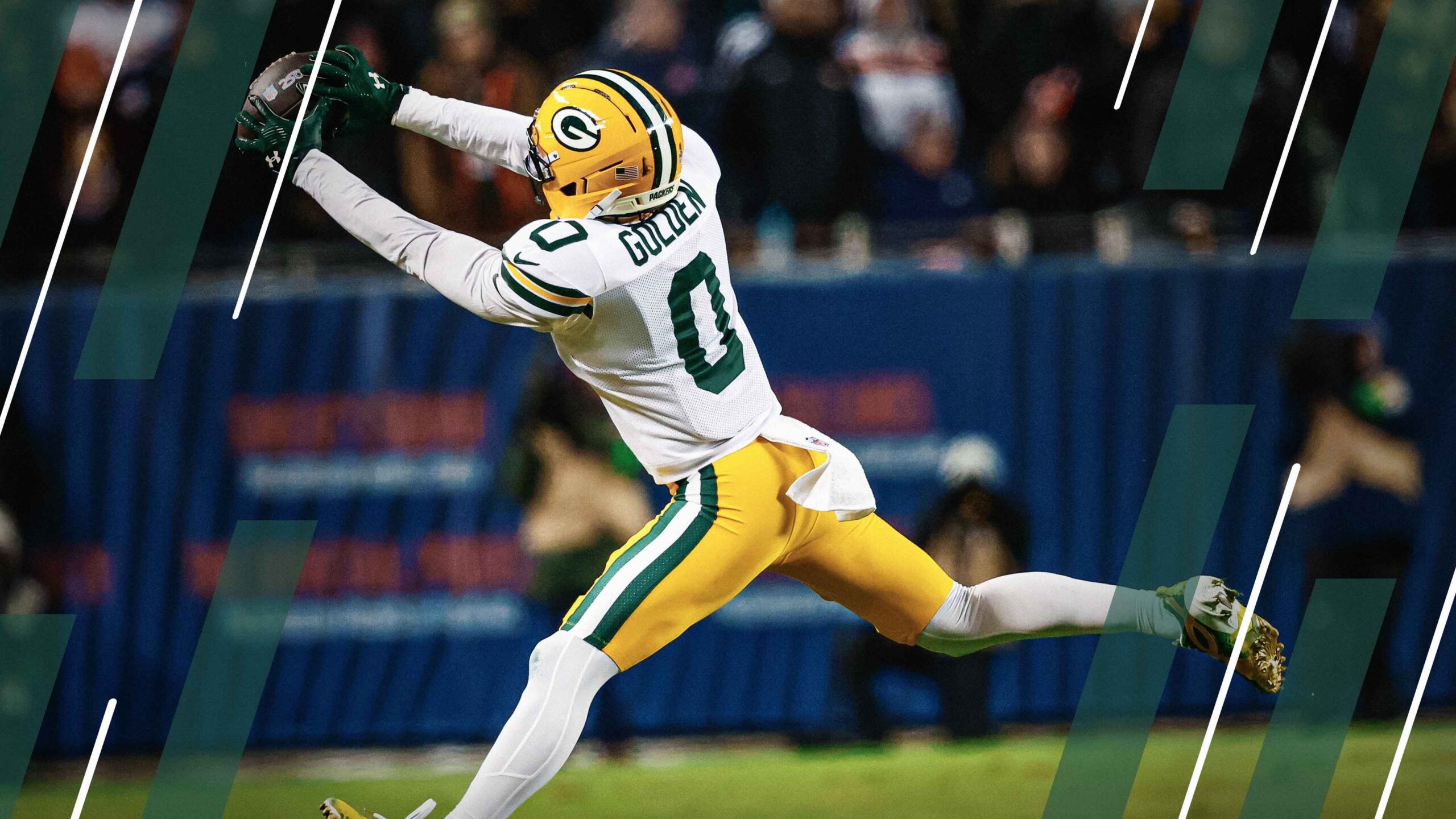
- The Packers are counting on Matthew Golden: Green Bay's new-look receiving corps means that Golden will need to improve from his disappointing rookie season.
- Two young Bengals are in the spotlight: Shemar Stewart and Demetrius Knight Jr. look to be part of the solution on a retooled Cincinnati defense.
- Last year's top two picks aim to become unbridled stars: The Titans' Cam Ward and the Jaguars' Travis Hunter both have questions to answer in their sophomore years.

An NFL player’s rookie season isn’t always a strong indication of their career trajectory. From newcomers who didn’t fare great — like Peyton Manning and Josh Allen — to those who hardly saw the field — like Aaron Rodgers and Patrick Mahomes — it’s clear that a first year in the pros only holds so much weight.
At the same time, today’s league encourages and often relies upon instant success. Players nabbed with high draft picks are intended to change organizations almost overnight. Just last season, all of Colston Loveland, Tetairoa McMillan and Carson Schwesinger did that by earning top-16 overall PFF grades at their respective positions, solidifying themselves as cornerstones.
While the aforementioned trio dominated, other classmates didn’t start off on the foot they wanted. These 10 sophomores are under extra scrutiny in 2026.
WR Matthew Golden, Green Bay Packers
When the Packers selected Golden with the 23rd overall pick, Green Bay fans rejoiced that the team had finally added a marquee weapon. Yet Golden’s rookie season didn’t follow suit.
In the regular season, Golden posted a 68.1 PFF receiving grade and 1.35 yards per route run, which each ranked fifth among 12 rookie receivers to garner 35 or more targets. Although Golden dropping only one pass was a bright spot, he seldom looked like a game-changer — producing only three single-game overall PFF grades above a 70.0, including the playoffs.
After Romeo Doubs signed with the Patriots and Dontayvion Wicks was traded to the Eagles, Golden is squarely in the crosshairs as Green Bay’s WR2. Considering Christian Watson’s injury history and the Packers’ Super Bowl aspirations, the Texas product will be under tons of attention from opposing cornerbacks and fans alike in 2026 as he looks to rebound.
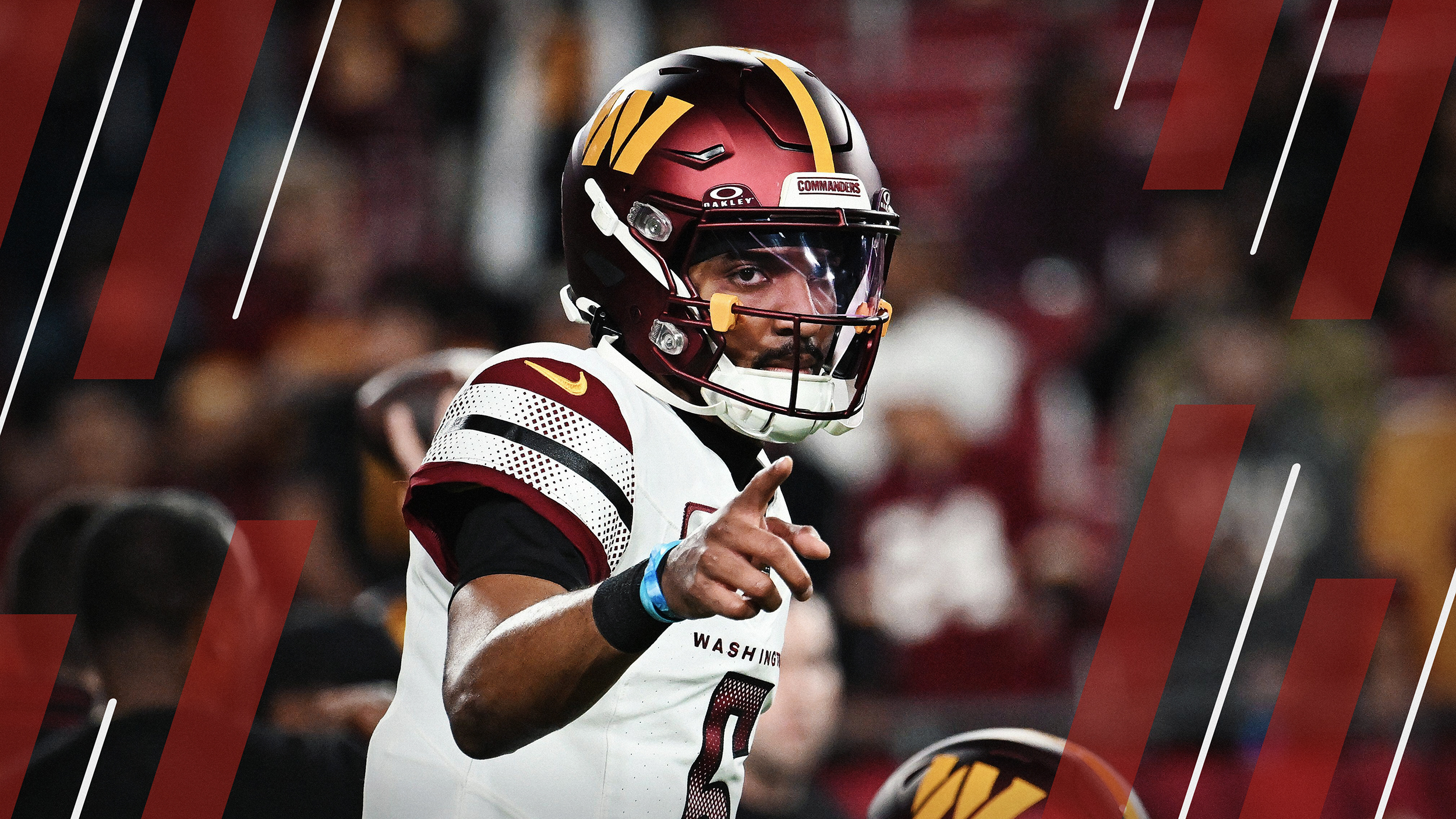
QB Jaxson Dart, New York Giants
Despite mixed pre-draft evaluations, the Giants traded back up into the first round to select Dart with the 25th overall pick. Although his first season showed some flashes, plenty of refinement is needed.
Among 26 quarterbacks to play at least 340 dropbacks last season, Dart’s 67.9 overall PFF grade ranked 23rd, and his 64.2 PFF passing grade slotted 24th. While Dart had a propensity for high-level plays with a 5.2% big-time throw rate, his 3.4% turnover-worthy play rate tied for sixth-highest. Part of what contributed to Dart’s woes was subpar accuracy: His 11.2% plus accurate throw rate tied for last, and his 58.9% accurate attempt rate tied for 21st.
Dart’s arm, athleticism and improvisation give him naturally raw talent, but more development is required — particularly in avoiding poor decisions and sacks. With John Harbaugh now coaching New York, Dart's play should go hand-in-hand with whether or not the Giants can return to competitiveness. If Dart fails to make a jump in 2026, it could render some uncomfortable conversations and/or transactions next offseason.
EDGE Mykel Williams, San Francisco 49ers
Williams was touted as a raw but high-upside prospect coming out of Georgia. The 49ers took a shot on him with the 11th overall pick in 2025 but will need to see much more of the latter.
Williams played only 385 snaps after suffering a torn ACL in Week 9, but the results were generally subpar. His 51.9 PFF pass-rush grade ranked 90th out of 95 qualified edge defenders, as he tallied just 19 pressures on an 8.8% pass-rush win rate. Despite his run-stopping prowess in college, Williams wasn’t dominant in that department either with a 6.2% run stop rate, good for the 51st percentile.
After Bryce Huff’s retirement, the 49ers are counting on Williams to be a legitimate running mate for the returning Nick Bosa. The second-year pass-rusher looms as a big X-factor on a team with continued title intentions, aiming to boost a unit that placed 25th in PFF pass-rushing grade.
QB Cameron Ward, Tennessee Titans
Despite being the first overall pick a year ago, Ward has yet to consistently light the league on fire. In fact, his rookie play left plenty to be desired.
Within the aforementioned 26 qualified quarterbacks, Ward finished last in both overall (58.4) and PFF passing (56.4) grades. His 3.7% turnover-worthy play rate was even higher than Dart’s, and his 22.4% uncatchable inaccurate throw rate ranked sixth among passers with at least 250 attempts.
Ward did put his elite skillset on display late in the year against the Seahawks, Chiefs and Jaguars, notching 78.7-plus overall grades. His underlying talent, plus a better receiving corps and a new offensive coordinator, should bode better for 2026. Ward may not need to be great as quickly as Dart given the Titans’ slower timeline, but he still has plenty of questions to answer in Year 2.
Read more
Read moreYoung NFL quarterbacks are getting better: PFF data tells the story
(opens in new tab)EDGE Shemar Stewart, Cincinnati Bengals
Similar to Williams, Stewart was a polarizing edge rusher coming out of Texas A&M. The Bengals bet on his ceiling at 17th overall but hardly saw any of it as a rookie.
Stewart playing only 280 snaps due to knee and ankle injuries complicated the picture, but even when healthy, he underwhelmed mightily. His 41.2 overall PFF grade was the worst among 120 edge rushers to appear on 250 or more snaps, powered by a dismal 29.3 PFF run-defense grade. Even as a pass-rusher, Stewart placed in the 12th percentile in PFF pass-rush grade and in the 16th percentile for pass-rush win rate.
With Trey Hendrickson heading to Baltimore, the Bengals added former Seahawk Boye Mafe to shore up their edge-rushing room. Even with the signing, Stewart is still unquestionably a key piece on a defense seeking to improve from 29th in EPA per play. Cincinnati will need the 22-year-old to blossom if it wants to return to the playoffs for the first time since 2022.
LB Demetrius Knight Jr., Cincinnati Bengals
Knight wasn’t selected quite as early as Stewart, but some felt his 49th overall slot was ambitious. The linebacker’s rookie year only added fuel to those narratives.
Knight emerged as a starter for the Bengals’ defense, but that didn’t equate to standout play. His 40.2 overall PFF grade ranked 56th out of 59 qualified linebackers in 2025, finishing below a 45.5 mark in both run defense and coverage. The South Carolina product also missed 15% of his tackles, tied for 15th-highest in that contingent.
While the Bengals made upgrades to their defensive line and secondary, the team’s linebacker corps was virtually untouched. Given that the unit was the worst in the NFL last season by overall PFF grade, Knight needs to unlock another gear if Cincinnati’s defense is to play closer to league average. With better underlying surroundings, the soon-to-be 26-year-old Knight will be in the limelight even further.
G Jonah Savaiinaea, Miami Dolphins
The Dolphins’ 2025 season was a disaster by almost all accounts, and that included Savaiinaea at guard. The second-round pick was a consistent starter but had a difficult time acclimating to the pros.
Last year, Savaiinaea’s 28.4 overall PFF grade was the worst among any qualified guard by almost nine grading points. In fact, that mark carries historical perspective: It’s easily the lowest in a season by any guard to play 950 or more snaps in the 20 years of PFF data. Not only did Savaiinaea permit eight sacks and 45 pressures, but he also played to a poor 37.3 PFF run-blocking grade.
After Miami drafted Kadyn Proctor in the first round this April, Savaiinaea is projected to slide to right guard, where he played 985 snaps at Arizona. Although it projects as a transition year in South Beach, the Dolphins will need Savaiinaea to look far more comfortable as they try to protect new quarterback Malik Willis and open lanes for De’Von Achane.
CB Benjamin Morrison, Tampa Bay Buccaneers
Countless pundits around the football landscape believed the Buccaneers landed a steal with Morrison in the second round of the 2025 NFL Draft, but his first year as a pro was trying for several reasons.
The Notre Dame product endured multiple leg injuries as a rookie, appearing on only 360 snaps while rotating behind Tampa Bay’s starters. When Morrison did see the field, he was susceptible in coverage with a 50.0 PFF coverage grade and 110.8 passer rating when targeted — the 17th-highest among 100 qualified corners. The ground game didn’t prove far superior for Morrison either, earning a 35.5 PFF run-defense grade and missing 21.2% of his tackle attempts.
With Jamel Dean heading to Pittsburgh, Morrison now has a clear runway to be one of Tampa Bay’s primary cornerbacks. The quality of his play in 2026 could decide whether the Buccaneers reclaim the NFC South throne or fail to meet expectations for a second straight campaign.
WR/CB Travis Hunter, Jacksonville Jaguars
Playing both ways in the NFL is a landmark achievement in and of itself, which Hunter accomplished as a rookie. However, the former Colorado star will be counted on to elevate his performance that much further in 2026.
Just seven games into his rookie campaign, Hunter suffered a torn LCL. During his more limited rookie sample size, Hunter displayed his high-echelon cornerback skills with a 72.7 PFF coverage grade and 78.8 passer rating when targeted across 120 coverage snaps. Yet the Heisman Trophy winner wasn’t quite as dynamic as a wideout, accruing a 62.7 PFF receiving grade and 1.32 yards per route run on offense.
Given that Hunter was viewed as a transcendent prospect, the reality is that it may never be completely possible to fully satisfy pre-draft expectations. But as he recovers from his knee injury, Hunter will need to either assert more consistent dominance at corner or become more efficient as an offensive weapon in order to justify the Jaguars’ significant draft trade-up. Even with a talented roster returning, Jacksonville will rely on the former second overall pick to play like a game-changer this season.
T Jalen Travis, Indianapolis Colts
Unlike the other 2025 draftees on this list, Travis wasn’t as heralded in terms of round. However, he’s likely to play an instrumental role for the Colts in 2026.
As a fourth-round pick, Travis appeared on 316 snaps for Indianapolis as a rookie, primarily working at right tackle. He looked steady with a 72.2 overall PFF grade, permitting only one sack across 165 opportunities and collecting a 72.6 PFF run-blocking grade. Especially encouraging was Travis’ 88th-percentile run-blocking mark on gap concepts.
With longtime stalwart Braden Smith heading to rival Houston this spring, Travis is now in pole position to be the Colts’ new starting right tackle. Given Indianapolis’ penchant for developing quality offensive linemen, the Iowa State product could step up to the plate swiftly in his second year. No matter what, Travis should boast a significantly larger role for a team that’s in the microscope following a late-season collapse — and which figures to compete in a tough division yet again.

 © 2026 PFF - all rights reserved.