- Introducing the NEW PFF Pro subscription: PFF Pro includes everything in PFF+, plus an upgraded Premium Stats Pro experience, higher base access to Guru AI, revamped player and team pages, enhanced data and visualizations, an improved interface and programmatic data access for modeling. Click here to subscribe.

While many roles across the NFL have already been determined, some teams enter Week 1 with a potential in-house competition looming. The article below breaks down three position groups that fantasy managers should follow closely early in the year. Short buy-low windows may appear before usage changes catch up with on-field performances.
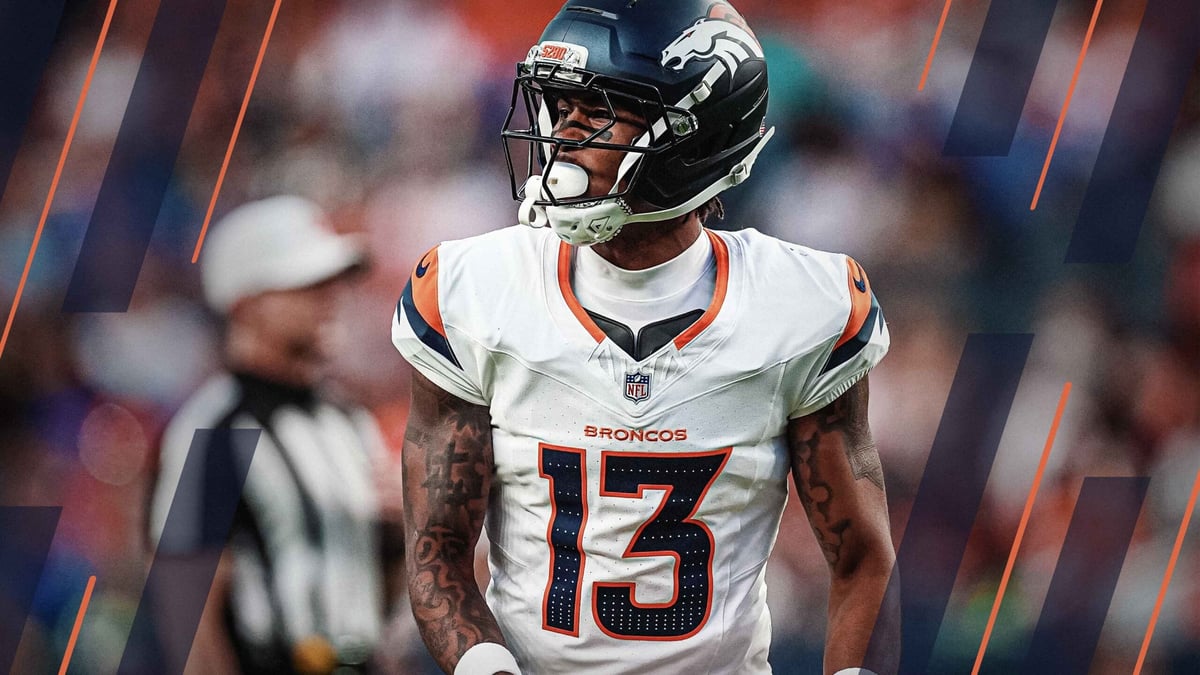
Denver Broncos wide receivers
Denver Broncos No. 2 wide receiver Courtland Sutton, a 2018 second-round pick, suffered season-ending ACL and MCL tears in Week 2, 2020. He averaged 1.73 yards per route run (YPRR), an 18.5% target rate and 4.6 yards after the catch per reception while earning a 74.3 PFF receiving grade in his career up to that point. He averaged 2.08 YPRR in 2019 and 3.30 YPRR in his abbreviated 2020 season.
Among Sutton’s 2021-25 seasons, he averaged 1.61 YPRR, a 19.6% target rate and 2.5 yards after the catch per reception while earning an 81.2 PFF receiving grade. He averaged the third-fewest YPRR (1.53) among his eight NFL seasons last year.
Sutton remains a reliable possession receiver entering his age-30 campaign, though No. 3 wide receiver Pat Bryant could be in for a second-year leap that earns him the No. 2 job in-season.
Bryant suffered two hamstring strains and two concussions from Week 14 through the AFC Championship Game, resulting in two missed games and multiple early in-game exits. Despite the medical maladies, he went from averaging a 10.1% target rate, 0.94 YPRR and 5.1 yards after the catch per reception with a 56.9 PFF receiving grade in Weeks 1-10 to a 21.9% target rate, 1.64 YPRR and 4.6 yards after the catch per reception with a 74.1 PFF receiving grade from Week 11 onward.
Bryant, 23, enjoyed a productive training camp after bulking up this offseason. Unseating Sutton may take time, but fantasy managers must closely follow this position battle early in the year. Bryant could emerge as a reliable fantasy starter as the season progresses.
Houston Texans running backs
New Houston Texans running back David Montgomery is penciled in for a potential three-down role this season, though second-year running back Woody Marks, widely viewed as a receiving specialist in the 2025 NFL Draft, played very well in the preseason. Beat reporters continue suggesting he could force a near-50–50 split and can reasonably be expected to enter the season playing as the primary two-minute drill running back. Playing with the first-team offense this summer, Marks, 25, earned an 80.4 PFF offense grade.
Montgomery, 29, averaged the fewest missed tackles forced per rushing attempt (0.18) last year since 2021. He likewise dropped from an 83.4 PFF rushing grade in 2023 to an 80.1 PFF rushing grade in 2024 to a 72.4 PFF rushing grade last year.
Marks’ 2026 preseason sample is undeniably small. He forced a missed tackle on two of four rushing attempts (0.5) while averaging 6.8 yards after contact per rushing attempt, generating a 79.0 PFF rushing grade. He compiled a 68.9 PFF rushing grade via 229 rushing attempts last year. If his preseason rushing results even partially reflect his overall development, Marks should handle at least a healthy minority rushing share.
Marks registered a 56.8 PFF pass-blocking grade as a rookie and a 74.6 PFF pass-blocking grade on one preseason pass-protection rep. By comparison, Montgomery played to a 58.0 PFF pass-blocking grade last season. Marks is the best bet to lead the position group in third-down snaps this season.
Montgomery will lead the team in rushing attempts and almost assuredly serve as the primary running back in scoring position, but Marks’ 2026 range of potential outcomes includes reliable flex play with occasional RB2 results.
Marks could exit Houston’s Week 8 bye with an increased role if his touch count is limited to a fantasy-unfriendly degree before that.
Indianapolis Colts wide receivers
As detailed previously, the Indianapolis Colts’ wide receiver corps is in flux entering the 2026 season, with all three starters currently occupying undefined roles. The Colts’ diminutive fourth-year wide receiver, Josh Downs (5-foot-9, 171 pounds), theoretically possesses the highest upside pending access to a role in two-wide receiver sets. If Downs can graduate from being a three-wide receiver-set-bound player, he should safely return WR3 value and has a chance to become a fantasy football WR2.
Downs has logged 52 offensive snaps in 12 personnel through three NFL seasons. He earned an 83.1 PFF receiving grade and a career-best 61.1 PFF run-blocking grade on 17 and seven qualifying 12 personnel snaps, respectively, last year.
The Colts signed free-agent wide receiver Keenan Allen, who was recently arrested, during wide receiver Alec Pierce’s (ankle) lengthy spring and summer recovery. After operating purely as a field-stretcher in his first four seasons, Pierce was expected to significantly expand his route tree this season with a lucrative new contract in tow. Pierce recently practiced for the first time this season, though he can no longer be expected to add short- and intermediate-depth routes to his repertoire.
Pierce earned a qualifying 89.5 PFF receiving grade and a 70.9 PFF run-blocking grade in 12 personnel last year.
Allen totaled just three 12 personnel snaps last year while playing for the Los Angeles Chargers, posting a qualifying 58.4 PFF receiving grade and a 60.0 PFF run-blocking grade.
Downs has a real chance to secure a role in 12 personnel. His early-season usage coming off a calf injury must be tracked closely.

 © 2026 PFF - all rights reserved.