- Keaton Mitchell aligns with a premium offensive archetype: With Mike McDaniel running the offense in Los Angeles, Mitchell profiles as a direct statistical match for the explosive, speed-based role De'Von Achane thrived in under McDaniel in Miami.
- Dylan Sampson was one of the most efficient receiving backs in football as a rookie: His 1.86 yards per route run ranked second among all running backs, ahead of both Christian McCaffrey and Jahmyr Gibbs.
- The PFF Early Bird Sale Is Here: Save 33% and get PFF+ for just $79.99, our lowest price of the year.

Regardless of whether a fantasy manager employs a Zero-RB, Hero-RB or Robust-RB strategy, it makes sense to target at least one late-round running back with a realistic path to a starting role. By the 11th round, most of the league's projected starters are long gone, but every season, a handful of overlooked backs emerge as league-winning values. Last year, Javonte Williams, Rico Dowdle and Kenneth Gainwell were all available in the late rounds and went on to finish among the top 20 fantasy running backs.
The goal isn't necessarily to find a Week 1 starter. It's to identify players whose roles could expand dramatically if circumstances break their way.
Below are five running backs currently being drafted in the 16th round or later who have the potential to become weekly must-start fantasy options in 2026.
Last updated: Thursday, Aug. 6
Keaton Mitchell, Los Angeles Chargers (ADP: 16.03)
Mitchell entered the league as an undrafted rookie with the Baltimore Ravens in 2023 and received his first carry in Week 9 of his rookie year. Over the following six weeks, he recorded 47 carries for 396 yards and two touchdowns, averaging 8.4 yards per carry and at least 6.0 in five of those six games. A significant ACL injury late in 2023 sidelined him for much of 2024 and clearly affected his play upon his return. By 2025, he had settled in as Derrick Henry‘s primary early-down backup, averaging 5.8 yards per carry on a limited 4.5-carry per-game workload.
Mitchell signed with the Los Angeles Chargers this offseason, joining a backfield that also includes 2025 first-round pick Omarion Hampton and Kimani Vidal, who played well in Hampton‘s absence last season. Despite his down 2024 campaign, Mitchell earned the highest PFF grade of the trio over the past three seasons, including the top receiving grade.
Mitchell is also the running back most closely tied to new offensive coordinator Mike McDaniel's preferred archetype. McDaniel brought Mitchell to Los Angeles himself, while Hampton and Vidal are holdovers. More importantly, Mitchell most closely resembles McDaniel's previous featured back, De'Von Achane.
Achane, Mitchell and Jaleel McLaughlin are the only running backs 5-foot-8 or shorter and 200 pounds or lighter to log at least 300 snaps over the past three seasons. That group joins Isiah Pacheco, Ty Chandler, Latavius Murray and former McDaniel back Raheem Mostert as the only backs to run both a sub-4.40 40-yard dash and a sub-1.50 10-yard split at the NFL combine while recording at least 300 snaps in a season.
Given those similarities to Achane, there is a real chance McDaniel ultimately prefers Mitchell over his other options. If Mitchell approaches Achane's level of production, he offers top-10 upside at the position.
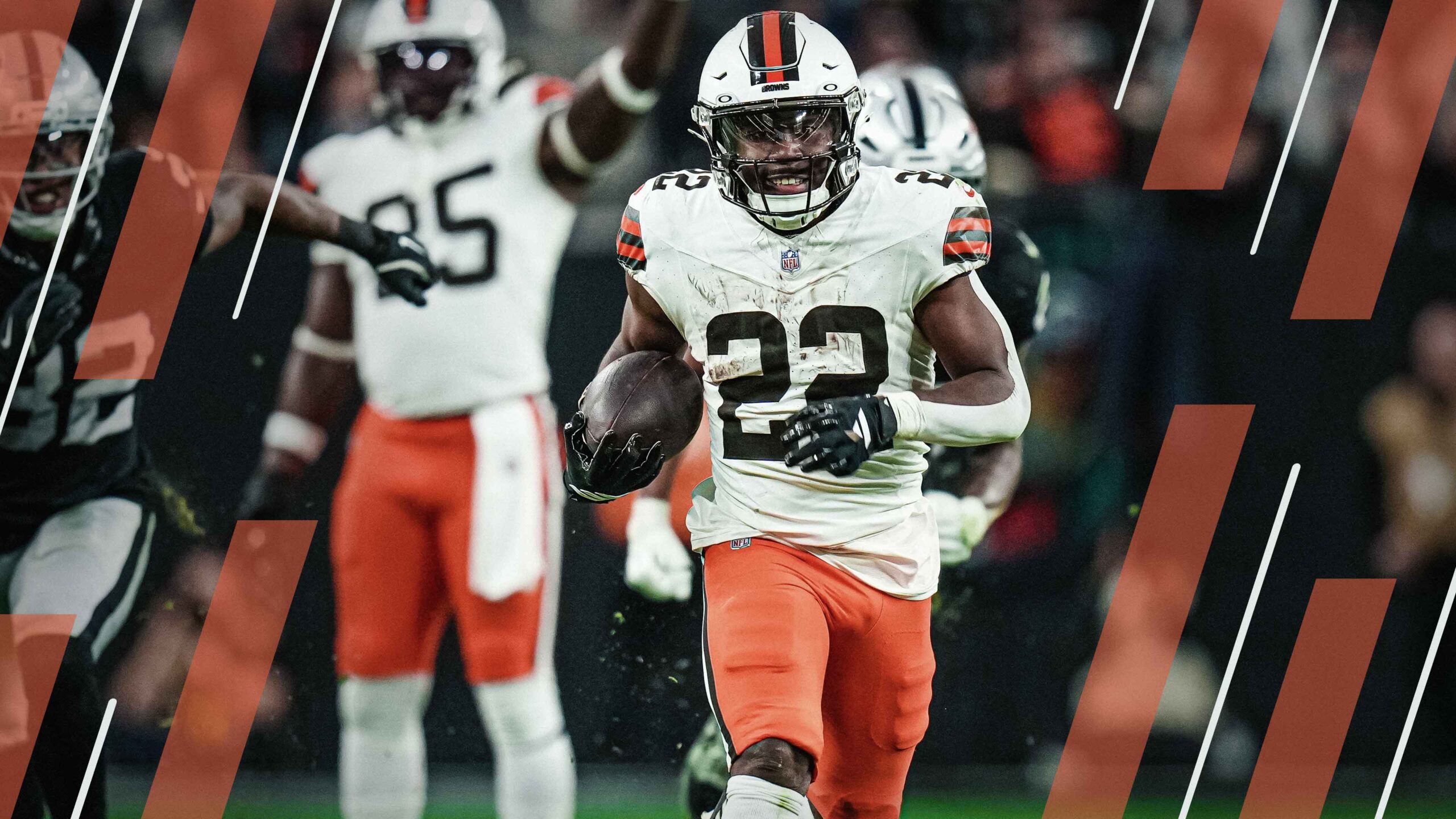
Dylan Sampson, Cleveland Browns (ADP: 16.04)
Sampson showed some sparks during his rookie season with the Browns. His 80.6 PFF receiving grade was eighth-best among running backs with at least 100 routes run, and his 1.86 yards per route run was second-most among backs, just behind Bijan Robinson and just ahead of Christian McCaffrey and Jahmyr Gibbs.
Sampson wasn't very effective as a runner, but that was due to his offensive line. His 0.3 yards before contact per carry was tied for the second-lowest mark by a running back with at least 50 carries in a season over the last 20 years, and teammate Quinshon Judkins wasn't much luckier at 0.4 yards before contact per carry.
Cleveland completely overhauled its offensive line this offseason, drafting Spencer Fano at left tackle, trading for right tackle Tytus Howard and signing interior linemen Zion Johnson and Elgton Jenkins. The unit may still project below league average, but it should no longer rank among the NFL's worst.
Sampson was part of a three-man rotation last season as the primary backup in all situations, with Judkins handling early downs and Jerome Ford deployed on third downs. Ford left in free agency and wasn't replaced by a free agent or draft pick; the only backfield additions were undrafted free agents unlikely to make the Week 1 roster. Sampson should see a substantial increase in playing time and efficiency, which could be enough to make him a flex option against the right opponents.
Judkins ended last season with a dislocated ankle and fractured fibula and might not be 100% to start the season. This makes Sampson more likely to be a starter at some point this season than the typical handcuff would be.

Tank Bigsby, Philadelphia Eagles (ADP: 17.01)
Bigsby spent the first two seasons of his career as a backup for the Jacksonville Jaguars, where he took significant early-down snaps from Travis Etienne. In 2024, he averaged double-digit rushing attempts per game. He was replaced by Bhayshul Tuten on the roster in 2025 and was traded to the Philadelphia Eagles after one week.
Bigsby was initially used as a kick returner, but that experiment lasted only four weeks. He ran nine times for 104 yards against the New York Giants in Week 8, which eventually helped him take over as the primary backup behind Saquon Barkley. He also received significant time against the Las Vegas Raiders in Week 15 and the Washington Commanders in Week 18, reaching 17 and 16 carries in those games, two of his top-five outings.
Bigsby received an 89.1 PFF rushing grade in Philadelphia last season compared to 76.7 by Barkley, while averaging 4.0 yards after contact per attempt compared to 2.7 by Barkley. It would not be surprising if Bigsby's rushing attempts per game see a notable increase this season. However, that will only help fantasy managers in very deep leagues.
It's fair to consider Bigsby the primary handcuff to Barkley, but it's worth noting he has totaled 11 career receptions in 50 games. If Barkley suffers an injury, Will Shipley would also see notable playing time. Bigsby would still be the player to pick up off waivers, but it won't be a one-for-one replacement. His lack of receiving production makes him a worse handcuff option than other backup running backs, despite how good his surrounding cast is.
Ray Davis, Buffalo Bills (ADP: 20.05)
Davis has spent the first two years of his career in a three-man backfield with James Cook and Ty Johnson, and that will be the case again this season. Cook has served as the starter, Davis the backup and Johnson the third-down back.
As a rookie, Davis averaged 5.2 carries per game when Cook was healthy, staying involved without carrying a real workload. Cook missed Week 6, and Davis responded with 20 carries for 97 yards and three catches for 55 yards. Davis also saw significant playing time in Week 18, when Buffalo rested some starters, running 15 times for 64 yards.
In 2025, the Bills leaned even more heavily on Cook and Johnson. Davis was held without a carry in seven games and limited to three or fewer in another six. Of his 58 carries on the season, 21 came in Week 18, when he ran for 151 yards.
Davis is expected to see more work this season, likely closer to his rookie usage. That still would not be enough to make him worth starting in the vast majority of leagues. His value this year lies in being Cook's handcuff. If Cook were to get hurt, Davis would likely step into the lead role, though Johnson could cut into that work, as could Frank Gore Jr., who has spent a few seasons on Buffalo's practice squad and would presumably become the third back.
Even so, in that scenario, Davis would be the lead back in one of the league's best offenses, which would make him a must-start fantasy option. That makes him one of the more intriguing pure handcuffs available.
Mike Washington Jr., Las Vegas Raiders (ADP: 16.07)
Washington is a big 6-foot-2, 228-pound back out of Arkansas. The only halfbacks that size on NFL rosters are Derrick Henry and Adam Randall of the Baltimore Ravens. He has strong straight-line speed as a power runner, and his PFF rushing grades improved every season in college.
He was drafted in the fourth round by the Raiders, where there is a clear path to being the backup to Ashton Jeanty. Raheem Mostert and Zamir White were the primary backups last season, but neither re-signed. Dylan Laube, a 2024 sixth-round pick, is the only other notable back on the roster, and he is more of a third-down option.
The Raiders added head coach Klint Kubiak, who is on his sixth team in six seasons. He has worked with feature backs like Dalvin Cook, Christian McCaffrey and Alvin Kamara, but also ran a two-man committee last season in Seattle and another in 2022 in Denver. Jeanty is a special player and will see the clear majority of touches, but Washington could still be involved.
Washington could have standalone value in deeper leagues if the Las Vegas offense improves significantly, and he takes over as the goal-line back. Last season, Zach Charbonnet consistently took goal-line work from Kenneth Walker III, boosting the bigger back's fantasy value, and the Raiders could make a similar call here.
Washington also carries handcuff appeal. Given the backs currently on the roster, Washington would be a must-start option if Jeanty were to get hurt. That said, as a fourth-round pick with a specific skill set, he could easily be leapfrogged if Las Vegas brings in someone else after an injury. Kamara in particular has been the subject of trade rumors, and his best season of the past few years came in Kubiak's offense.
Washington is a solid pick in deep leagues for his touchdown upside and his handcuff value.


 © 2026 PFF - all rights reserved.