
- Don't chase production where it shouldn't reasonably exist: Players like Gary Barnidge in 2015 and James Robinson in 2020 are examples of extreme outliers on generally poor offenses that needed to funnel touches somewhere.
- Don't get carried away amid the Malik Willis hype: While Willis has looked excellent on limited NFL snaps, his sample size is worrisome and could point to regression as a starter.
- 2026 NFL Draft season is here: Try the best-in-class PFF Mock Draft Simulator and learn about 2026's top prospects while trading and drafting for your favorite NFL team.
There is nothing more heartbreaking — in dynasty fantasy football, at least — than buying high on a player who you think has just broken out, only for that past season to turn out to be their outlier.
Remember Gary Barnidge’s superb 2015 season? He finished as the TE4. How about Justin Fields’ 2022 campaign, where he leaned on his rushing ability to propel himself to the QB7? And how could we forget James Robinson? The rookie back started hot and, bit by bit, faded into fantasy irrelevance.
The point is, if you traded for those players, you have likely closed this article already out of frustration. If you sensed their production was an outlier or unsustainable and flipped them, you’re still basking in the glow of what assets you turned them into.
But what makes an outlier season? What patterns or spikes can we look at that may signal an outlier versus the norm?
Let’s take Barnidge as our first example. A former fifth-round pick by the Carolina Panthers, Barnidge logged just 75 targets across his first six NFL seasons, which he turned into 44 catches for 603 yards and three touchdowns.
Then came 2015, when he commanded 119 targets and caught 79 of them for 1,043 yards and nine scores. It led to a 78.8 PFF receiving grade, a career high. In one season alone, Barnidge basically doubled his entire career’s production.
The first thing to note is that the Browns attempted 113 more passes in 2015 compared to 2014 (650 in 2015 compared to 537 the year before). The other thing is that Barnidge benefited from the Browns' decision to move on from Jordan Cameron while reducing backup tight end Jim Dray's role to special teams.
In 2014, Cameron played 476 offensive snaps while Dray played 599 — mostly because Cameron was injured. Barnidge played just 358 snaps. It’s a huge outlier that a team would move up a third-string tight end one season to be their starter the following year.
The 2014 NFL draft class was also not blessed with great tight end talent. The first five tight ends off the board were Austin Seferian-Jenkins (38th overall), Jace Amaro (49th overall), Troy Niklas (52nd overall), C.J. Fiedorowicz (65th overall) and Richard Rodgers (98th overall).
The other thing to inspect is the state of the rest of the receiving corps. While Barnidge saw 119 targets, the Browns’ 2015 clubhouse leader in that regard was Travis Benjamin (129), and the team’s highest-graded receiver was running back Duke Johnson Jr. (83.6 PFF receiving grade).
When playing dynasty, you need to take a holistic approach: Don't just look at your own roster; also examine the rosters of the players you’re rostering. The 2014 Browns recorded just 12 passing touchdowns (32nd in the NFL) and passed at a 54.5% rate (28th). The void had to be filled somehow, and Barnidge just happened to inherit the perfect situation for fantasy.
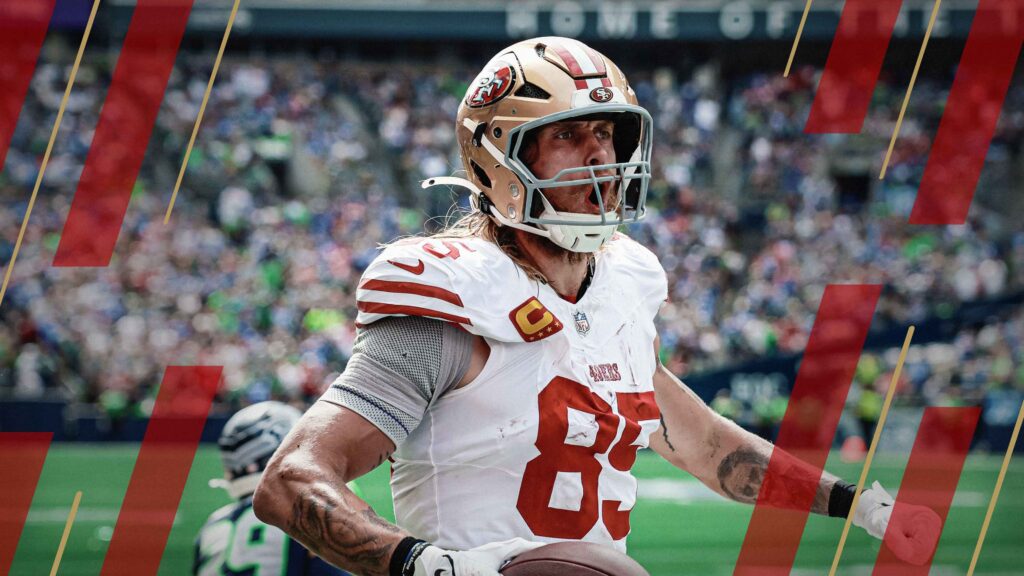
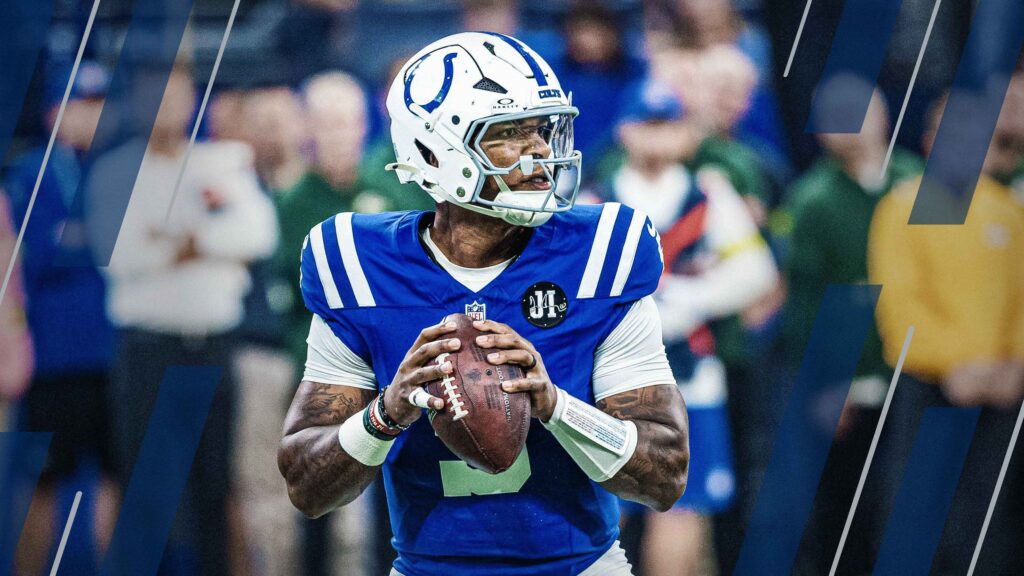
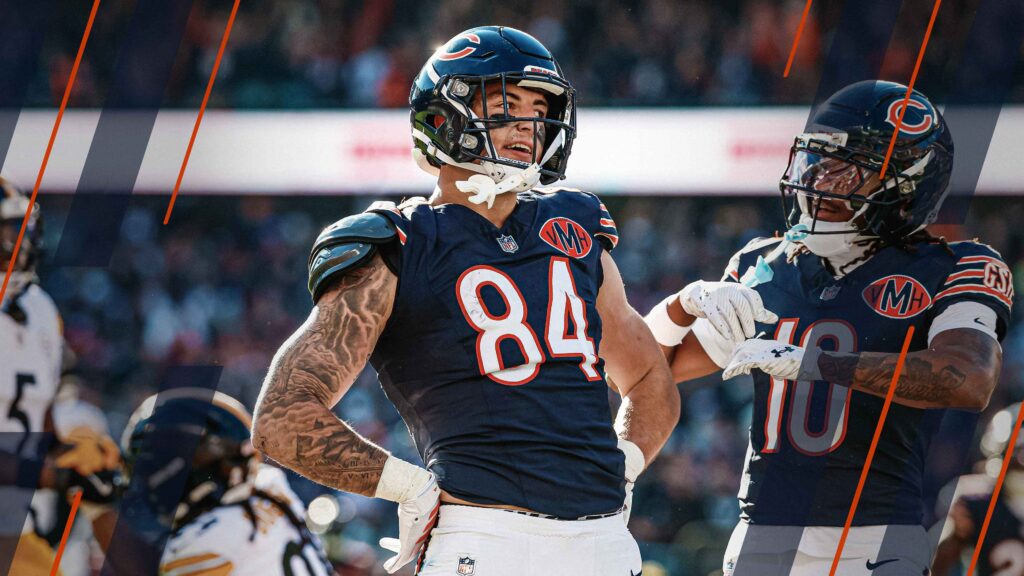

The same can be said of Robinson and Fields.
Robinson, an undrafted free agent in 2020, entered a Jacksonville Jaguars team that had just lost 265 carries when Leonard Fournette moved on. The running back with the second-most rushes in 2019 was Ryquell Armstead, with 35.
The Jaguars brought in Dare Ogunbowale and Chris Thompson to compete with Robinson for the job, but the former Illinois State product, while significantly smaller than Fournette, embodied the same grinding style that Jacksonville liked.
The Jaguars were also the second-most pass-heavy team in 2020 (69.1%), so there was not a lot of volume on the ground. The available touches all went to Robinson.
What primarily helped was his healthy dose of targets. In 2020, Robinson commanded 56 targets and caught 49 of them for 344 yards and three touchdowns. His yardage total ranked 14th among all running backs that season, and his targets ranked 12th at his position. Those were above-average numbers, but given that the Jaguars passed the ball at the second-highest rate in the NFL that season, they weren't elite marks.
Robinson's 4.5 yards per carry ranked 11th out of 23 backs with at least 150 carries, and his 35 missed tackles forced placed him 14th. He was not a finesse runner, but he bulldozed his way to an RB7 finish in 2020.
But the Jaguars knew they needed a more dynamic run game. In 2021, they brought in Carlos Hyde to compete with Robinson, and Ogunbowale also stole 43 carries from the former undrafted free agent. A rookie quarterback by the name of Trevor Lawrence logged 73 rushing attempts, too.
Robinson still put together a fine season, with 767 rush yards and eight scores on the ground, and he even improved his yards per carry from 4.5 to 4.7. But he finished 2021 as the RB24, and the team drafted Travis Etienne Jr. that April, all but signalling an end to Robinson’s brief stint as Jacksonville’s lead back.
Justin Fields still has time to prove his 2022 QB7 season was no outlier, but the grains in that particular sandtimer are running out. After Fields' intriguing rookie campaign in which the former 11th overall pick threw for just 1,870 yards and seven touchdowns but rushed for 420 yards and two scores on 72 carries, the Bears leaned into what he did well.
The 2022 version of Fields was electric, if unbalanced. Fields dashed for 1,143 yards and eight touchdowns on his way to an elite 91.5 PFF rushing grade. He finished 378 yards ahead of Lamar Jackson in terms of rushing production. His 70 scrambles led the NFL — 13 ahead of Josh Allen.
And yet, Fields' passing performances were dismal. He ended the 2022 campaign with a 54.4 PFF passing grade, 30th out of 31 quarterbacks with at least 300 dropbacks. His 4.4% turnover-worthy play rate was the highest in the NFL, and he, by far, had the longest average time to throw at 3.45 seconds.
None of it was sustainable. Fields made more than enough plays with his legs to carry teams to fantasy success in 2022. But when teams took that away — and they did in 2023, as the former Bear ran for only 653 yards and four scores — Fields could not operate the passing attack well enough to offset the dip in rushing production.
The key theme among the three players we’ve spotlighted here is the risk of looking for huge spikes where they shouldn’t exist at the position.
Fields’ rushing ability has never left him, but the marks he hit in 2022 were absurd. Barnidge got an entire career’s worth of production in one season, then disappeared again.
The other commonality is that nearly all of these outliers exist on bad teams. Offense has to be funnelled into certain areas because the offense as a whole isn’t good enough to spread the ball around.
And finally, tying in with that bad teams theme, there is a lack of quality options available in these scenarios. Robinson benefited from a meager running back room. Once the Jaguars drafted Etienne, the former undrafted free agent was a non-factor and was already splitting time in 2021 with Hyde. Barnidge did get a shot at claiming the tight end spot for his own, but after a down year, the Browns drafted David Njoku in 2017 in a bid to get more dynamic, and Barnidge faded away.
Fields, meanwhile, simply did not develop enough as a passer, so much so that offenses had to be crafted around his run-first ability and style, much like what the Pittsburgh Steelers did in 2024.
Outliers shouldn’t scare dynasty managers, however. Knowing when you’re onto one is a good thing. You can get all the production and then flip them for more assets. There is nothing like having your cake and eating it.
So, I present two potential outliers heading into 2026: Commanders running back Jacory Croskey-Merritt and Dolphins quarterback Malik Willis.
Croskey-Merritt faces little backfield competition in 2026, but he's a former seventh-round pick who handled more than 15 rushing attempts in just two games in 2025 and fumbled four times.
Like Fields, Willis has elite rushing ability (80.4 PFF rushing grade since the start of the 2024 season) but has produced on such a small sample size as a passer (209 NFL dropbacks).


 © 2026 PFF - all rights reserved.