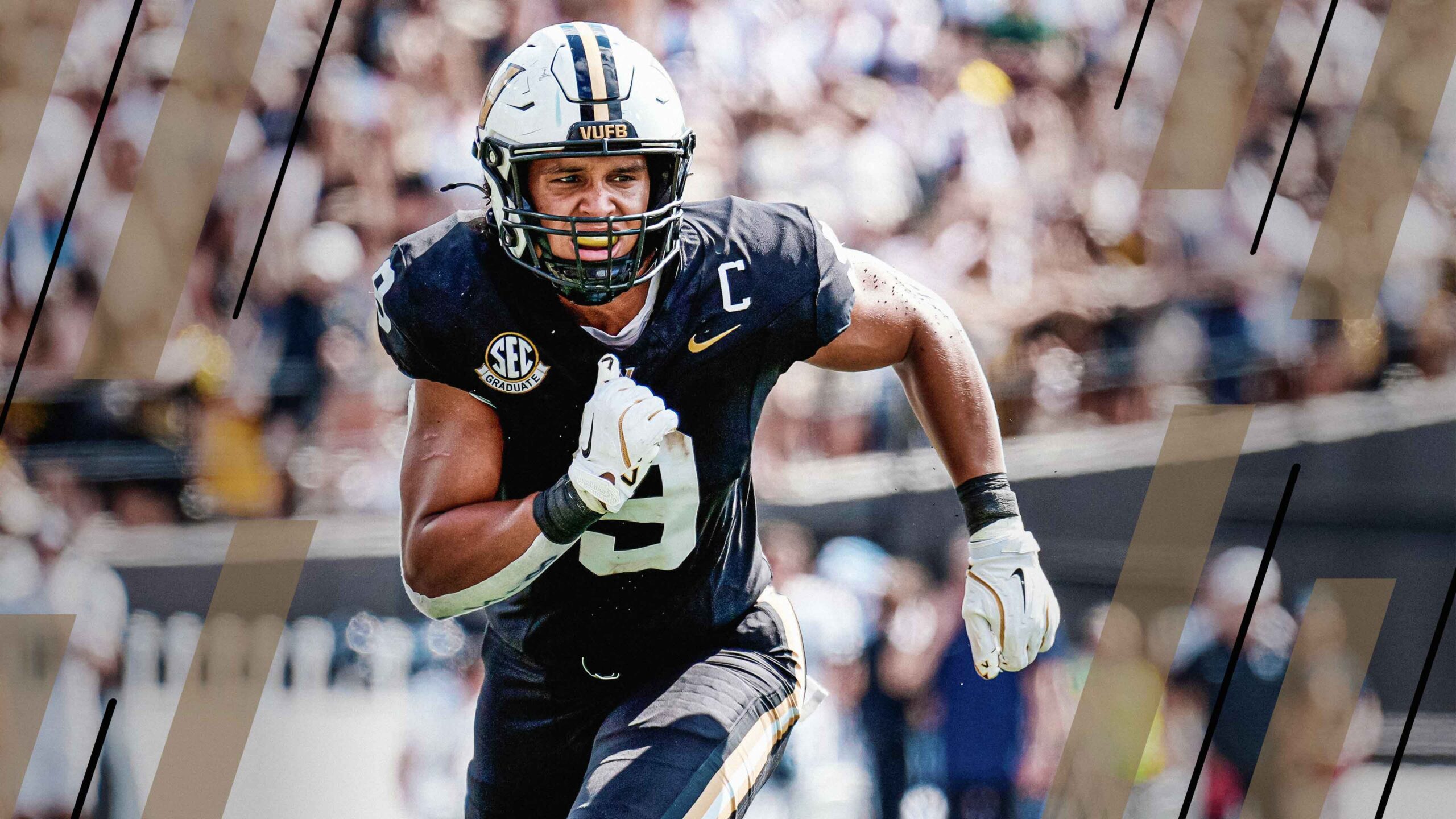
- Eli Stowers brings athleticism and production: The Vanderbilt tight end impressed at the NFL Scouting Combine and shone in many key PFF Premium Stats metrics.
- Tanner Koziol is destined for a big-slot role: The Houston product's production and size indicate he can be a mismatch weapon at the NFL level. He led all tight ends in the class in receptions (74) and contested-catch percentage (74.1%) in 2025 while lining up in the slot on 50% of his snaps.
- 2026 NFL Draft season is here: Try the best-in-class PFF Mock Draft Simulator and learn about 2026's top prospects while trading and drafting for your favorite NFL team.
PFF+ subscribers instantly have the work of the largest scouting department in history (in the form of the PFF data collection team) at their fingertips — much of the same information used by all 32 NFL front offices. And we'll use that data here to scout tight ends for the 2026 NFL Draft.
We'll first identify NFL players who reached a threshold of successful production and then examine their college production numbers to identify indicators of potential NFL success.
Tight ends rarely produce at high levels as rookies. Only nine first-year tight ends in the past eight seasons have reached 600 receiving yards (and four were in 2025), compared to 29 wide receivers who produced 800-yard rookie seasons during the same span.
We'll use that 600-yard receiving campaign over the past eight NFL seasons as our threshold in this analysis. After those players are identified, we'll examine what those players did in their last year of college football to see if we can reverse engineer a 600-yard NFL tight end.
If you’re a PFF+ subscriber, log in and follow along.
Thirty-nine tight ends have notched at least 600 receiving yards in an NFL season over the past eight years. One, Logan Thomas, was drafted as a quarterback and converted to tight end. Eight played their last college season before PFF started collecting college data in 2014, which leaves 30 productive NFL tight ends in our sample.
For this article, we will focus only on a tight end's receiving ability and production — not their blocking prowess. Specifically, we are looking at PFF receiving grade, yards after the catch per reception and yards per route run, all of which you can easily access if you’re a PFF+ subscriber.
Here are the 39 tight ends who notched at least 600 receiving yards the past eight seasons and their statistics in their final year of college.
- Colston Loveland: PFF 90.6, YAC/REC 5.2, Y/RR 2.67
- Tyler Warren: PFF 93.4, YAC/REC 6.7, Y/RR 2.78
- Harold Fannin Jr.: PFF 96.4, YAC/REC 7.5, Y/RR 3.77
- Oronde Gadsden II: PFF 82.6, YAC/REC 3.5, Y/RR 1.89
- Juwan Johnson: PFF 63.8, YAC/REC 5.9, Y/RR 2.13
- Brock Bowers: PFF 87.0, YAC/REC 8.6, Y/RR 2.74
- Trey McBride: PFF 95.0, YAC/REC 5.0, Y/RR 2.78
- George Kittle: PFF 62.9 (92.2 in 2015), YAC/REC 7.0, Y/RR 1.48
- Travis Kelce: Last year in college predates PFF grades
- Jonnu Smith: PFF 63.0, YAC/REC 7.0, Y/RR 1.42
- Zach Ertz: Last year in college predates PFF grades
- Sam LaPorta: PFF 82.7, YAC/REC 6.0, Y/RR 2.10
- Mark Andrews: PFF 80.4, YAC/REC 5.2, Y/RR 2.78
- Tucker Kraft: PFF 85.2, YAC/REC 5.8, Y/RR 2.30 (last healthy season)
- Hunter Henry: PFF 90.8, YAC/REC 4.4, Y/RR 2.23
- Pat Freiermuth: PFF 80.9, YAC/REC 5.7, Y/RR 2.33
- Mike Gesicki: PFF 75.7, YAC/REC 4.6, Y/RR 1.47
- Cade Otton: PFF 60.6, YAC/REC 5.6, Y/RR 1.43
- Kyle Pitts: PFF 95.9, YAC/REC 6.5, Y/RR 3.29
- Evan Engram: PFF 80.5, YAC/REC 6.2, Y/RR 2.59
- T.J. Hockenson: PFF 90.9, YAC/REC 6.9, Y/RR 2.26
- David Njoku: PFF 76.0, YAC/REC 11.6, Y/RR 2.37
- Jake Ferguson: PFF 85.5, YAC/REC 5.0, Y/RR 1.68
- Cole Kmet: PFF 73.7, YAC/REC 4.8, Y/RR 1.58
- Dalton Kincaid: PFF 92.3, YAC/REC 5.7, Y/RR 2.54
- Dalton Schultz: PFF 57.3, YAC/REC 3.4, Y/RR 0.90
- Tyler Conklin: PFF 67.7, YAC/REC 4.6, Y/RR 1.85
- Dallas Goedert: PFF 94.9, YAC/REC 8.2, Y/RR 3.18
- Tyler Higbee: PFF 89.0, YAC/REC 6.8, Y/RR 2.51
- Rob Gronkowski: Last year in college pre-dates PFF grades
- Noah Fant: PFF 80.6, YAC/REC 6.8, Y/RR 1.86
- Darren Waller: PFF 76.7, YAC/REC 3.7, Y/RR 1.88
- Logan Thomas: Played quarterback at Virginia Tech
- Austin Hooper: PFF 68.2, YAC/REC 3.9, Y/RR 1.62
- Jared Cook: Last year in college predates PFF grades
- Eric Ebron: Last year in college predates PFF grades
- Jimmy Graham: Last year in college predates PFF grades
- Kyle Rudolph: Last year in college predates PFF grades
- Vance McDonald: Last year in college predates PFF grades
Editor's note: PFF is PFF receiving grade, YAC/REC is yards after the catch per reception and Y/RR is yards per route run.
We are left with the following averages from the above group:
- PFF receiving grade: 80.67
- Yards after the catch per reception: 5.92
- Yards per route run: 2.21
PFF Receiving Grade
PFF receiving grade is an indicator of a tight end's receiving ability. Positive grades are earned for making plays that move the chains, scoring points or making tacklers miss. The grade isn’t in itself an indicator of how a player will produce at the NFL level; it is solely based on how the player produced that season.
However, college PFF receiving grades have recently been a solid indicator of projecting successful tight ends in the NFL. The top four PFF receiving grades from 2025 NFL Draft prospects (with more than 20 targets) were Harold Fannin Jr. (96.4), Tyler Warren (93.4), Colston Loveland (90.6) and Oronde Gadsden II (82.6), all of whom went on to achieve 600-plus receiving yards in the NFL as rookies.
The player with the highest PFF receiving grade in their last college season of the 600-yard tight ends sampled was Harold Fannin Jr., with a 96.4 mark in 2024. Nine of the 30 tight ends earned a PFF receiving grade above 90.0: Fannin (96.4), Kyle Pitts (95.9), Trey McBride (95.0), Dallas Goedert (94.9), Tyler Warren (93.1), Dalton Kincaid (92.3), T.J. Hockenson (91.9), Hunter Henry (90.8) and Colston Loveland (90.6).
Nineteen players logged a PFF receiving grade above 80.0, while only four of the 600-yard NFL tight ends tallied PFF receiving grades below 65.0: Jonnu Smith (63.0), George Kittle (62.9), Cade Otton (60.6) and Dalton Schultz (57.3).
To examine PFF receiving grades for yourself, use the following parameters in PFF Premium Stats:
- Select “NCAA”
- Select “by position”
- Select “Reg + Post”
- Select “TE” in the receiving grades box, under receiving reports
- Set “min snaps” at 20% to filter out small-sample-size players
- Select “2026” as the draft year
The following nine tight ends in the 2026 NFL Draft class posted a PFF receiving grade above 77.0:
- Rohan Jones, Arkansas: 92.7
- Izayah Cummings, Appalachian State: 89.5
- Tanner Koziol, Houston: 87.2
- Eli Stowers, Vanderbilt: 85.3
- Dallen Bentley, Utah: 82.6
- Carsen Ryan, BYU: 82.4
- Justin Joly, North Carolina State: 81.6
- Eight-year average of the 600-yard NFL tight ends: 80.67
- Brian Shane, Miami (OH): 77.7
- Michael Trigg, Baylor: 77.3
Yards After the Catch per Reception
Yards after the catch per reception is just as it sounds: how many yards a player nets after making a catch and before being tackled. Obviously, it’s going to be hard for a tight end to reach the 600-yard receiving mark if they only catch contested passes and don’t generate any additional yardage after the catch.
The high mark in the players listed is David Njoku’s 11.6 yards after catch per reception. The average number of yards after the catch per reception is 5.92, and only four of the 600-yard tight ends fell below 4.5 yards: Hunter Henry (4.4), Austin Hooper (3.9), Darren Waller (3.7) and Dalton Schultz (3.4).
To examine yards after the catch per reception for yourself, use the following parameters in PFF Premium Stats:
- Select “NCAA”
- Select “by position”
- Select “Reg + Post”
- Select “TE” in the receiving grades box, under receiving reports
- Set “min snaps” at 20% to filter out small-sample-size players
- Select “2026” as the draft year
- Sort results by clicking YAC/REC in the banner
The 2026 tight end class includes 22 players who averaged 6.1 yards after the catch per reception or more (minimum 20 receptions):
- Rohan Jones, Arkansas: 11.5
- Dae'Quan Wright, Ole Miss: 10.1
- Joe Royer, Cincinnati: 8.9
- Kenny Fletcher Jr., Rutgers: 8.2
- Oscar Delp, Georgia: 7.8
- Riley Nowakowski, Indiana: 7.7
- Carsen Ryan, BYU: 7.5
- Ethan Conner, Troy: 7.3
- Jyrin Johnson, Bowling Green: 7.3
- Izayah Cummings, Appalachian State: 7.1
- Matthew Hibner, SMU: 6.8
- Josh Cuevas, Alabama: 6.6
- Sam Roush, Stanford: 6.5
- Boden Groen, Kansas: 6.3
- Seydou Traore, Mississippi State: 6.3
- Dallas Payne, FIU: 6.2
- Lake McRee, USC: 6.2
- Louis Hanson, UConn: 6.1
- RJ Maryland, SMU: 6.1
- Tre Williams III, North Texas: 6.1
- Jaren Kanak, Oklahoma: 6.1
- Eli Stowers, Vanderbilt: 6.1
Yards per Route Run
PFF’s yards per route run metric divides a player's total receiving yards by the number of routes they ran, providing a better indicator of production than yards per reception or even yards per target. Of the 30 600-yard tight ends we are studying, the highest yards per route run number belonged to Harold Fannin Jr., at 3.65. The average yards per route run was 2.21. Seventeen of the players topped 2.0 yards per route run above 2.0, and only one fell below 1.4 (Dalton Schultz).
To examine yards per route run for yourself, use the following parameters in PFF Premium Stats:
- Select “NCAA”
- Select “by position”
- Select “Reg + Post”
- Select “TE” in the receiving grades box, under receiving reports
- Set “min snaps” at 20% to filter out small-sample-size players
- Select “2026” as the draft year
- Sort results by clicking Y/RR in the banner
The 2026 tight end class includes five players who averaged 2.21 yards per route run or more (minimum 20 receptions):
- Rohan Jones, Arkansas: 5.03
- Eli Stowers, Vanderbilt: 2.55
- Izayah Cummings, Appalachian State: 2.4
- Tanner Koziol, Houston: 2.25
- Eli Raridon, Notre Dame: 2.21
- Eight-year average of the 600-yard NFL tight ends: 2.21
- Michael Trigg, Baylor: 2.18
- Carsen Ryan, BYU: 2.03
- Dallen Bentley, Utah: 2.03
- Dae'Quan Wright, Ole Miss: 2.01
The Findings
Two tight ends in the 2026 NFL Draft class were above the average of the 600-yard NFL tight ends in two of the three categories. (For perspective, Colston Loveland and Terrance Ferguson were mentioned in this group in last year’s article.)
Tanner Koziol, Houston
Koziol’s 3.9 yards after the catch per reception number came in below the average of 5.92, but his 2.25 yards per route run was slightly above the average of the 600-yard NFL tight ends, and his 87.2 PFF receiving grade ranks second in the draft class.
Koziol led all tight ends in the class in receptions (74) and contested-catch percentage (74.1%). He lined up in the slot on 50% of his snaps in 2025, and his best NFL role will be as a big slot receiver where he can use his athleticism to get open and his size and giant catch radius to keep defenders away from the ball. Koziol is currently the No. 195 prospect on the PFF Predictive Big Board.
Carsen Ryan, BYU
Ryan broke out in his sole campaign with BYU. His 2.03 yards per route run is just below the average of the 600-yard tight end (2.12). His 7.5 yards after the catch per reception ranks second in the draft class among tight ends with at least 30 catches. He does an excellent job of adjusting to off-target passes and has a very effective stiff arm to break tackles after the catch. His 11 forced missed tackles in 2025 rank second in the draft class.
Ryan isn’t just a pass-catcher, as he posted a 75.3 PFF run-blocking grade in 2025. He is the No. 292 prospect on the PFF Predictive Big Board, and his 0.27 PFF Wins Above Average ranks first among tight ends in the class.
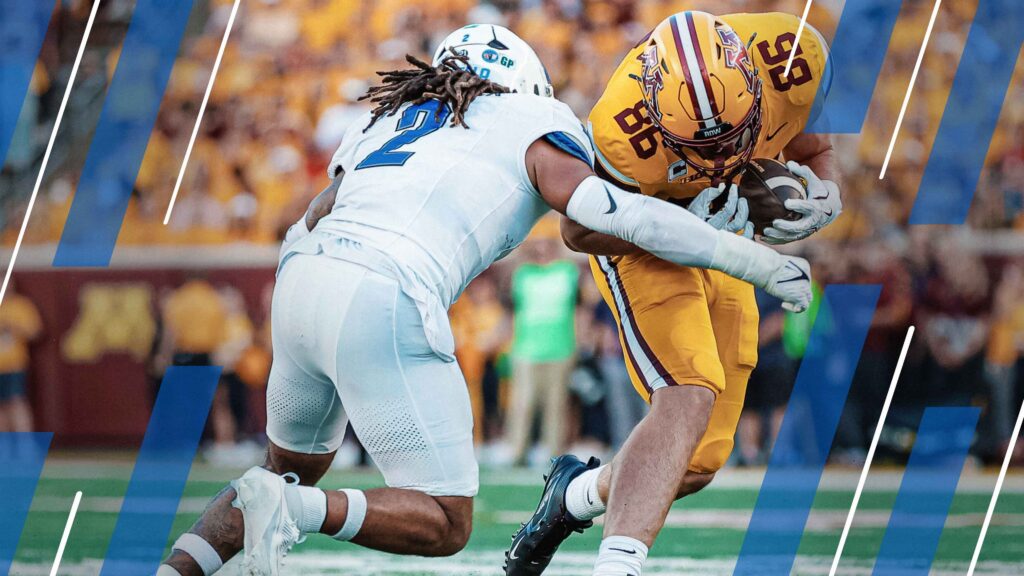
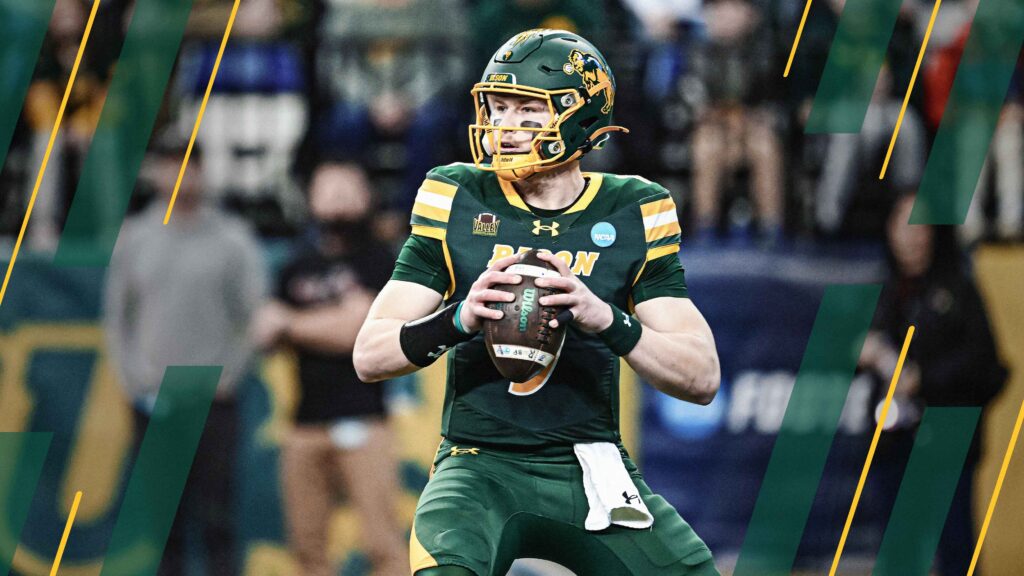

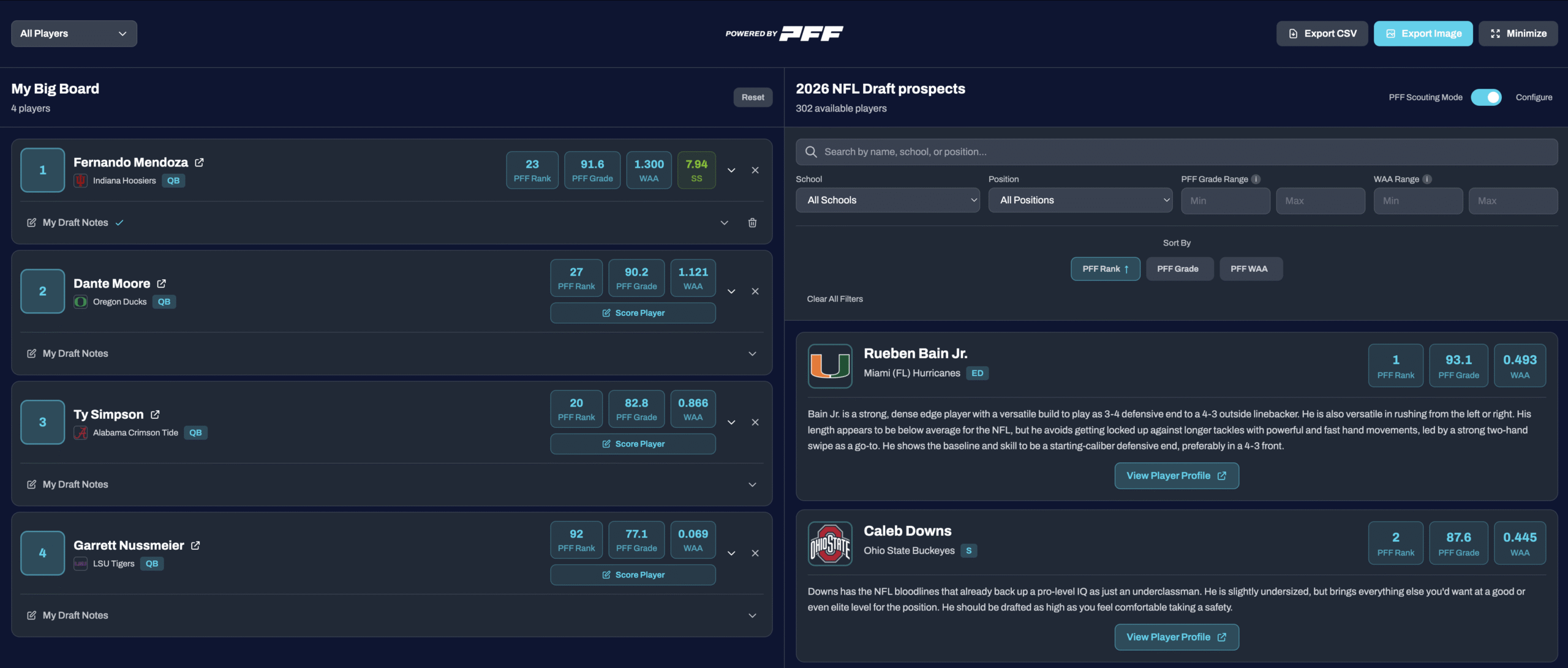
Only three tight ends in the 2026 NFL Draft class had numbers at or above the averages of the 600-yard NFL tight ends in PFF receiving grade, yards after the catch per reception and yards per route run. (For perspective, Tyler Warren and Harold Fannin Jr. were mentioned in this group in last year’s article.)
Eli Stowers, Vanderbilt
Stowers is a vertical threat who lined up in the slot on 70.7% of his receiving snaps, and his production stands out. In 2025, he led all tight ends in the class with 769 receiving yards and 2.55 yards per route run. He racked up 377 yards after the catch and forced nine missed tackles in 2025. Stowers can win out wide and is currently the No. 53 prospect on the PFF Predictive Big Board.
Rohan Jones, Arkansas
Jones is a Canadian-born player who began his career at Maine, transferred to Montana State for a season and played at Arkansas in 2025. Jones isn’t a prototypical in-line tight end, as he is only 6-foot-2 and 235 pounds with below-average PFF run-blocking grades.
Jones’ 92.7 PFF receiving grade and 5.03 yards per route run in 2025 are the highest marks among the tight ends in the 2026 NFL Draft class, although he recorded only 20 receptions on the year. While Jones' results are skewed due to a small sample, he did hit the averages of the 600-yard tight ends in all three categories for two consecutive years, both in 2025 at Arkansas and in 2024 at Montana State. He is currently the No. 367 prospect on the PFF Predictive Big Board.
Izayah Cummings, Appalachian State
Cummings is largely on this list due to a small sample. He played in only eight games with five starts in 2025. He made just 60 catches over the span of his six-year college football career.


 © 2026 PFF - all rights reserved.