
- Buffalo's rushing advantage: The Bills lead the NFL in perfectly blocked runs and yards before contact, creating a favorable matchup for James Cook against a Rams defense that ranks in the bottom five at preventing perfectly blocked runs.
- Josh Allen's passing opportunities: The Rams rank seventh worst in generating perfect coverage, while Allen produces nearly twice the league-average EPA per dropback when defenses make coverage mistakes.
- Matthew Stafford's pressure concerns: Buffalo ranks second in pressure rate without blitzing, and Stafford has struggled against disruptive pressure and four-man rushes this season.
Click here to subscribe to PFF+ Annual — $99.99 a year (just $8.33 a month) billed annually
Many NFL bettors start with individual markets — spreads, totals or player props — and ask, “Which spread looks good?” or “Which totals stand out this week?” It’s a bottom-up approach: Start with the bet, then decide whether the underlying game script supports it.
In this space, we’ll work in reverse. Each week, we’ll focus on one game and take a top-down approach, starting with the broader picture of how the teams and players are performing and what the data suggests about the matchup. From there, we’ll identify the betting markets that best align with that expected game script.
The goal is to form a view of how the game is likely to unfold first, then find the spreads, totals and props that offer the best ways to bet on that outcome.
A look at the fundamentals
Let us begin, as always, by looking at the team fundamentals to set the frame for our analysis.
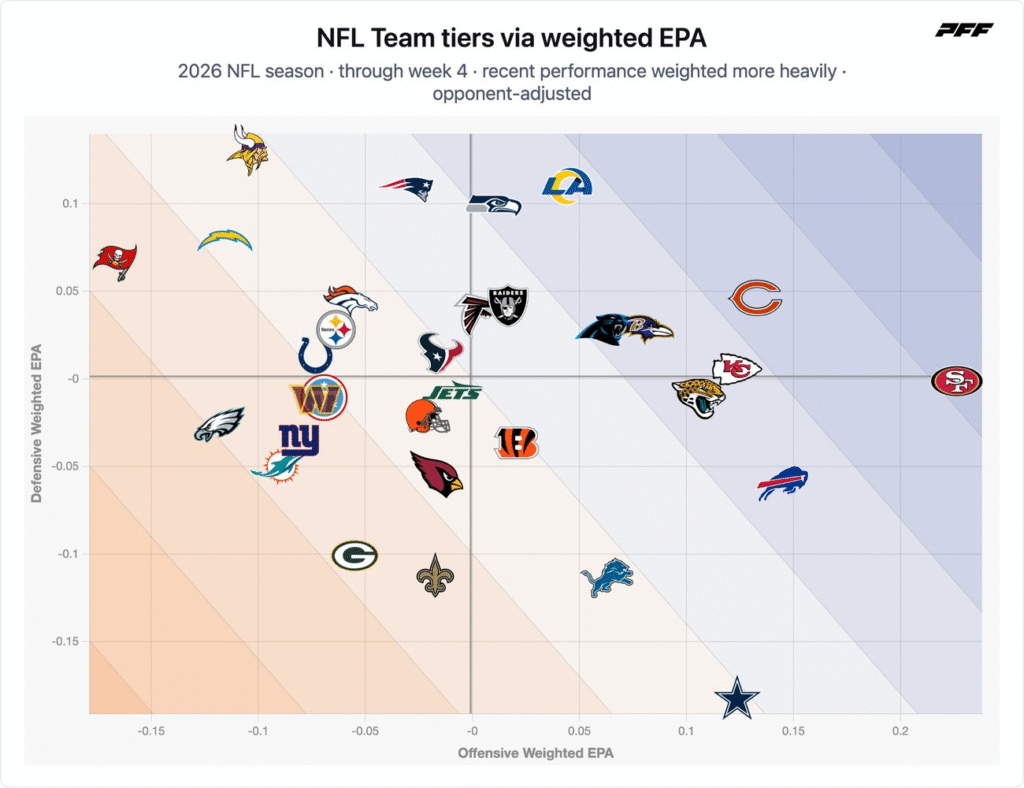
Above, we can see weighted EPA per play, which suggests that the Rams have been one of the best defensive teams in the NFL, with a slightly above-average offense. The Bills, meanwhile, have been dominant on offense but have struggled defensively.
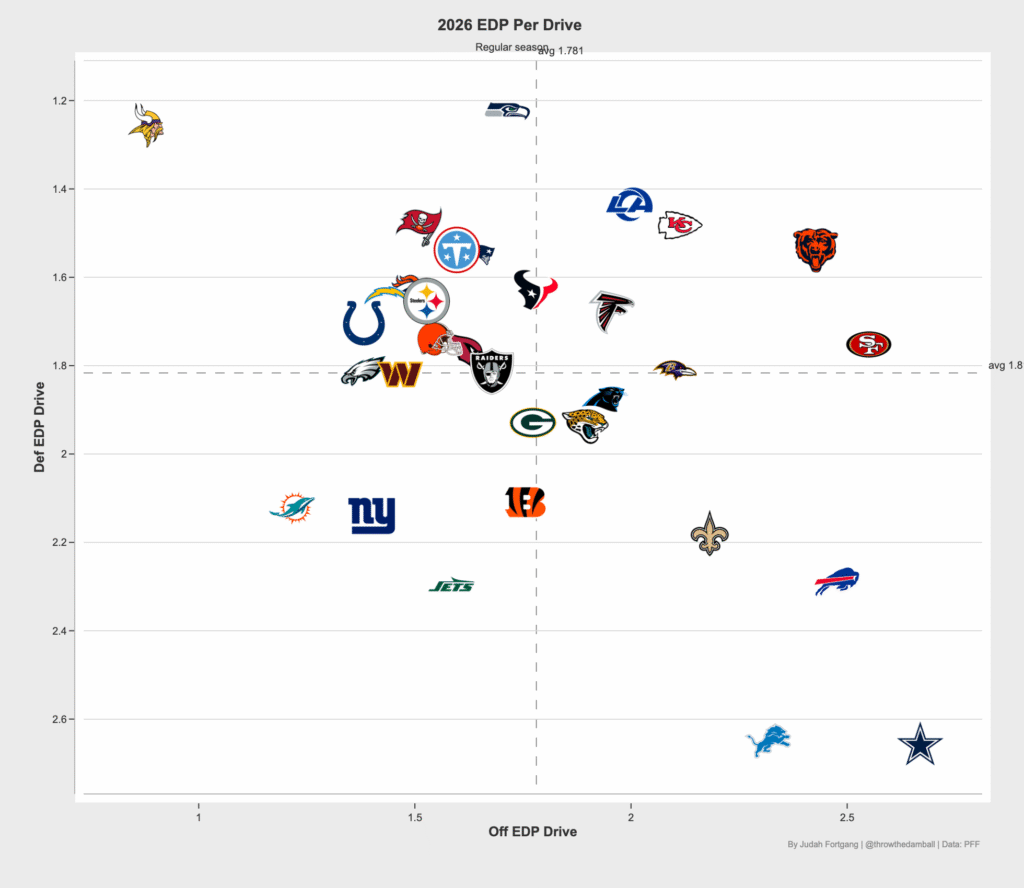
A look at earned drive points, which measures the reproducibility of points at the drive level, suggests a similar story: a strong Rams defense and a dominant Bills offense.
And if we look at market rating estimates derived from lookahead lines, they rank the Rams as the sixth-best offense and seventh-best defense. The defensive ranking aligns with our underlying metrics, while the offensive ranking suggests that the Rams' offense may be somewhat overvalued.
Matchup Angles
But the key to this matchup, I think, lies in how much of the Rams' power rating (which has them as 3.5-point favorites) relies on their defense. In this matchup, I think the Bills can mitigate much of that defensive advantage, taking away a significant portion of the Rams' market value in the process.
In the running game, the Bills have generated the most perfectly blocked runs of any offense and rank first in yards before contact, with their running backs averaging 2.36 yards per carry before contact.
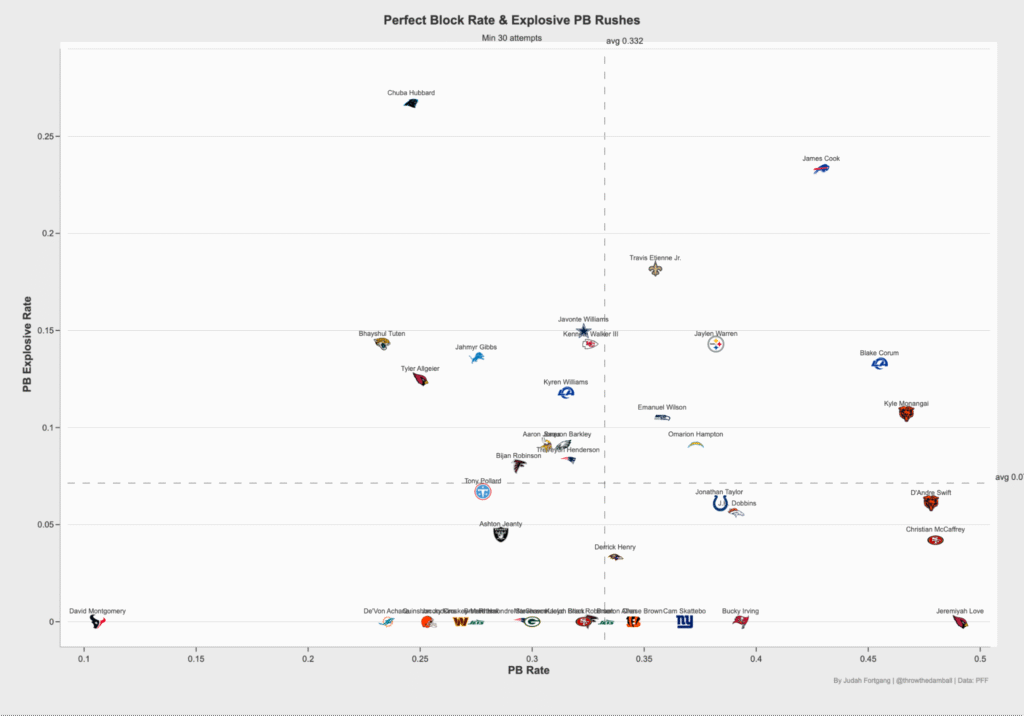
On these perfectly blocked runs, James Cook has been dominant, ranking among the NFL's most explosive runners and trailing only Chuba Hubbard in explosive play rate. This is especially notable because the Rams have ranked in the bottom five in preventing perfectly blocked runs but have yet to be fully punished for it. Their run defense, particularly in this area, would look far worse if the full sample of games had come against the Bills and Cook.
And certainly, if the Bills have success running the ball and the Rams need to bring more defenders into the box (they rank in the top five in light-box rate), that should open up plenty of room in the secondary, where Josh Allen has been excellent at taking advantage of coverage breakdowns.
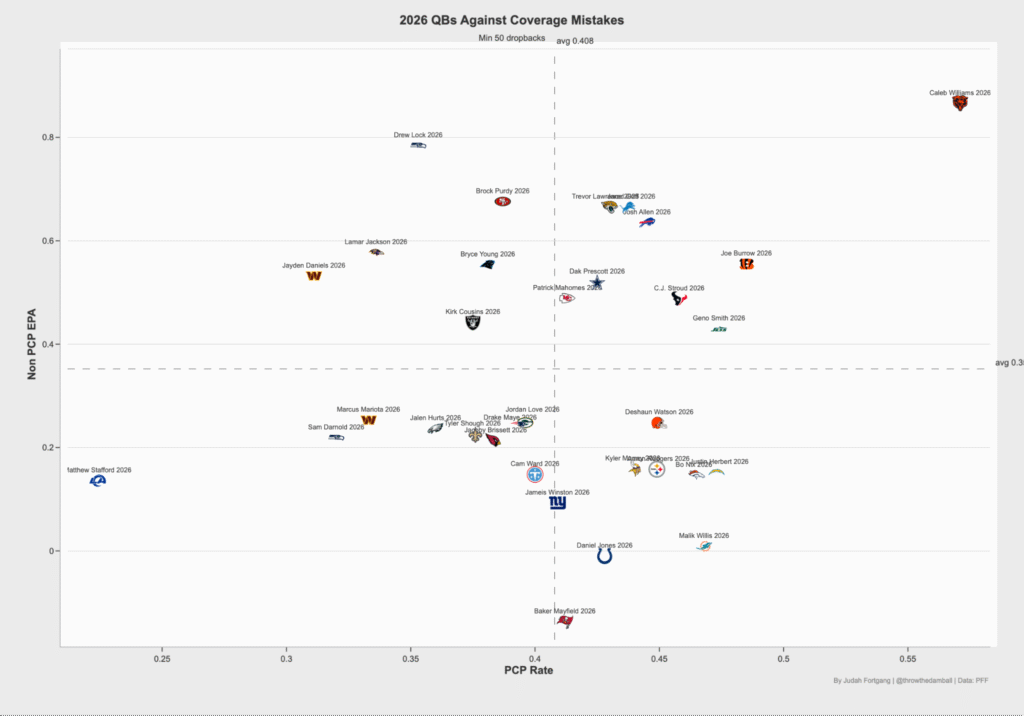
Allen has faced perfect coverage at a bottom-10 rate but has been dominant when coverage breaks down, generating nearly twice the league-average EPA per dropback when the defense makes a coverage mistake. If the ground game is working and the Rams are forced to commit more defenders to the box, the Bills should be able to create plenty of open passing windows and force coverage mistakes, allowing their offense to thrive while mitigating the Rams' defensive advantage.
On the other side of the ball, I don't think the Rams' offense has been as good as its sixth-place market ranking suggests, but a deeper dive is for another time. In this matchup in particular, the Bills should be able to match their strengths against the Rams' weaknesses and slow this offense down.
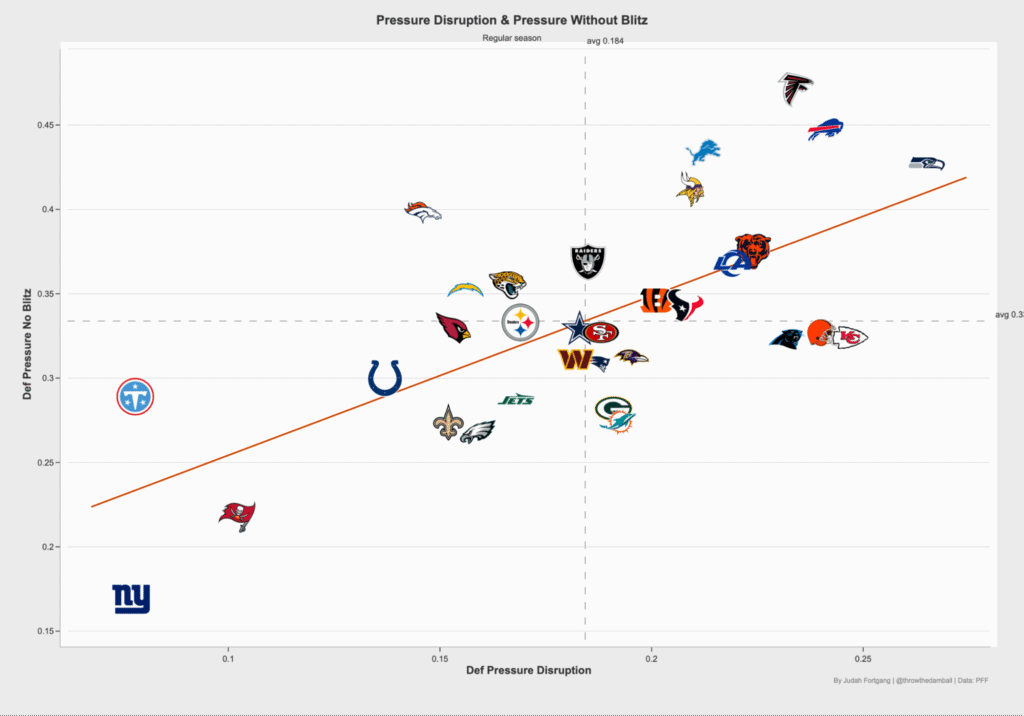
The Bills have been at the very top of the league in generating pressure disruptions — plays where a quarterback can't stay in rhythm because of pressure — while also posting the second-highest pressure rate without blitzing.
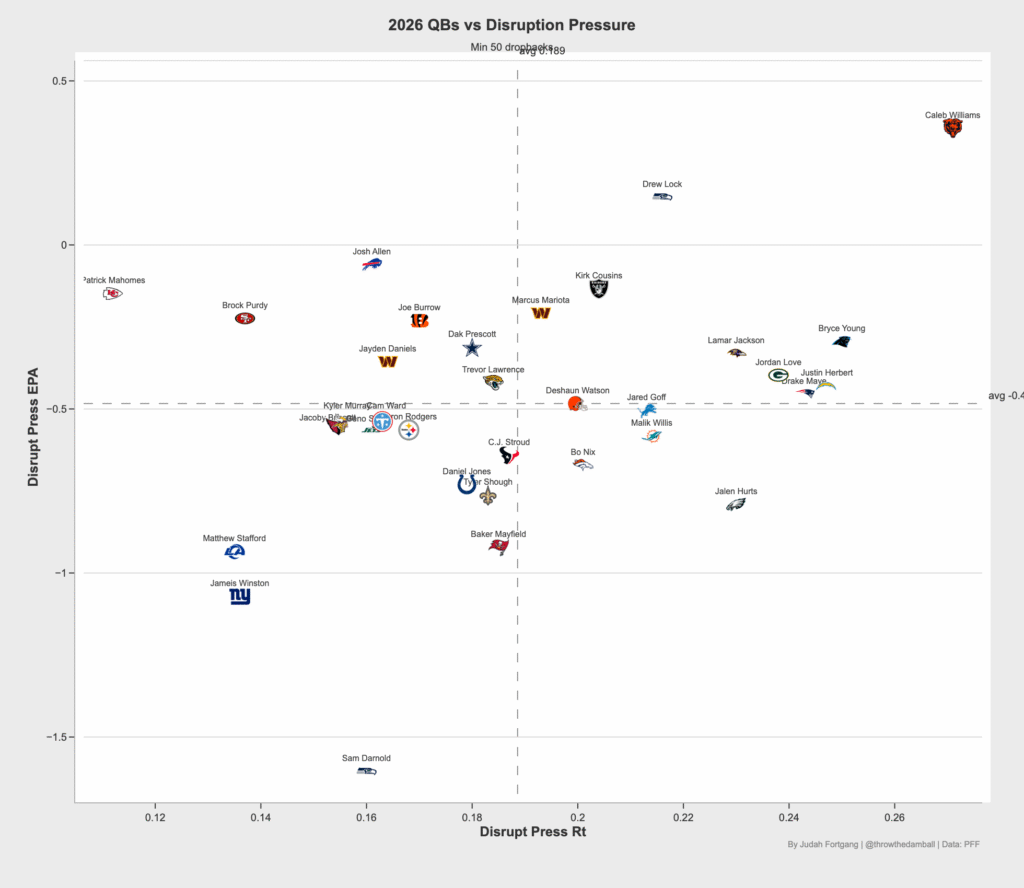
Stafford, meanwhile, has faced one of the lowest rates of disruptive pressure this year, but on the rare plays when he has faced it, he has been a disaster, losing nearly one expected point per play. Likewise, Stafford has been pressured by four-man rushes on just 23% of his dropbacks (compared with Buffalo's 45% pressure rate), and on those plays, he ranks second worst in the NFL, losing nearly 0.6 EPA per play.
Add it all up, and we have a Bills offense that should be able to move the ball both through the air and on the ground, mitigating the market value of the Rams' defense. Meanwhile, Buffalo‘s ability to generate pressure should create a larger sample of plays than the Rams are accustomed to in an area where Stafford has been a bottom-three quarterback in the NFL.

 © 2026 PFF - all rights reserved.