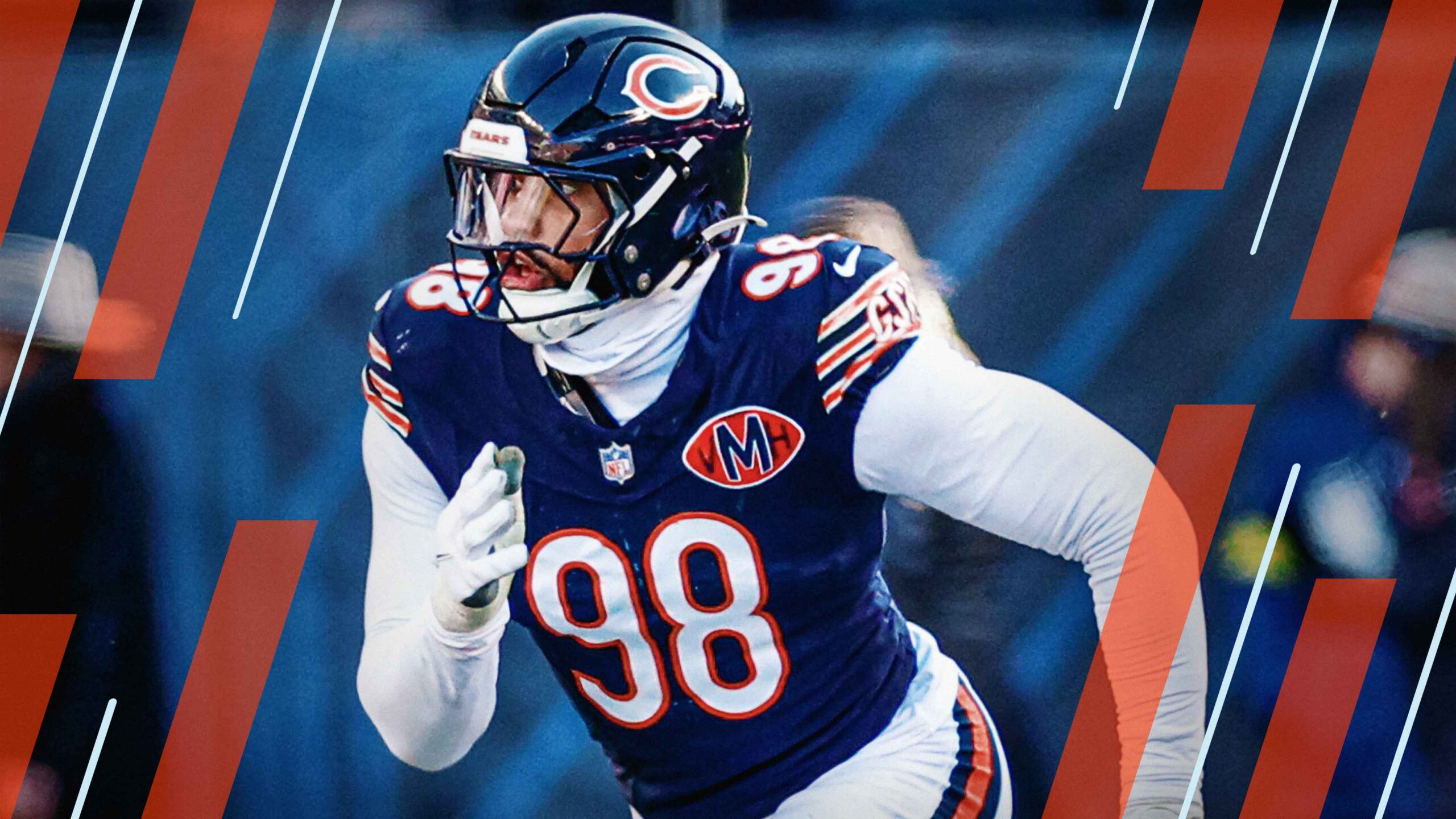
- The Bears‘ defense could trouble Caleb Williams‘ third year: Chicago's defense placed 21st in EPA per play and still lacks reliable contributors, especially along its front.
- The Patriots have questions on both sides: How will New England's offense operate without Stefon Diggs, and can its pass rush get better?
- The Broncos played to the margins last year: Denver went 12-4 in one-score games and relied on fourth-quarter magic, both of which seem unsustainable.
Estimated Reading Time: 6 minutes

Optimism is the name of the game throughout the NFL offseason. From flashy draft picks to big free-agent additions, almost every team feels as though it gets better in the seven months without organized football.
However, the harsh reality of the sport is that, invariably, at least several teams will decline based on years past. Last season, that was headlined by the Chiefs and Commanders, who each went from reaching their respective conference championships to winning no more than six games. Other franchises that saw diminished results in 2025 included the Lions, Ravens and Buccaneers.
Which teams may see similar regression in 2026? Based on their current offseason maneuvers as well as underlying factors from last year, here are three candidates.
Chicago Bears
The Bears took a legitimate step under first-year head coach Ben Johnson, going 11-6 and claiming the NFC North crown while also winning a playoff game. It’s difficult to dismiss what Chicago has blossoming, but there are reasons for worry.
Johnson is one of the sport’s preeminent offensive minds, and quarterback Caleb Williams (72.2 PFF passing grade) should only continue to scale up in his third season. At the same time, the Bears suffered a big loss up the middle when center Drew Dalman retired — and replacement Garrett Bradbury has never earned above a 68.0 overall PFF grade in any season. Likewise, the team’s receiver room is counting heavily on inconsistent talents like Rome Odunze and Kalif Raymond, who each earned a sub-73.0 PFF receiving grade last year.
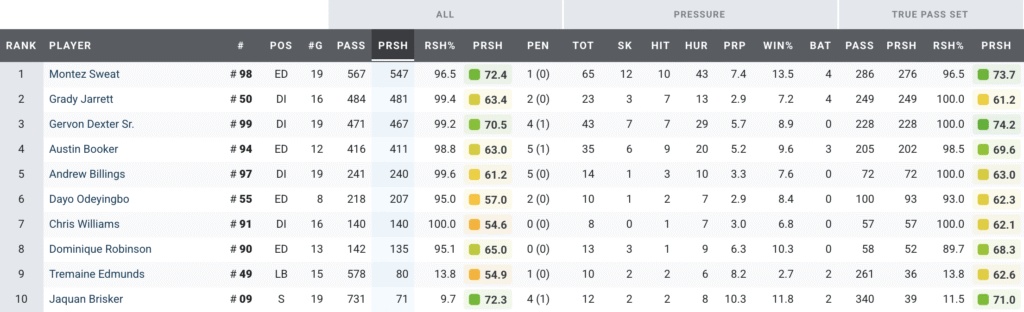
Defense is where more anguish surrounds the Bears. The team’s unit ranked 21st in EPA per play last year, with the big culprit the 26th-ranked pressure rate. Chicago’s defensive line looks concerning, with Montez Sweat the only returning starter to produce even a 63.0 overall PFF grade or 45 pressures. In the secondary, Chicago is relying on better play from corners Jaylon Johnson and Tyrique Stevenson, who both fell below a 62.5 PFF coverage mark.
The Bears could very well wind up in the playoff mix yet again under the visionary Johnson. But the margins look thinner on Chicago’s path back to late January, especially considering the team plays the eighth-hardest schedule by PFF Power Ratings. Williams’ third pro campaign could unfortunately mirror that of Daniels’ second, where the team’s bad defense leads to disappointment.
New England Patriots
The Patriots took the NFL world by storm last season, going all the way to Super Bowl 61 behind an MVP-caliber campaign from Drake Maye. But things may not be quite as swimming in 2026.
New England’s offense should remain at least solid given the caliber of year Maye put together as a sophomore, where he finished second in overall PFF grade (90.1) among qualifiers in the regular season and placed as the sixth-most-valuable gunslinger by PFF Wins Above Replacement. Maye’s offensive line may even be better after signing Alijah Vera-Tucker and drafting Caleb Lomu, although it’s unknown how center Jared Wilson will fare.
The bigger alarm bells ring at receiver and running back. New England’s wideouts earned the fifth-best PFF receiving grade a year ago, but much of that was fueled by Stefon Diggs (82.6). The Patriots may still trade for A.J. Brown — and they have solid options in Romeo Doubs, Kayshon Boutte and Demario Douglas — but losing a bona-fide No. 1 like Diggs will hurt. Likewise, Josh McDaniels will need more out of his run game after his backs placed 22nd in PFF rushing grade, leading to a 26th-place finish in rushing EPA per play.
On defense, Mike Vrabel’s team returns a strong core in Christian Gonzalez, Milton Williams and Robert Spillane. But Patriots edge rushers struggled attacking the passer with the 29th-ranked PFF pass-rush grade, and that room still has legitimate question marks about reliability. Further, while Kevin Byard ranked as the 11th-best safety by overall PFF grade in 2025, it’s fair to wonder how well he’ll sustain that in his age-33 season.
To reiterate, the Patriots figure to at least be competitive in Vrabel’s second year. But in a much more dangerous AFC on paper and with existing roster X-factors, a quasi-Super Bowl hangover could take effect.
Denver Broncos
The Broncos have the makings of another promising season ahead, but it likely won’t match the level they reached in 2025.
Arguing for superior results this year, Denver made an impressive splash when it acquired receiver Jaylen Waddle from the Dolphins, and his 90.6 PFF career receiving grade will form a legitimate duo with Courtland Sutton. Moreover, the Broncos return all five starters from football’s highest-graded offensive line, and Bo Nix showed improvement with a 76.1 PFF passing grade — the 11th-best among qualifiers.
Yet there are still question marks about Sean Payton’s run game, a unit that ranked 24th in EPA per play and 19th in explosive rush rate in 2025. Re-signing J.K. Dobbins (80.8 PFF rushing grade) is a boon, although he’s played only 776 snaps across five years. Likewise, backups RJ Harvey (69.6) and rookie Jonah Coleman are unproven on an offense that was 27th in rushing EPA per play following Dobbins’ injury.
It’s admittedly tough to be skeptical about Denver’s defense, which slotted fifth in EPA per play and returns the vast majority of its contributors. For what it’s worth, Vance Joseph’s group was a tad worse late in the year, slotting 11th in EPA per play and 30th in explosive run rate allowed from Weeks 13 through the AFC title matchup. Nevertheless, the Broncos project to field an elite unit, one that provides a strong overall floor.
So, why would a team that’s arguably improved roster-wise going into next year be a regression candidate? Much revolves around the Broncos’ play style last season.
Indeed, Denver went a league-best 12-4 in games decided by eight points or less, which isn’t sustainable year over year. Many of those close contests were against bad teams like the Giants, Jets, Raiders and Commanders, too. What’s also alarming is that the Broncos’ offense sputtered through the first three quarters before turning it on late, which is far from ideal in the long term.
| Metric | Quarters 1-3 | Quarter 4 + OT |
| PFF Grade | 17th | 7th |
| EPA/play | 20th | 10th |
| Success rate | 18th | 18th |
| Yards/play | 23rd | 10th |
| Scoring drive rate | 25th | 8th |
To reiterate, the Broncos wield the ingredients to be an established playoff contender in the AFC, presumably winning at least nine games and vying for another AFC West crown. But weighing regression in close margins with improvements across the division — and the larger conference — makes it fairly unlikely that Denver will repeat as the AFC’s No. 1 seed.


 © 2026 PFF - all rights reserved.