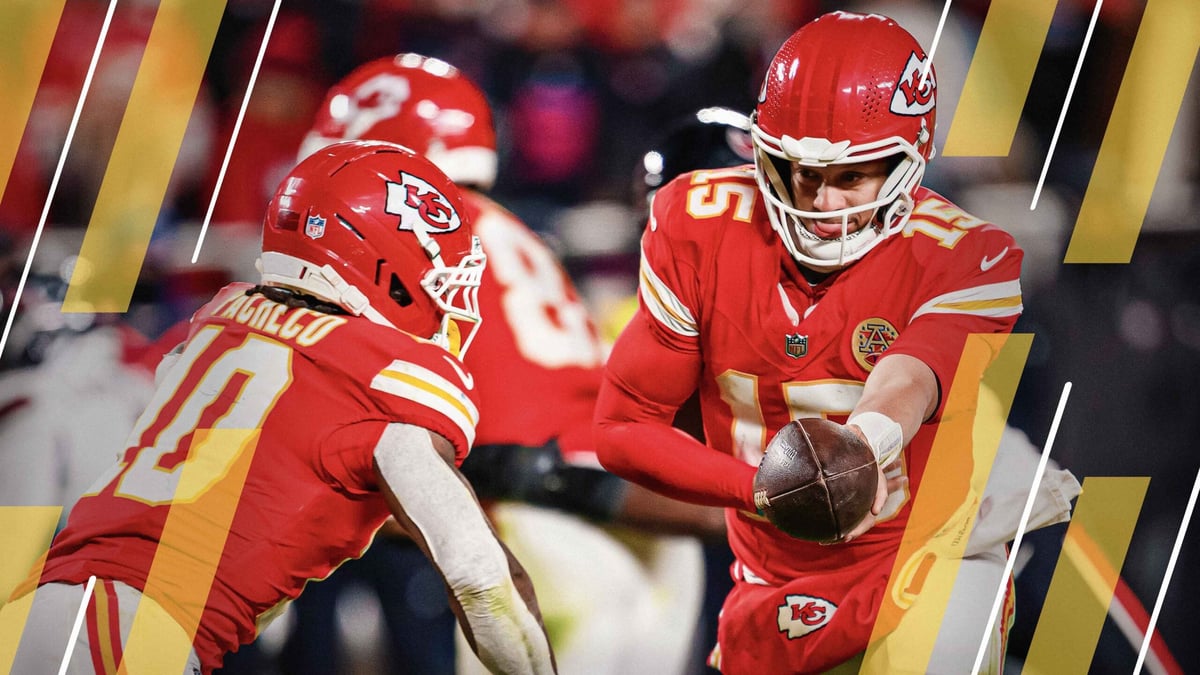
- The first play of a game often features a run: Over the last five years, 52.6% of opening plays were on the ground.
- Teams usually go under center to start: In order to settle in and mitigate crowd noise, offenses have implemented a higher rate of under-center looks.
- A feeling-out process for both sides: Offenses use motion nearly 20% more on their first play, while defenses are less likely to call man coverage.

Until the recent resurgence of NFL kickoffs, the first play from scrimmage had long been considered the true beginning of an NFL game. The opening kickoff served little more than a means of establishing field position. Unless something unusual happened on special teams like a long return or a turnover, the game rarely felt like it truly started until the offense lined up for its first snap.
The opening play is one of the primary moments in football that carries a legitimate human psychological element. Every player on the field has spent the previous hour going through warmups and the past week preparing for the opponent, but nothing replicates live action. Even at the highest level of the sport, nerves inevitably play some part.
Unlike every snap that follows, the first offensive play is generally independent of game flow. There is no score to chase or clock situation to manage, and no information has been gathered from earlier plays. Coaches usually script not only the opening play but much of the opening drive, carefully selecting concepts which offer the best combination of early-game success and information-gathering.
Obviously, the most critical objective on the first play of the game is to not screw up. The 2025 season saw just three turnovers on the opening play from scrimmage, committed by the Falcons, Raiders and 49ers. However, the 49ers also produced the only opening-play touchdown of the season, albeit a straightforward one-yard fullback dive after Skyy Moore’s 98-yard kickoff return against the Cardinals set them up on the goal line.
When quarterbacks did put the ball in the air on opening plays in 2025, they managed just a 78.8 passer rating. That’s the lowest mark on opening-play dropbacks in eight years. However, that’s largely noise caused by a relatively small sample size. What’s much more interesting, and not subject to noise, is the play-calling decisions each offense made to begin the game.
To answer that, we’re looking at every opening play from scrimmage recorded by PFF over the past five seasons. This study only includes the very first offensive snap of each game, not each team’s first possession. Across five 285-game regular seasons, that gives us a sample of 1,425 opening plays.
It’s no surprise that NFL offenses run the ball well above their normal rate on the opening snap. Over the last five seasons, offenses have run the ball on 52.6% of opening plays. By comparison, the league-wide rushing rate across all other offensive snaps sits at just 38.8%.
The conventional wisdom is straightforward. Allowing the quarterback to settle into live action with a routine exchange while also giving the offensive line an opportunity to establish itself physically is a safe and sound way to begin the game.
This desire to keep the ball on the ground becomes even stronger when the stakes are highest. Over the last decade, 62% of playoff games have begun with a run play, including each of the last five Super Bowls.
Some coaches lean into this philosophy more than others. Despite having arguably the NFL’s most potent quarterback over the last half decade, Andy Reid’s Chiefs lead the league with a 73% run rate on the opening snap. At the opposite end of the spectrum sits one of the AFC’s other superstars. Josh Allen has handed the ball off on just 30.9% of Buffalo’s opening plays since 2021.
Allen still likes to get into rhythm immediately, though. Rather than relying on the running game, the Bills frequently call quick, high-percentage throws to get their franchise quarterback settled in. Allen is 24-for-27 for 194 yards on opening-play passes since 2021 while averaging a lightning-fast 2.02-second time to throw.
Most run-heavy NFL teams on opening plays, 2021-25
| Team | Run Play % |
|---|---|
| Chiefs | 73.0% |
| Patriots | 66.7% |
| Giants | 62.5% |
| Lions | 60.4% |
| Falcons | 60.0% |
Even though offenses are noticeably more likely to run the ball to begin games, defenses haven’t become any more effective at stopping those attempts. Opening-play rushes actually average fractionally more yards per carry than runs on all other downs. However, defenses do succeed in limiting explosive gains. Carries of 10 or more yards occur 27% less frequently on the opening play than they do across all other rushing attempts.
The alignment of the quarterback on the opening play follows a similarly predictable trend. Across all offensive snaps over the last five seasons, quarterbacks lined up under center on 31.9% of plays. On opening snaps, that figure jumps to 48.8%.
This is partly logistical. Road teams receive the opening kickoff more often than not, meaning the offense’s first snap frequently comes in front of a loud home crowd, and operating under center eliminates the need for a silent count shotgun snap to begin the game.
Highest under-center rates on opening plays, 2021-25
| Team | Under Center % |
|---|---|
| Vikings | 80.0% |
| Titans | 75.0% |
| Raiders | 73.2% |
| Lions | 68.8% |
| Rams | 65.8% |
The combination of greater rushing likelihood and increased under-center usage naturally creates opportunities for play action. While traditional coaches have long preached that establishing the run opens up play action later in games, the inverse can be equally effective. Early run expectations often make the very first play an ideal opportunity to fake the handoff.
Since 2021, 46.4% of opening-play dropbacks have featured play action. That’s comfortably ahead of the 25.1% play-action rate across all other passing plays. Kirk Cousins has built much of his career on efficient play-action passing, making it little surprise that both the Vikings and Falcons have used play action on more than two-thirds of their opening-play dropbacks since 2021.
Atlanta’s high rushing rate, heavy use of play action and willingness to mix in screen passes means that, since 2021, just four of their 50 opening plays from scrimmage have featured a traditional dropback pass.
Screen passes and RPOs appear slightly more frequently on opening snaps as offenses search for easy completions and quick wins. We’ve already mentioned how Josh Allen has excelled in this role, but he’s not alone. Lamar Jackson owns a remarkable 95.0% career completion percentage on the first offensive snap of games, alongside a 92.1 PFF passing grade.
The same cannot be said for Jalen Hurts. While the sample is admittedly small, since he entered the league, Hurts has completed just eight of his 20 opening-play pass attempts while also taking a sack. He’s averaged only 3.3 yards per attempt, earning a 41.4 PFF passing grade.
Of course, not every coaching staff prefers to ease into games. Matt LaFleur’s Packers have called five opening-play trick plays since 2021, including fake tosses, reverse jet sweeps and even a flea flicker. Green Bay also leads the NFL in deep pass attempts of 20 or more yards on the opening snap.
That aggressive approach seems to have paid dividends. The Packers average an NFL-best 8.5 yards per opening play over the last five seasons. At the opposite end of the spectrum sit the Tennessee Titans, who have managed just 2.5 yards per opening play after receiving the opening kickoff.
However, initial results aren’t the only thing coaches prioritize on the first few snaps. The opening drive doubles as a valuable information-gathering exercise. No tool is used more frequently for that purpose than pre-snap motion. Motion has appeared on 74.2% of opening plays since 2021 compared to 57.8% of all other offensive snaps. Coordinators frequently send their primary receiving threat across the formation before the snap to see how the defense plans to respond, giving quarterbacks insightful clues they’ll revisit throughout the showdown.
In response to this, defenses generally avoid revealing too much of their overall plan immediately. Man coverage appears on just 15% of opening plays compared to roughly 25% across the league as a whole over the last five seasons. Blitz frequency, however, remains almost unchanged. Defenses continue to send extra rushers on roughly 31% of opening-play dropbacks, often pairing those pressures with fire-zone coverages behind them to avoid immediate coverage busts.
Despite the additional rushers, quarterbacks, unsurprisingly, have little difficulty getting the ball out. The scripted nature of the opening play and the league-wide preference for quick-hitting concepts means pass-rushers rarely have time to finish the job. Across all 1,425 opening plays in our sample, defenses have recorded just 25 sacks, and no defender has managed more than one opening-play sack over that span.

 © 2026 PFF - all rights reserved.