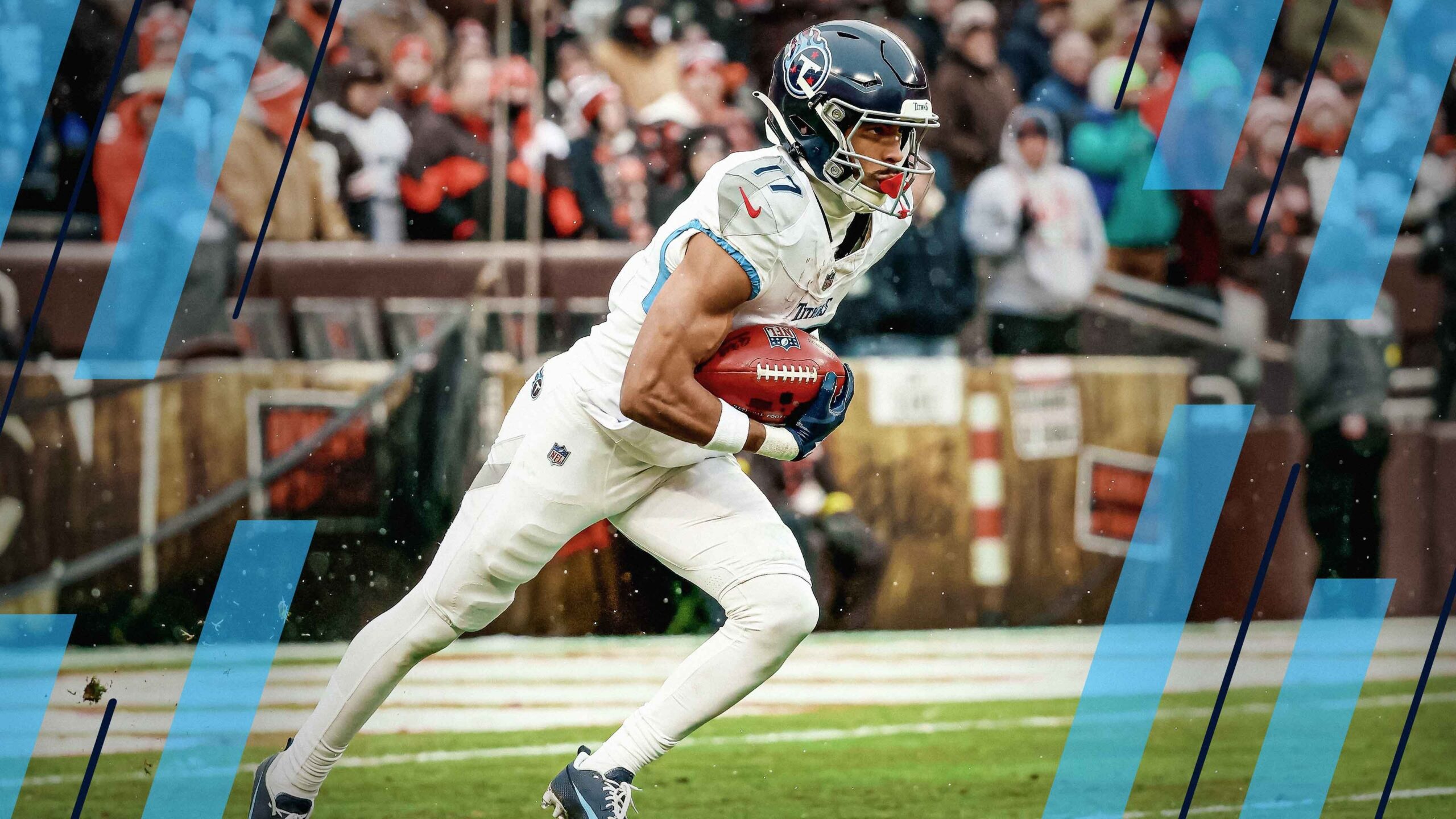
- Kick returns are more prevalent than ever: NFL teams averaged 69.41 returns last season, more than double the 2024 mark.
- Returns are making tangible impacts on games: Average field position has reached a record high, and franchises are creating more long returns than at any point in the past 12 years.
- Returns may impact defenses more than offenses: PFF data reveals that defenses are more affected by average starting field position than the other side.

As football began a new decade of action in 2020, the sport was arguably approaching its peak. The player widely considered the best ever dueling with the one coming for his throne, freak athletes aligning all over the field, high-tech stadiums straight out of a movie and augmented viewership helped create nearly ideal conditions.
But something felt a tick off, and it involved the very start of every game.
Since their inception, kick returns have been a source of instant energy for fans and players alike, with one evasive carry of the ball turning a contest on its head. In spite of the bravado returns provide, their frequency had fallen. Indeed, NFL teams averaged only 20.34 kick returns during the 2023 season, offering a noticeable drop for the third straight season.
The NFL went to work to restore a forgotten element of its game. Prior to the 2024 campaign, the league instituted the dynamic kickoff, which implemented an XFL-style return scheme focused on manufacturing more run-backs.
Those rules radically altered the traditional kick return by instituting the landing zone and bringing touchbacks out to the 30-yard line. Many touted the changes as borderline heretical and difficult to understand compared to the simplicity of the ordinary setup.
But as the fog has dissipated from the league’s new return system, those criticisms have started to subside and turn into praise — because the kick return remains just as exciting and important while better protecting players.
The kick return is back and better than ever
The first year of the dynamic kickoff yielded a big bump in the average number of team returns, jumping from 20.34 to 32.06. However, that new figure was still comparable to what had been done in recent seasons.
The league knew additional change was necessary, so it went back to the drawing board. Before the 2025 season, the NFL adjusted the new kickoff to bring touchbacks all the way to the 35-yard line.
The alteration may have seemed unthinkable at first, but it indisputably accomplished what it sought to do. Indeed, teams returned kicks an average of 69.41 times last year, causing a spike more than double the previous figure almost overnight. Consider that six returners — KaVontae Turpin, Chimere Dike, Myles Price, Devin Duvernay, Charlie Jones and Ray Davis — all returned at least 40 kicks. There were zero such players to do that in the prior five seasons.
Not only did kick returns become more frequent, but they also yielded the big plays that fans continually seek. Although the average kick return was a tad shorter in 2025 (25.39 yards) than the year prior (26.55), it remained steadily more than the sub-22.0-yard figures of the prior nine seasons. Along similar lines, the average starting field position moved from 30.24 in 2024 to a record 30.99 in 2025.
Chunk returns were a natural byproduct of more kicks being taken out, too. Last season, teams averaged 2.78 “long” kick returns (40 or more yards), which was the highest mark since 2012. Indeed, 10 separate squads tallied at least four long returns, compared to the two combined across 2023 and 2024.
From a football strategy perspective, it’s easy to understand why return rates are higher. Teams are disincentivized from kicking a touchback and gifting their opponent an extra five or more yards.
Now that a full year of the revised touchback is complete, the data also backs that notion. The table below reveals that drives beginning with a kick return yielded noticeably lower touchdown and higher punt rates.
Drive result metrics based on kick return type, 2025
| Return Type | Scoring Drive Rate | Touchdown Drive Rate | Drive Punt Rate |
|---|---|---|---|
| Return | 39.81% | 23.44% | 37.02% |
| Touchback | 38.64% | 25.5% | 27.69% |
| Short of Landing Zone | 53.06% | 34.03% | 29.69% |
Separating kick return type data from more binary field position data also underscores that an offense gains significantly favorable results if it starts at its own 35-yard line or better.
Drive result metrics based on starting field position, 2025
| Starting Range | Scoring Drive Rate | Touchdown Drive Rate | Drive Punt Rate |
|---|---|---|---|
| -1 to -34-Yard Line | 33.64% | 19.97% | 40.54% |
| -35 to +1-Yard Line | 49.46% | 28.57% | 21.96% |
Football can be a highly convoluted game, but the dynamic kickoff utilizes more straightforward math. Teams are now motivated to avoid touchbacks and defend returns, shrinking the field and assuming that the odds will play in their favor.
The metrics above paint a clear and lively picture of the kick return reclaiming glory like prime Devin Hester cruising to the end zone. But how does the dynamic kickoff impact the success of offenses and defenses on ensuing possessions? Let’s break it down.
Defenses benefit from limiting long kick returns
The Seahawks, Eagles, Texans and Rams all played like some of the stingiest defenses throughout the 2025 season, ranking in the top 10 by EPA per play. All of them have basic schematic elements in common, but each also was helped by starting with more favorable field position.
Indeed, Seattle, Philadelphia, Houston and Los Angeles comprise four of the top seven teams in average starting drive position. Three of the other teams in the top 10 — the Panthers, Steelers and Packers — all made the playoffs. Each of the franchises mentioned allowed their opponent, on average, to start at the 30.26-yard line or shorter.
It doesn’t seem like a coincidence that many of those top-tier defenses were impacted by disadvantageous offensive starting field position. After all, pitting an opponent deeper in its own territory creates far more margin for error for a defense, where surrendering an explosive play doesn’t mean the other side reaches scoring range.
The inverse placement on that list reveals that sentiment to be true. The Cardinals, Buccaneers, Raiders, 49ers and Jets all ranked in the bottom eight of average field position allowed. It’s true that those defenses were inferior because of poor pass rushes, shaky run defense, coverage lapses and other mistakes, but they were put at natural scoring disadvantages with their opponents closer to the end zone.
For example, if an offense starts a drive after a touchback, it may only need five yards to feel comfortable going for it on fourth down at the 40-yard line. Likewise, starting at the 35 could leave a kicker 20 or 25 yards away from makeable field goal range. The bottom line is that while defenses can force negative plays like sacks and turnovers, one that “does its job” limits yards and holds its opponent behind schedule. That same suffocating group is automatically penalized by a kick return unit that enables an easier pathway to score and/or sustain possessions.
It would make sense for formidable defenses to play behind teams that don’t allow many touchbacks, but that’s actually not necessarily the case. For instance, the Rams’ 56.3% touchback rate was the highest by almost 20 percentage points, and that didn’t prove a hindrance to Chris Shula. Los Angeles still constrained opposing field position by limiting average return distances, holding returners to a league-low 20.1 yards.
In parallel, the Jaguars and Saints netted the second- and third-highest touchback rates, and both still ranked no worse than 11th in defensive success rate. On the flip side, the teams with the lowest touchback frequencies included the Colts, Steelers, Bengals, Bills and Jets, whose defenses were generally substandard in 2025. It’s evident that touchbacks alone don’t correlate well with defensive efficiency, with kick return averages on a team’s other returns also playing a big role in measuring where offenses begin.
Good kick returns don’t consistently aid offenses
If good kick return units leave defenses with fewer yards to defend, it’s only fair to assume that teams with better return units aid their offense’s production. Yet the picture is murkier here.
The top 10 teams in average starting field position feature a wide range of offensive outcomes, from the Lions, 49ers and Colts to the Jets, Dolphins, Giants and Raiders. Indeed, Aaron Glenn’s bunch started at its 34.5-yard line on average — the best in the league — yet scored on only 29.8% of its drives — the fourth-worst figure in football.
Another way to look at if starting point impacts offensive performance is gleaning where the league’s most efficient offenses began. The table below doesn’t suggest a very apparent relationship.
Top NFL offenses and their average starting field position, 2025
| Team | EPA/Play Rank | Avg. Starting Field Position Rank |
|---|---|---|
| Rams | 1st | 11th |
| Bills | 2nd | 14th |
| Packers | 3rd | 19th |
| Cowboys | 4th | 27th |
Beginning field position doesn’t seem to carry the same impact for offenses, but what about teams that regularly return kicks better than others? That’s also fairly ambiguous.
Only four of the top 10 teams in PFF kick return grade — the Colts, Bills, Chiefs and Cowboys — ranked in the same tier of offensive EPA per play. By the same token, the Jets, Giants, Saints and Dolphins all returned kicks well, but it clearly didn’t translate much once their offenses trotted out.
What gives? The simplest explanation is likely that a great offense can (and will) produce explosive plays and stay ahead of the sticks no matter where it begins. While reducing the distance to paydirt always helps, the league’s best quarterbacks and skill-position players regularly get there themselves anyway. That contrasts the defensive side, where scoring drive rate is arguably less in the defense’s control and more reliant on where the ball is first snapped.
One wrinkle in this rather vague pattern is that returning more kicks meshed with better offensive performance. The Cowboys, Bills, Rams, Bears, Patriots and Bengals all placed in the top 10 in total kicks returned.
It’s not immediately clear what the overlap between those two variables is considering that those run-backs didn’t regularly yield improved starting field position or spark chunk plays. Maybe kick returners who then suit up on offense feel invigorated, or seeing a high number of missed tackles forced inspires subsequent offensive plays.
Only one season of data with the revised dynamic kickoff is in the books, and it’s already enlightening. It’s abundantly clear that kick returns are back in earnest, and teams will likely continue to invest more resources in having strong returners and gunners as they seek any edge. Over time, the interaction between kick returns on both offenses and defenses will better reveal itself — but for now, it seems that coaching staffs should prioritize limiting big returns rather than gaining them.

 © 2026 PFF - all rights reserved.