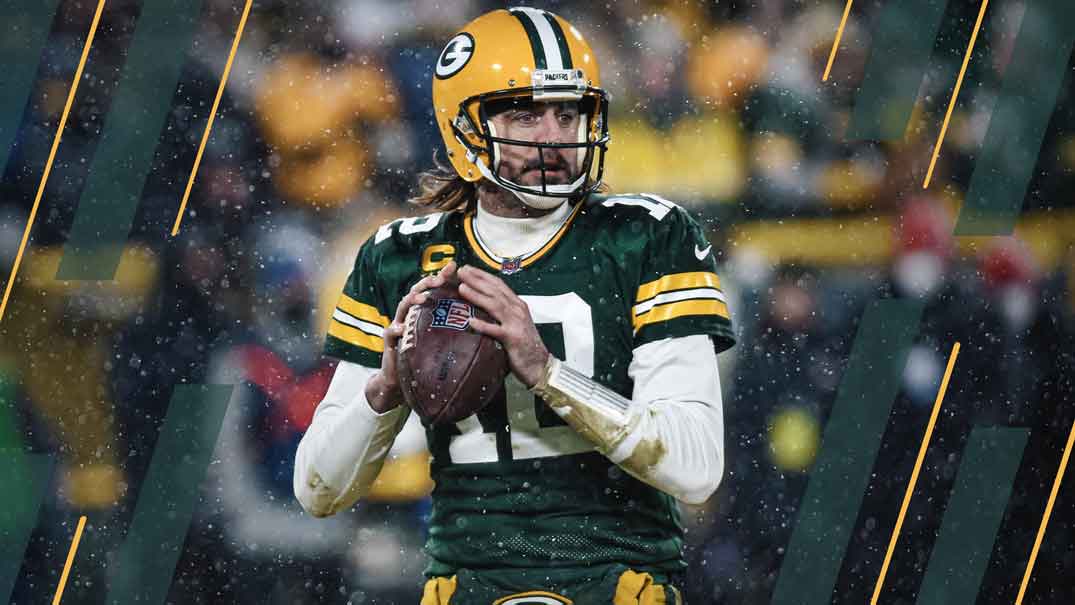
- Aaron Rodgers leads the Green Bay Packers offense: Rodgers was the obvious choice at quarterback, with 10 of the 11 players on offense playing their entire Packers career with Rodgers at quarterback.
- A Super Bowl secondary: The Packers won the Super Bowl in 2010 thanks to their offense, but also great play from defensive backs Charles Woodson, Tramon Williams and Nick Barnett.
- Tucker Kraft claims the lone active starter distinction: Aided by a breakout campaign and a decade-long organizational search for stability at tight end following Jermichael Finley's injury retirement, Kraft emerged as the sole active player to make the roster.

As part of PFF's celebration of 20 years of NFL data, we're building an All-Star team for every franchise, highlighting the best players at each position from the PFF era. This installment turns to the Green Bay Packers.
PFF's database dates back to the 2006 NFL season, providing a unique lens for evaluating and comparing players across eras. More details on the methodology used to construct these teams are available at the bottom of the page.
Offense
- QB: Aaron Rodgers (2006-2022)
- HB: Aaron Jones Sr. (2017-2023)
- WR: Davante Adams (2014-2021)
- WR: Jordy Nelson (2008-2016)
- Slot WR: Greg Jennings (2006-2012)
- TE: Jermichael Finley (2008-2013)
- TE: Tucker Kraft (2023-2025)
- LT: David Bakhtiari (2013-2023)
- LG: Josh Sitton (2008-2015)
- C: Corey Linsley (2014-2020)
- RG: T.J. Lang (2009-2016)
- RT: Bryan Bulaga (2010-2019)
The Packers' offense was relatively straightforward to assemble. Aaron Rodgers served as Green Bay's franchise quarterback for most of the past 20 seasons, making him an easy choice. His primary receiving targets during that span all earned spots on the roster, while Aaron Jones Sr. and Jermichael Finley were the clear selections at running back and tight end, respectively.
The toughest decisions came at center and right tackle. Scott Wells and Zach Tom may have reached slightly higher peaks, but Corey Linsley and Bryan Bulaga ultimately earned the nods because of their longevity.
One of the more difficult position-specific decisions involved Josh Sitton and T.J. Lang. After the 2012 season, the Packers made the unusual decision to switch the sides of their two Pro Bowl-caliber guards. Sitton played more snaps at right guard during his time in Green Bay and graded similarly at both positions. Lang also spent more time at right guard, but his grades were notably better there, making him the choice on the right side and Sitton the selection at left guard.
While the Packers have reached the playoffs in all three seasons since the Rodgers era ended, they have also fielded one of the NFL's youngest rosters during that span. As a result, few current players accumulated enough production to make this team. Tucker Kraft is the lone active Packer on the roster, aided by his strong 2025 season and Green Bay's decade-long search for a long-term answer at tight end following Finley's retirement.
Defense
- DI: Mike Daniels (2012-2018)
- DI: Cullen Jenkins (2006-2010)
- NT: Kenny Clark (2016-2024)
- ED: Clay Matthews (2009-2018)
- ED: Rashan Gary (2019-2025)
- LB: De’Vondre Campbell Sr. (2021-2023)
- LB: Desmond Bishop (2007-2011)
- CB: Jaire Alexander (2018-2024)
- CB: Tramon Williams (2007-2014, 2018-2019)
- Slot CB: Charles Woodson (2006-2012)
- S: Nick Collins (2006-2011)
- S: Adrian Amos (2019-2022)
The Packers have been known more for their offense than their defense over the past 20 seasons, but they have still featured several cornerstone defenders, most notably Charles Woodson and Clay Matthews. The roster includes a mix of long-term contributors and players who earned spots on the strength of brief but exceptional peaks.
The secondary was the most difficult position group to assemble. The three best defensive backs from Green Bay's lone Super Bowl team of the past 20 seasons were easy selections, as was Jaire Alexander. Both Woodson and Tramon Williams spent time at safety late in their Packers careers, but each was notably better at cornerback.
One option would have been to move Woodson or Williams to safety to create room for Casey Hayward, who played at a high level in four seasons as Green Bay's slot cornerback before earning All-Pro honors with the Chargers. However, the gap between Hayward and Adrian Amos was small enough that Amos earned a spot on the roster while allowing Woodson and Williams to remain at their best positions. Morgan Burnett and Sam Shields also narrowly missed the cut.
Amos joins linebackers De'Vondre Campbell Sr. and Desmond Bishop as players who made the roster largely on the strength of one exceptional season. Bishop earned an 89.1 PFF grade in 2010, Amos posted an 89.9 grade in 2020 and Campbell recorded an 85.0 grade in 2021. None earned a grade above 80.0 in any other season with Green Bay, but those campaigns represent the highest peaks at their respective positions during the PFF era.
Nick Barnett and Aaron Kampman were among the notable Packers from the 2000s who narrowly missed the roster. In both cases, a significant portion of their careers occurred before the PFF era, limiting the body of work available for comparison.

Methodology
Selections were based on normalized PFF grades adjusted by season. To balance peak performance and longevity, only a player's five best seasons with a franchise from 2006-25 were considered. Any season with an overall PFF grade below 60.0 was excluded, ensuring that strong years helped a player's case while weaker seasons were not held against him. Postseason play was included, though all seasons were capped at a 16-game equivalent to maintain consistency across eras. At each position, the player with the highest score under this methodology earned the spot.
Each team consists of 12 offensive and 12 defensive players. Because 11 personnel and nickel defense were the league's most common alignments over the past two decades, those personnel groupings served as the foundation for every roster. Teams received either a second tight end or a fullback, depending on whether they used more 12- or 21-personnel. Defensively, teams received either a third interior defender or a third linebacker depending on whether they primarily operated from a 3-4 or 4-3 front.
Players who logged significant snaps at multiple positions during their tenure with a franchise were eligible at either spot. In most cases, those players were assigned to the position where they provided the greatest value, though their versatility occasionally influenced the final roster construction.
Unlike some All-Pro teams that group offensive linemen by position type, these rosters were built according to where players actually lined up. If a team's two best tackles both played exclusively on the left side, only the top left tackle was selected. One of the three wide receivers and one of the five defensive backs was also required to have significant slot experience. In a 4-3 defense, one linebacker needed experience at the Sam linebacker position, while in a 3-4 defense, one defensive tackle needed experience at nose tackle.
When multiple players are listed at the same position, the first name represents the top selection. Players designated as slot wide receiver, slot cornerback, nose tackle or Sam linebacker were selected specifically for those roles rather than as the third-best player within their broader position group.

 © 2026 PFF - all rights reserved.