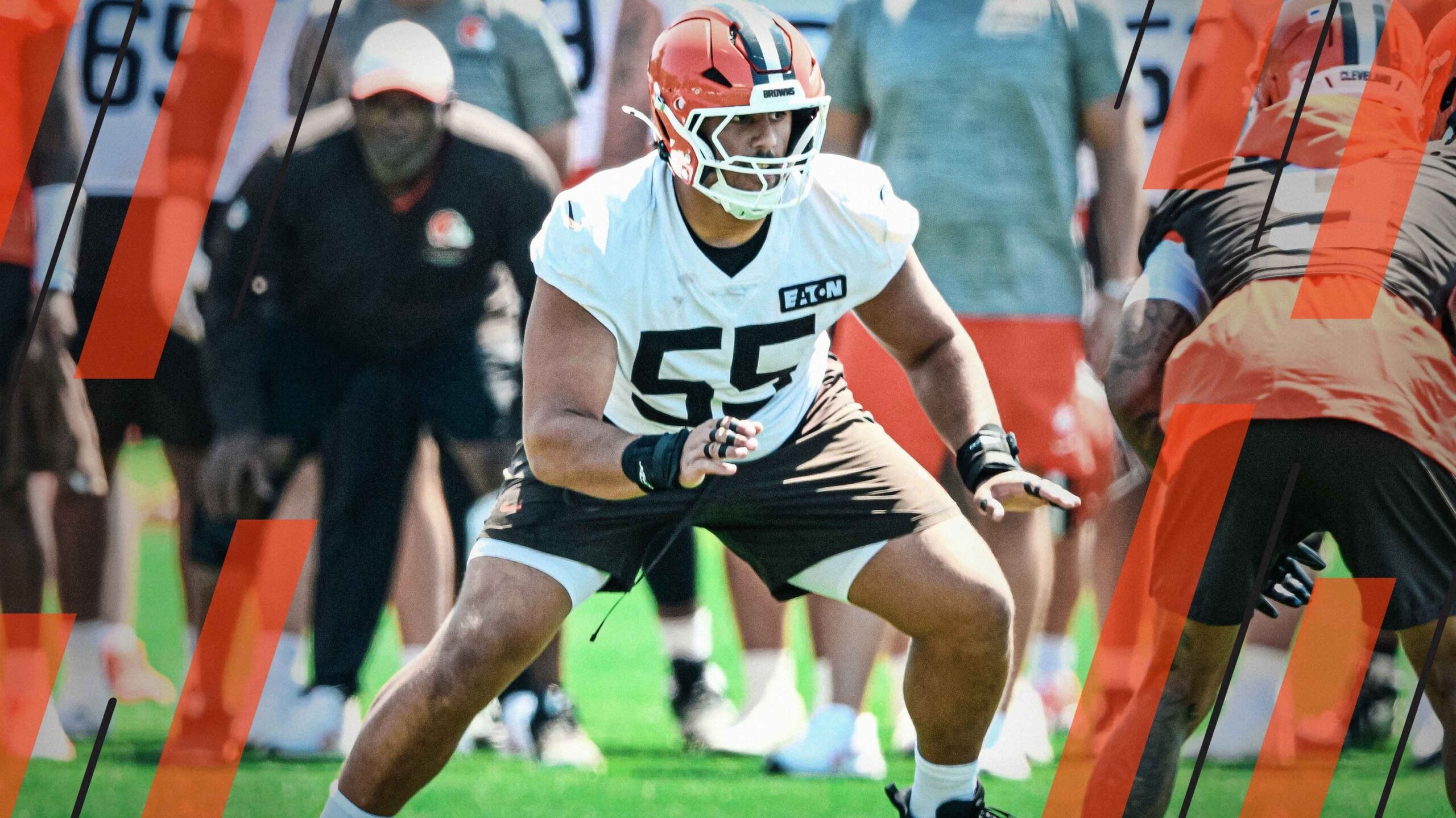
- The Browns‘ offensive line is overhauled: Cleveland selected Spencer Fano with the ninth overall pick to complement numerous newcomers.
- The Packers face question marks: Jordan Morgan takes over at left tackle, while Sean Rhyan projects as the starting center.
- The Texans looked to finally build a strong group: First-round pick Keylan Rutledge and veteran Braden Smith headline Houston's updated line.

Offensive line play is the backbone of all real-life NFL teams, and forms a huge part of your fantasy football scores each week. After all, a quarterback can’t deliver the deep shots down the field if they don’t get the requisite protection. A running back may see their value seriously harmed if the line can’t open up gaps for them.
The offseason sees many teams run the rule over their offensive line, and the changes — both additions and subtractions — can major huge fantasy implications across the board and swing the value of players or whole position groups. With that said, we’ll take a look at some of the biggest fantasy impacts a change in offensive linemen or even a lineman will play.
Cleveland Browns
The Browns finished the 2025 season with a 49.7 PFF pass-blocking grade, dead last, and a 55.4 PFF run-blocking grade, 28th in the NFL. The Browns also posted an 80.3 pass-blocking efficiency rating, ahead of only the Las Vegas Raiders.
Major surgery was undertaken in the offseason. Former Green Bay Packers do-it-all lineman Elgton Jenkins signed with Cleveland, as did former first-round pick Zion Johnson. The Browns also traded for Tytus Howard before drafting Spencer Fano at ninth overall.
It is yet to be determined who will be the Browns’ starting quarterback, though it seems Shedeur Sanders is battling it out with Deshaun Watson for the position. From Week 12 onward — Sanders’ first start — only Jacoby Brissett faced more pressures (127) than Sanders (121). That was not helped by the fact that Sanders held the ball the second-longest in that same stretch with a 3.32-second average time to throw.
Only the Raiders scored fewer points than the Browns’ 279. If Cleveland’s offensive line can return to even average, then it will have a significant impact on all fantasy-relevant parties in the offense.
Green Bay Packers
The Packers were a bottom-10 pass-blocking line in 2025 and enter the 2026 season with some shuffling across the unit given both Rasheed Walker’s and Jenkins’ exit.
Former first-round pick Jordan Morgan looks to settle in as the team’s starting left tackle following Walker’s departure in free agency. Walker posted a solid 69.1 PFF pass-blocking grade in true pass sets in 2025, a starkly better number than Morgan’s 55.0.
Meanwhile, the club will need more from Sean Rhyan, who will take over as the starting center in place of Jenkins. Rhyan signed a three-year, $33 million extension in the offseason, but his 42.2 true pass set PFF blocking grade was the lowest of any Packers lineman. He also gave up 17 pressures which, from the interior, is a problem.
That worry may be magnified if Aaron Banks and Anthony Belton don’t improve on the inside. Banks, a big-money free-agent signing in 2025, allowed 21 pressures in 191 true pass set snaps. Those pressures ranked him 22nd in the NFL; the issue is every guard who gave up more pressures also played significantly more snaps in a true pass set (outside of the Miami Dolphins’ Jonah Savaiinaea).
If the unit can’t keep Jordan Love — who compiled the third-lowest pressure-to-sack rate among qualifying quarterbacks last season at 10.9% — clean, then his fantasy stock could be harmed, along with that of his pass-catchers.
Houston Texans
The Texans invested heavily in their offensive line this offseason, perhaps their only true weak point on their roster.
C.J. Stroud enters a critical fourth year as the team’s starter, with a decision on a contract extension taking shape as the season nears. The former second overall pick produced a 49.0 PFF passing grade when under pressure in 2025 — 15th out of 26 qualifying signal-callers — and generated a 59.5 passing grade against the blitz, 23rd out of 25.
However, the Texans’ offensive line itself gave up 155 pressures, which placed 18th in the NFL. It’s nothing to write home about, but it is distinctly average. Yet Houston went out of its way to try and upgrade across the unit in order to keep its (hopeful) franchise quarterback clean.
Houston added Braden Smith, Evan Brown and Wyatt Teller through free agency, then selected guard/center Keylan Rutledge in the first round of the draft. The goal is to have a line that can be better-than-average to below-average. Consider that the Texans’ PFF pass-blocking grade was 63.5, and the unit sat at a 59.8 PFF run-blocking grade.
If the Texans’ line can keep Stroud clean and confident, an offense which scored 404 points last season — 13th-most in the league — could easily push into the top 10 for 2026, especially if Jayden Higgins and Jaylin Noel take sophomore leaps.


 © 2026 PFF - all rights reserved.