2027 NFL Draft: Stock up, stock down after Week 11 of college football
By
Daire Carragher
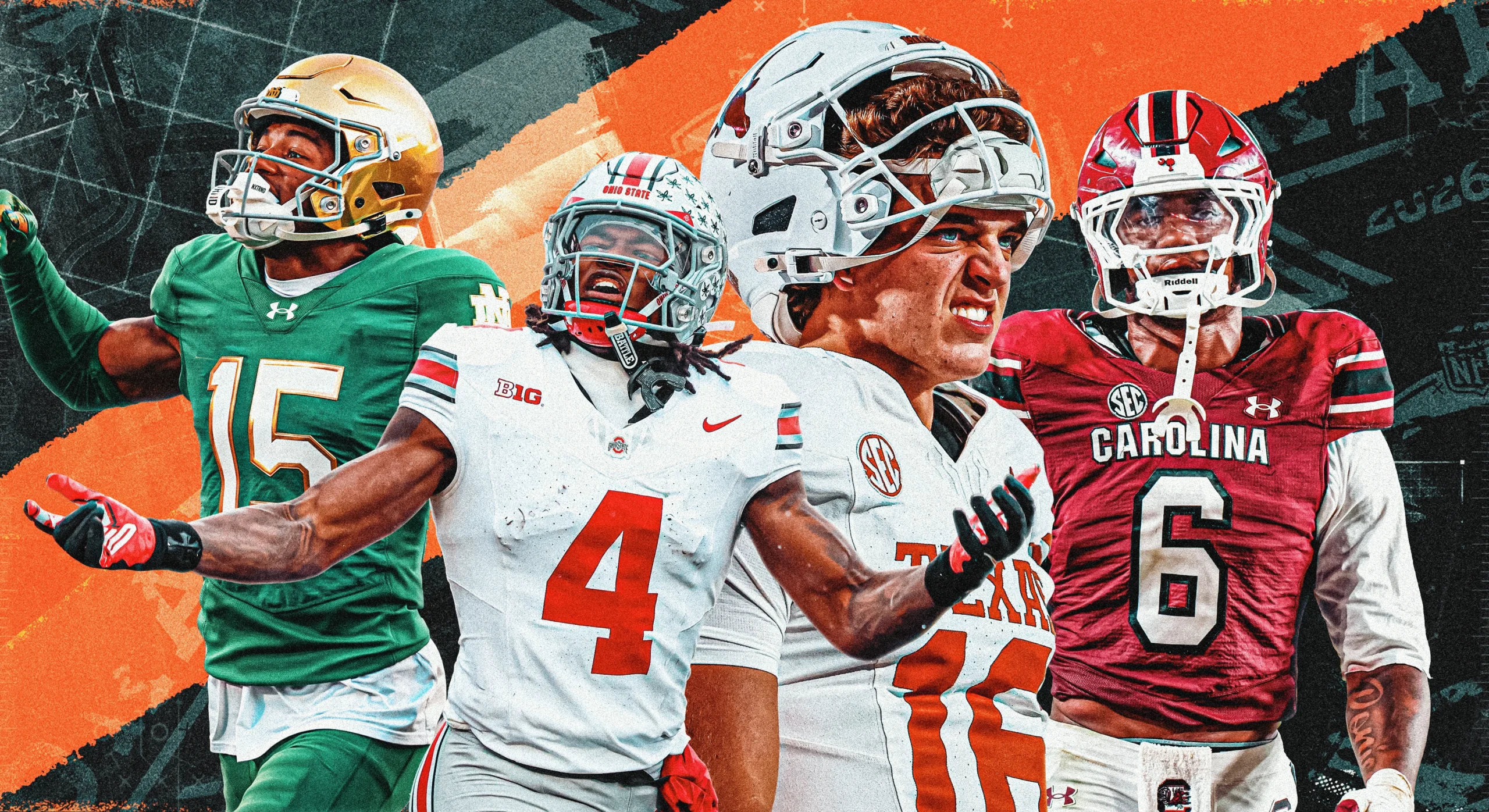
Jelani McDonald headlines the draft risers: The Texas safety earned a 90.7 overall PFF grade against LSU, intercepting three passes and recording 10 tackles without a miss.
Cam Coleman faces questions about his production: The Texas wide receiver went without a catch on 20 routes against LSU, continuing an inconsistent season after transferring from Auburn.
See the grades for yourself: Explore PFF's college football player grades to evaluate the prospects rising and falling on the 2027 NFL Draft board.
Many top prospects in the 2027 NFL Draft have just two more games to prove themselves before their college football careers draw to a close.
Week 11 was disrupted before a ball was even snapped, with several teams scrambling to make alternative travel arrangements and kickoff times pushed back across the country due to aviation disruptions.
The quality of play may have suffered as a result. The Power Four conferences combined for a 76.9 PFF offensive grade in Week 11, the lowest weekly mark of the season and down from 84.4 the previous week.
Several top quarterback prospects struggled to impress, and it wasn't a banner week for wide receivers, either. Of the 15 wide receivers ranked inside the top 100 on PFF's draft board who played Saturday, only Jeremiah Smith surpassed 100 receiving yards — and even he dropped two passes.
Currently ranked as the 56th overall prospect on PFF's big board and fourth among safeties, McDonald did more for his draft stock this weekend than any other player inside the top 100. He delivered his highest-graded performance of the season on the road against LSU, earning a 90.7 overall PFF grade.
McDonald intercepted LSU quarterback Sam Leavitt three times, twice in the red zone. He could've had a fourth pick, too, but an errant throw over the middle slipped through his fingertips.
The turnovers will, of course, be the flashy plays most remember, but scouts have long admired McDonald's natural range in deep zone coverage. His ability to read and react to throws has always been one of his primary selling points as a prospect.
McDonald's passer rating allowed when targeted this season now stands at 69.0. He has been an above-average run defender throughout his career, and this game marked a step in the right direction for his tackling, too. He finished with 10 tackles and no misses. An excellent performance overall.
We mentioned that top wide receiver prospects struggled to produce this weekend, but Coleman didn't catch a single pass. He ran 20 routes and drew three targets against LSU‘s defense but failed to record a reception.
Coleman hasn't exactly benefited from elite quarterback play from Arch Manning lately, but his lack of production in the Longhorns‘ offense is becoming impossible to ignore.
Coleman has battled injuries this year, and even with him back in the lineup, Steve Sarkisian appears to be turning to underclassmen Emmett Mosley and true freshman Jermaine Bishop Jr. for larger roles in the Texas passing attack.
Coleman impressed at Auburn but wasn't particularly productive relative to his high usage. His yards per route run figure has hovered around 1.7 in all three collegiate seasons. He stands a good chance of playing postseason football with the 8-2 Longhorns, but any hopes of a post-transfer breakout in Austin appear to have been firmly put to bed.
With many of the draft‘s top wideouts failing to make an impact this weekend, the door was open for someone else to attract attention, and that's exactly what Carlos Hernandez did.
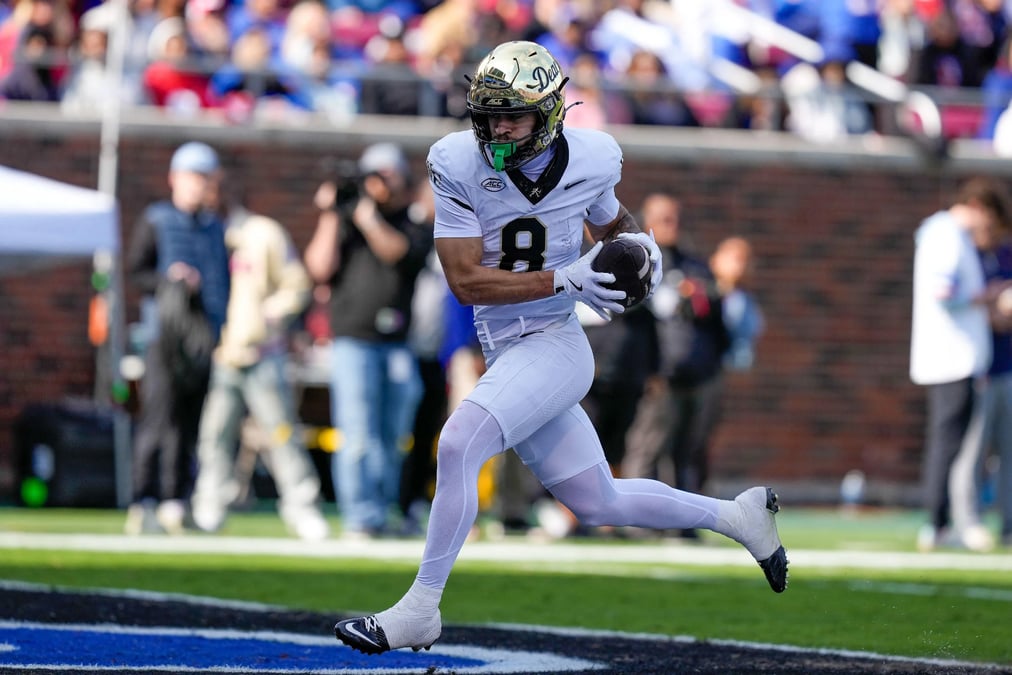
The true senior has been an integral part of Wake Forest‘s meteoric rise. The Demon Deacons‘ offense has been a buzzsaw, outscoring opponents 145-0 in the first halves of their last four games. Hernandez has now surpassed 1,000 receiving yards on the season and developed tremendous chemistry with quarterback and Heisman contender Gio Lopez, who is likely to return to college football for another season.
Hernandez hasn't dropped a pass since September. In his nine full-game appearances, he has failed to reach 85 receiving yards just once.
The Demon Deacons don't put him in many contested-catch situations, but when they do, Hernandez comes down with the football 75% of the time. He's used heavily in intermediate areas, where he can continue to gain yards after the catch. Hernandez is averaging a monstrous 8.0 yards after the catch per reception and has recorded 11 receptions of 15-plus yards over his last three games.
The Razorbacks picked up their second conference win of the season Saturday against South Carolina, which was without quarterback LaNorris Sellers. Despite the Gamecocks turning to the less mobile Cutter Woods, Rhodes failed to generate a single pressure on 24 pass-rushing snaps.
It was the first time in Rhodes' career that he had rushed the passer more than 12 times in a game without recording a pressure. Despite throwing three interceptions and scoring just six points, the Gamecocks kept their quarterback upright all game. Woods wasn't necessarily getting the ball out particularly quickly, either, averaging 2.83 seconds to throw.
Rhodes currently ranks just outside the top 100 prospects on PFF's big board and profiles as a fringe Day 2 selection. His experience and positional value may push him higher in due course, but for now, it's difficult to ignore how significantly his production has declined from a year ago.
Rhodes has recorded less than half as many pressures as he did last season, with only two games remaining to make an impression. He has now gone four straight games without a sack and has just two all season.
Power Four Wide Receivers
Weeks 1-11
The same players and metrics are available as a sortable table on each team's Leaders tab.
This was yet another quality performance from Gilliam, who has not only risen to first-round status but is quickly emerging as a contender for top-10 pick consideration. He earned a 79.3 overall PFF grade against Texas A&M this week. Gilliam played just 33 snaps, his fewest in any SEC game this season, but made an impact against both the run and the pass.
Gilliam is a wonderfully coordinated athlete whose ability to defend interior runs is magnificent. Opposing offenses have started to recognize that running inside with only one blocker responsible for Gilliam often gets them nowhere.
Gilliam has earned an 87.1 PFF run-defense grade this season without a single below-average performance in that department. It's difficult to believe he was stuck in a rotational role on Penn State‘s defense last season, unable to make much of a contribution and finishing with a 52.2 PFF run-defense grade.
One-season wonders can sometimes be met with skepticism in draft evaluations, but when a player performs with Gilliam's consistency and conviction, it's impossible to ignore. Look no further than Quinnen Williams, who enjoyed just one dominant season as an interior defender in the SEC. That draft pick certainly worked out.
After an explosive performance against Stanford three weeks ago that earned Brown a 91.9 overall PFF grade, he followed it up with the two worst games of his career from a grading standpoint, on the road against Georgia Tech and North Carolina.
Ranked 78th overall on PFF's big board, Brown is a little undersized by NFL running back standards. Like prospects such as Jahmyr Gibbs before him, he needs to prove he can contribute heavily in the receiving game to earn an every-down role. A drop and a fumble in the passing game over the past two weeks aren't helping his case.
Brown has been far too hot and cold for a top running back prospect this season. Between Weeks 5 and 9, he produced three monstrous games in which he averaged more than 13 yards per carry and scored six total touchdowns.
In other outings, he has exhibited sluggish effort and struggled to generate anything before or after contact. That includes 17 carries for 38 yards against Ole Miss and nine carries for 11 yards against Syracuse.
It's worth noting that Brown doesn't always receive a bell-cow workload at Louisville. Much like Jadarian Price last year, that may make it difficult to gauge how productive he could be as the lead back in an offense.
There is no shortage of quality pass-protecting offensive tackles projected for the middle rounds of the 2027 NFL Draft. Boley is one player who has built a very solid résumé.
The fifth-year senior is on track to log his 3,000th career college football snap before the season is over. His grades have steadily improved each year, reaching an 81.9 overall PFF grade so far this season.
Saturday's dominant display in a 29-point victory over Cal marked Boley's seventh pressure-free game of the season. He has allowed just one sack and one additional quarterback hit on 300 pass-blocking snaps in 2026.
Unlike several other mid-round pass protectors in this class, Boley has also taken a clear step forward as a run blocker. He's been solid in Virginia‘s run game, which relies heavily on inside and outside zone concepts. Boley has earned a 74.8 PFF run-blocking grade, up from 69.1 a year ago.
Boley currently ranks 140th on PFF's big board, and his age won't work in his favor as a super senior. But in the third-to-fourth-round range, that might hardly be a factor in what is shaping up to be one of the oldest draft classes of all time.
PFF's Big Board for the 2027 NFL Draft offers three-year player grades, combine measurables, position rankings, and in-depth player analysis for all of the top draft prospects.
Available with
Subscriptions
Unlock the Fantasy Draft Kit, with Live Draft Assistant, Fantasy Mock Draft Sim, Waiver Wire, Rankings & PFF Grades


 © 2026 PFF - all rights reserved.