- Draft capital vs. player value drives outcomes: The PFF trade analyzer compares perceived pick value to expected player outcomes using WAR-based models, revealing which teams gained long-term advantages.
- Trading down consistently creates value: Teams like Cleveland, Miami, Buffalo and San Francisco leveraged extra picks to increase their chances of generating positive WAR outcomes across multiple scenarios.
- 2026 NFL Draft season is here: Try the best-in-class PFF Mock Draft Simulator and learn about 2026's top prospects while trading and drafting for your favorite NFL team.
Every NFL draft trade tells two stories: what the league thinks a pick is worth on draft night, and what that pick is actually expected to become once a player is selected.
The PFF 2026 NFL Draft trade analyzer is built to show both, using six different trade value charts — including two PFF WAR-based models — to measure how much value each team gave up, how much it received and which side has the better chance of winning the deal once the range of realistic outcomes is taken into account.
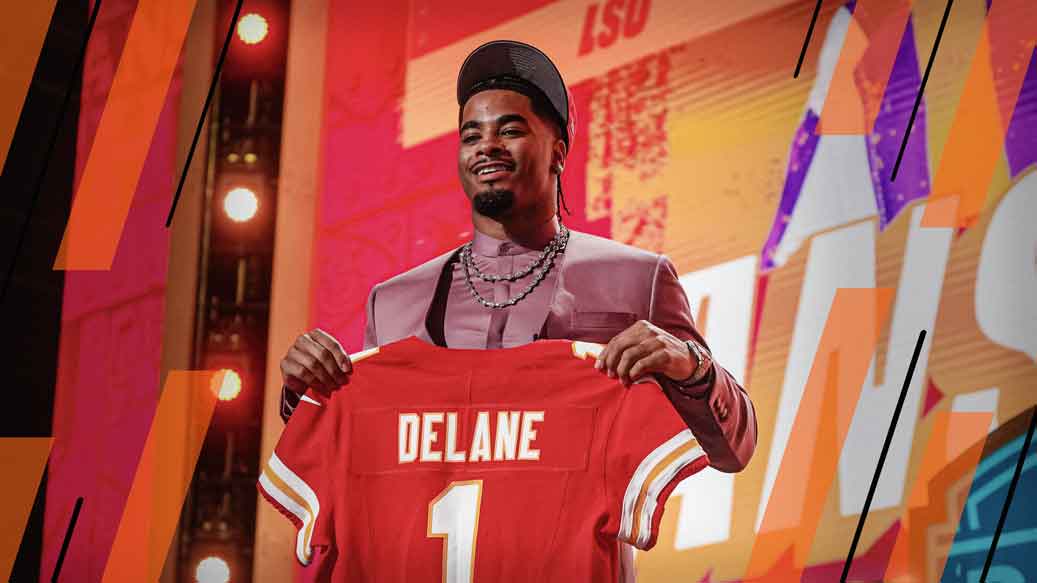
Kansas City Chiefs trade up to No. 9 for Mansoor Delane, Cleveland Browns trade back and still get a top tackle prospect
Chiefs receive:
- No. 6 overall pick (CB Mansoor Delane, LSU)
Browns receive:
- No. 9 overall pick (T Spencer Fano, Utah)
- No. 74 overall pick
- No. 148 overall pick
Kansas City moved up from No. 9 to No. 6, sending picks No. 74 and No. 148 to Cleveland in the process, to select LSU cornerback Mansoor Delane. The move signals a clear priority at the position after offseason losses in the secondary, with the Chiefs targeting the top cornerback on the board rather than risking a drop-off. Delane’s 2025 production supports that aggressiveness, as he earned a 90.5 PFF grade (third among 525 qualifying cornerbacks) and a 0.395 WAA (sixth) while allowing just 14 receptions for 165 yards across 340 coverage snaps.
Cleveland, meanwhile, traded back three spots and still landed Utah offensive tackle Spencer Fano at No. 9, adding additional Day 2 and Day 3 capital. Fano brings a strong combination of production and versatility, having earned 80.0-plus PFF grades in each of the past two seasons while primarily playing right tackle after beginning his career on the left side.
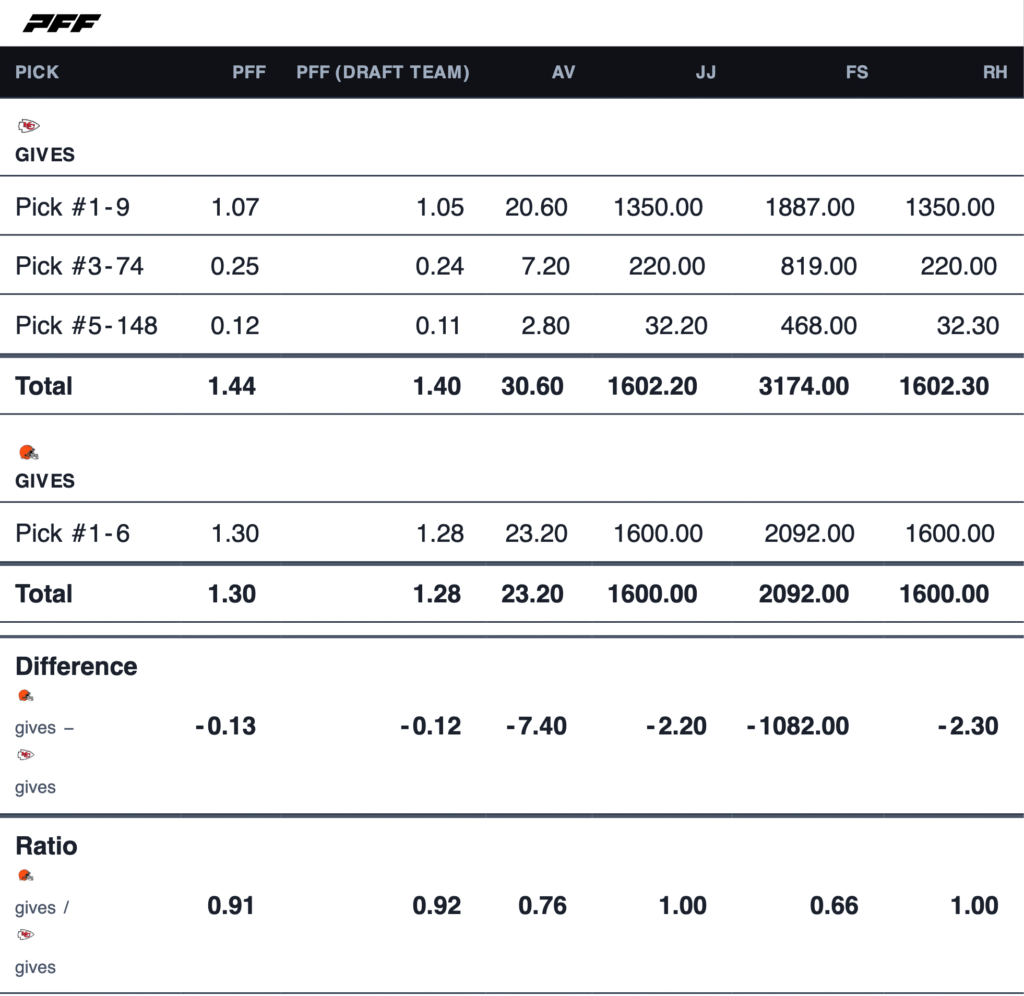
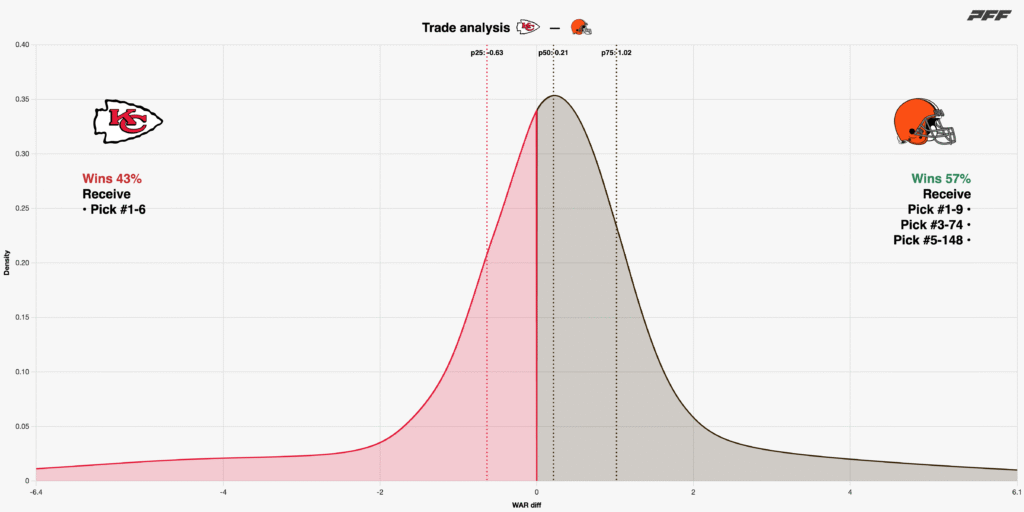
From a pure draft capital perspective, Cleveland comes out ahead in this deal, with Kansas City paying roughly a 9% premium to move up for Delane based on the PFF chart. That edge shows up in the simulation as well, where the Browns win the trade in 57% of outcomes, driven by the additional picks and the increased number of paths to positive WAR.
The Dallas Cowboys move up one spot for star safety Caleb Downs
Cowboys receive:
- No. 11 overall pick (S Caleb Downs, Ohio State)
Dolphins receive:
- No. 12 overall pick (T Kadyn Proctor, Alabama)
- No. 177 overall pick
- No. 180 overall pick
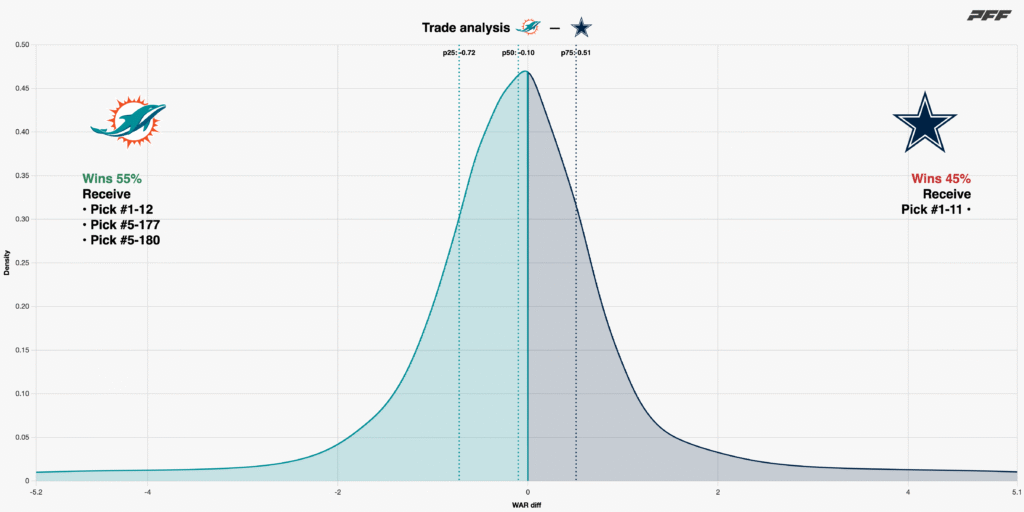
Dallas moved up one spot from No. 12 to No. 11 to secure Ohio State safety Caleb Downs, sending picks No. 177 and No. 180 to Miami to get the deal done. It’s a targeted move for a defense that struggled mightily on the back end in 2025, finishing last in team PFF coverage grade. Downs brings one of the cleanest production profiles in the class, having earned 85.0-plus PFF grades in three straight seasons across Alabama and Ohio State. His 87.5 PFF grade in 2025 ranked seventh among 517 qualifying safeties, while his 0.445 WAA placed fourth — elite marks for the position. That level of consistency and impact points to a player who can step in immediately as a stabilizing presence in coverage.
Miami, meanwhile, slides back one spot and still lands Alabama offensive tackle Kadyn Proctor at No. 12, while adding two late-round picks. Proctor profiles as a high-upside addition in the trenches, bringing rare size at 6-foot-7 and 350-plus pounds along with three years of starting experience at left tackle. He’s coming off a career-best 86.1 PFF grade in 2025, which ranked fourth among 334 qualifying tackles, and posted a 0.205 WAA (fifth). While his exact role along the offensive line remains to be determined, his combination of production and physical tools raises the baseline talent level of a Miami unit that entered the draft with needs across the board.
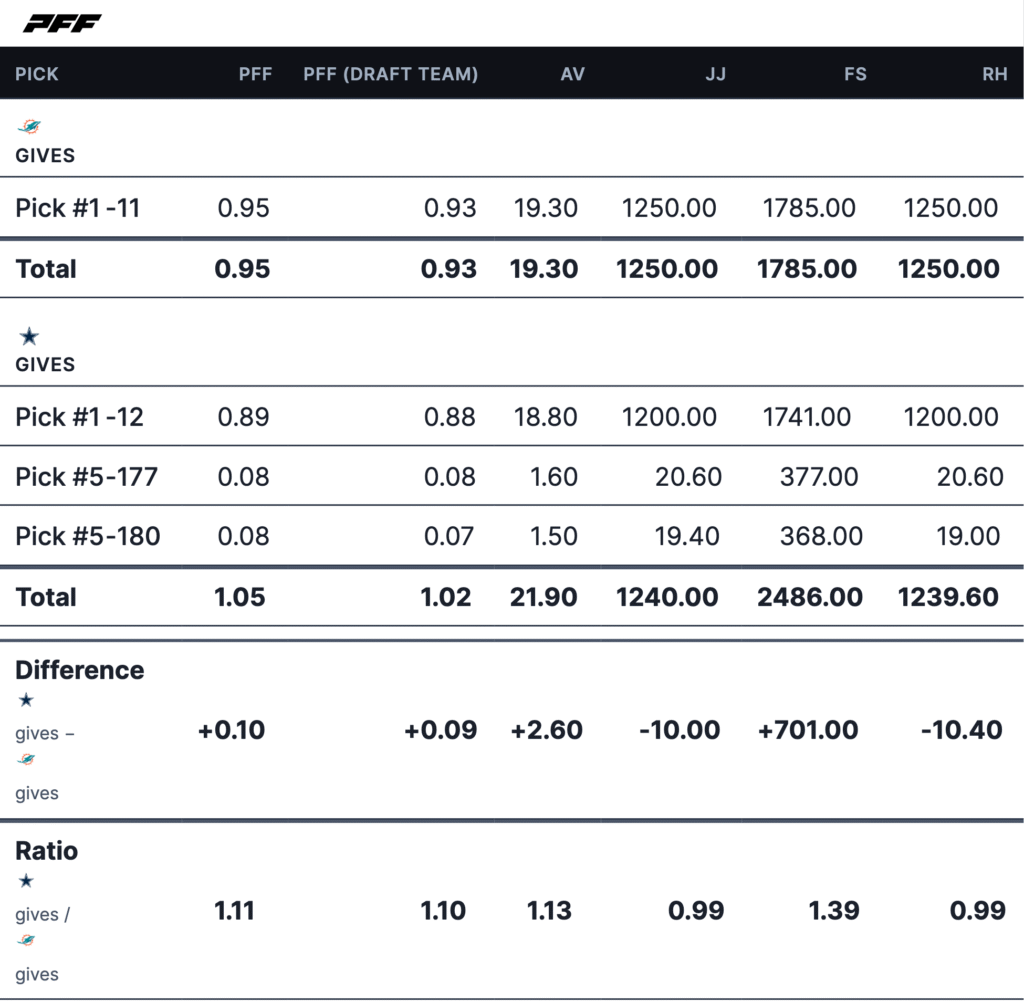
From a draft capital perspective, this is a clear premium Dallas paid to move up one spot. Based on the PFF chart, the Cowboys gave up roughly 11% more value than they received (1.11 ratio)to jump one spot on the board. That shows up in the simulation as well, where Miami wins the trade in 55% of outcomes, driven by the added picks and the increased number of chances to generate positive WAR.
The Philadelphia Eagles strike a deal with the Dallas Cowboys to move up to No. 20
Eagles receive:
- No. 20 overall pick (WR Makai Lemon, USC)
- 2027 seventh-round pick
Cowboys receive:
- No. 23 DE overall pick (edge Malachi Lawrence, UCF)
- No. 114 overall pick
- No. 137 overall pick
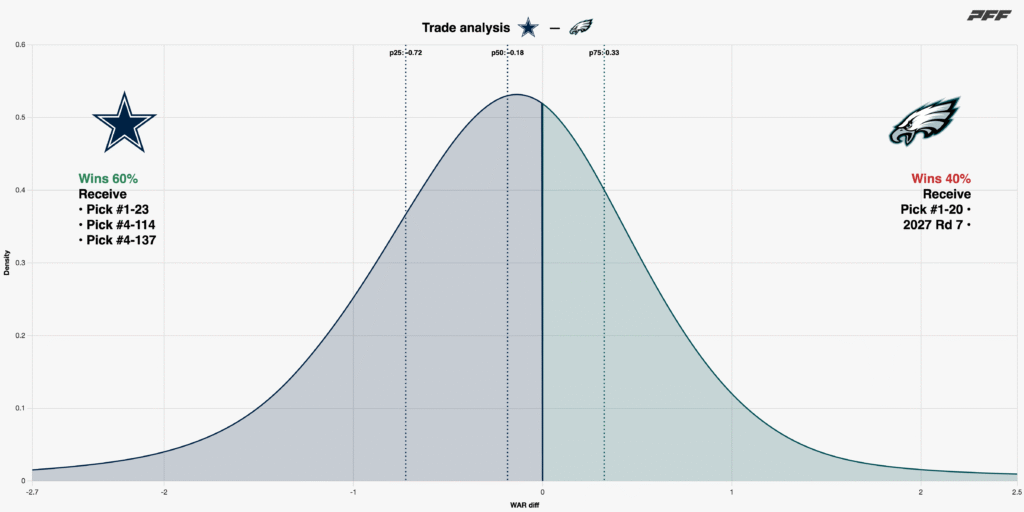
Philadelphia moved up from No. 23 to No. 20, sending two fourth-round picks (Nos. 114 and 137) and a 2027 seventh-rounder to Dallas to secure wide receiver Makai Lemon. The move allowed the Eagles to jump Pittsburgh and capitalize on Lemon’s slide, addressing a potential long-term need at the position with uncertainty surrounding A.J. Brown. Lemon brings elite production to the table, posting a 90.8 PFF grade in 2025 — first among 432 qualifying receivers — while his 0.552 WAA ranked second among. He pairs that efficiency with strong ball skills, having hauled in 10 of his 14 contested targets in 2025, and profiles as a high-impact receiver capable of contributing early.
Dallas, meanwhile, trades back three spots and adds two Day 3 picks while selecting UCF edge defender Malachi Lawrence at No. 23. The pick addresses a clear need after the departure of Micah Parsons, but comes with more projection than production relative to its draft slot. Lawrence earned an 80.1 PFF grade in 2025 (49th among 546 qualifying defenders) and posted a 0.076 WAA (87th), though his 89.5 PFF pass-rush grade points to situational upside as a rotational edge defender early in his career. With Donovan Ezeiruaku and Rashan Gary already added to the room, Lawrence fits into a developing edge rotation, but the value here is tied more to role and need than elite, top-of-the-board production.
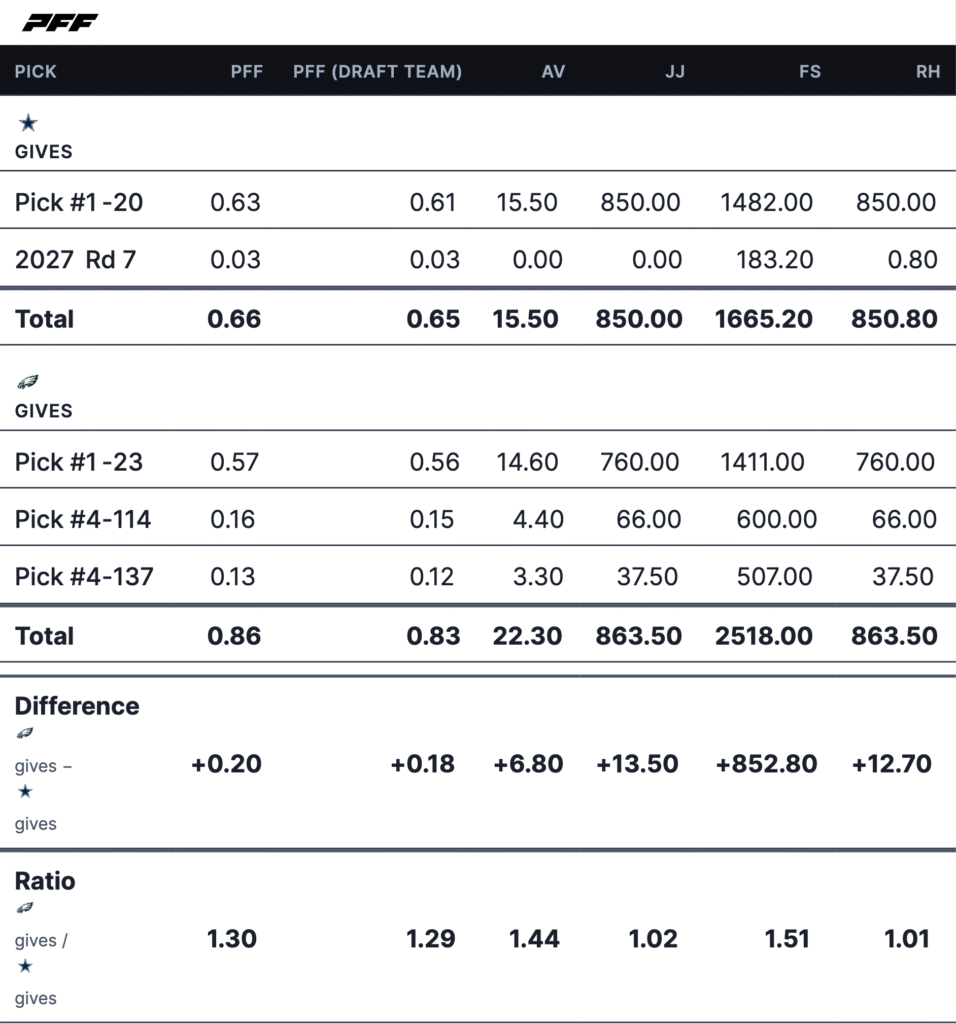
From a draft capital perspective, this is a decisive win for Dallas. Based on the PFF chart, the Cowboys receive roughly 30% more value than they give up (1.30 ratio), a substantial return for moving back just three spots. That advantage is reflected in the simulation as well, where Dallas wins the trade in 60% of outcomes, driven by the added fourth-round capital and the increased number of opportunities to generate WAR.
The Houston Texans move up to select an offensive tackle, sending picks to the Buffalo Bills
Texans receive:
- No. 26 overall pick — (G Keylan Rutledge, Georgia Tech)
- No. 91 overall pick
Bills receive:
- No. 28 overall pick, which they later traded to the Patriots
- No. 69 overall pick
- No. 167 overall pick
Houston moved up from No. 28 to No. 26, sending picks No. 69 and No. 167 to Buffalo in exchange for No. 91 to select Georgia Tech guard Keylan Rutledge. It’s a targeted move for an interior offensive lineman who saw a late rise during the pre-draft process, though the valuation is more aggressive than consensus. Rutledge ranked outside the top 50 on most big boards, and his production profile is more solid than elite, highlighted by a 76.7 PFF grade in 2025 (14th among 374 qualifying guards) and a 0.178 WAA (sixth). After earning sub-70.0 PFF grades in each of his first three seasons, Rutledge showed improvement down the stretch — particularly as a run blocker, where he posted a 77.8 grade — suggesting developmental upside but not necessarily top-30 value on production alone.
Buffalo, meanwhile, moves back two spots and adds additional capital, turning one first-round pick into three selections before later trading down again from No. 28.
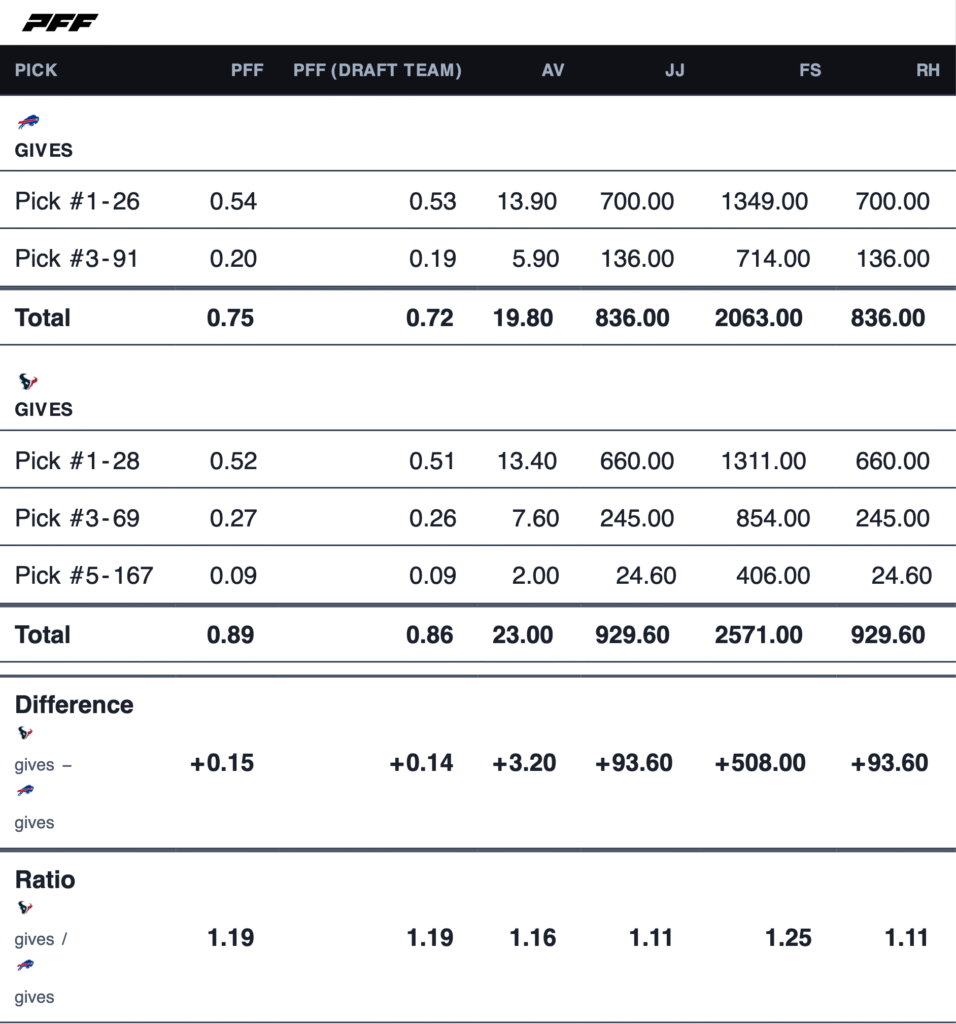
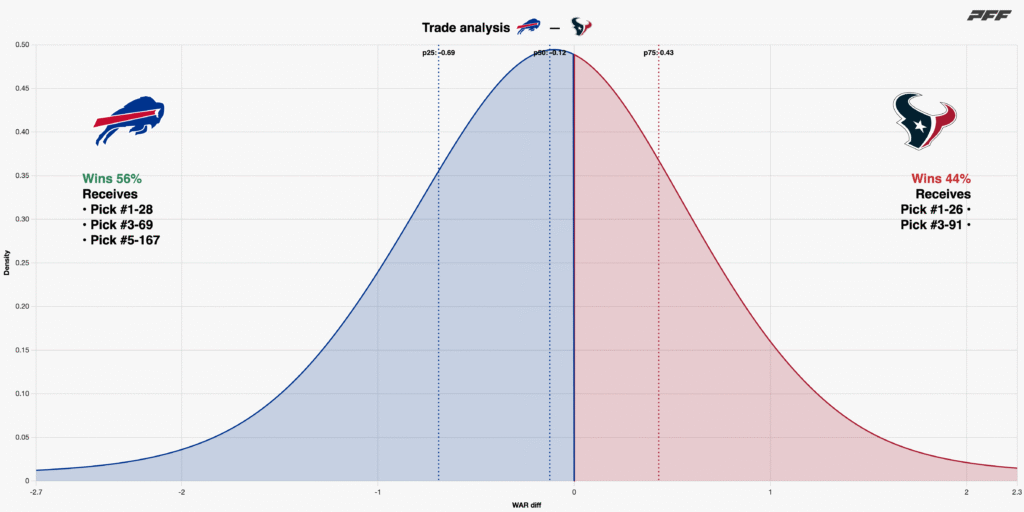
From a draft capital perspective, Buffalo comes out ahead in this deal, with Houston paying a notable premium to move up two spots. Based on the PFF chart, the Texans gave up roughly 19% more value than they received (1.19 ratio), which is a high cost for a relatively small jump in the first round. That edge carries through in the simulation, where the Bills win the trade in 56% of outcomes, driven by the additional picks and the broader distribution of potential WAR outcomes.
Miami Dolphins move up for a cornerback, sending picks to the San Francisco 49ers
Dolphins receive:
- No. 27 overall pick (CB Chris Johnson, San Diego State)
- No. 138 overall pick
49ers receive:
- No. 30 overall pick, which they later traded to the Jets
- No. 90 overall pick
Miami moved up from No. 30 to No. 27, sending pick No. 90 to San Francisco in exchange for No. 138 to select San Diego State cornerback Chris Johnson. It’s a targeted move to address one of the weakest position groups on the roster, with the Dolphins prioritizing coverage help after a poor 2025 season on the back end. Johnson’s production supports the aggressiveness, as he posted a 91.6 PFF grade in 2025 (second among 525 qualifying cornerbacks) and a 0.344 WAA (ninth). He also allowed a passer rating of just 16.1 when targeted.
San Francisco, meanwhile, moves back three spots and adds a top-100 pick, turning No. 27 into picks No. 30 and No. 90 before later dealing the first-round selection again.
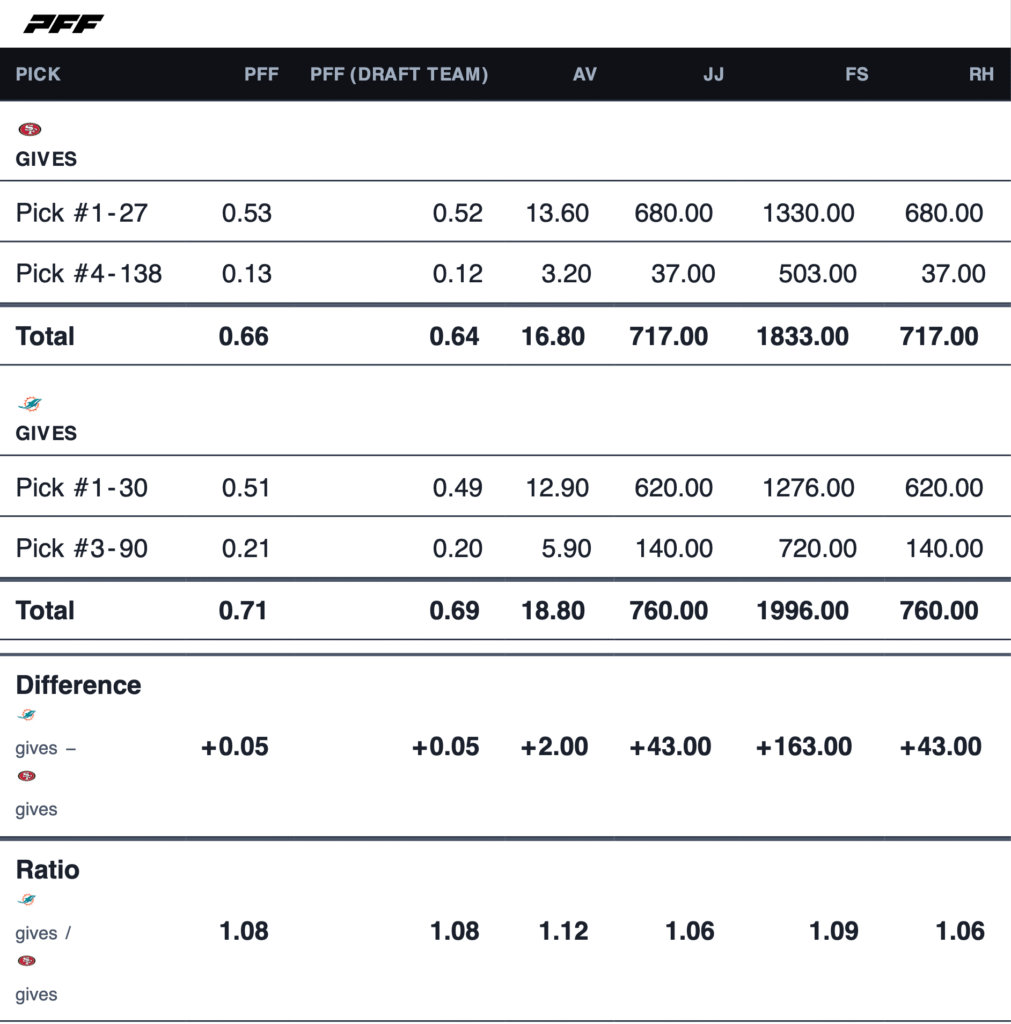
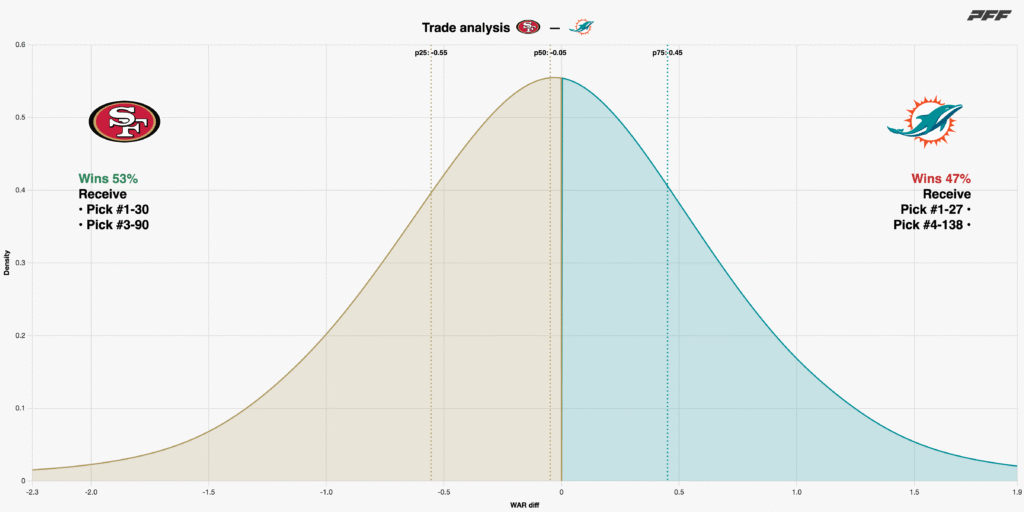
From a draft capital perspective, this is a relatively modest premium paid by Miami to move up three spots. Based on the PFF chart, the Dolphins gave up roughly 8% more value than they received (1.08 ratio), which is in line with typical trade-up costs in this range. That slight edge toward San Francisco shows up in the simulation as well, where the 49ers win the trade in 53% of outcomes, reflecting the added value of the extra Day 2 pick.
New England Patriots trade up to select an offensive tackle, Buffalo Bills trade back…again
Patriots receive:
- No. 28 overall pick (T Caleb Lomu, Utah)
Bills receive:
- No. 31 overall pick, which they later traded to the Titans
- No. 125 overall pick
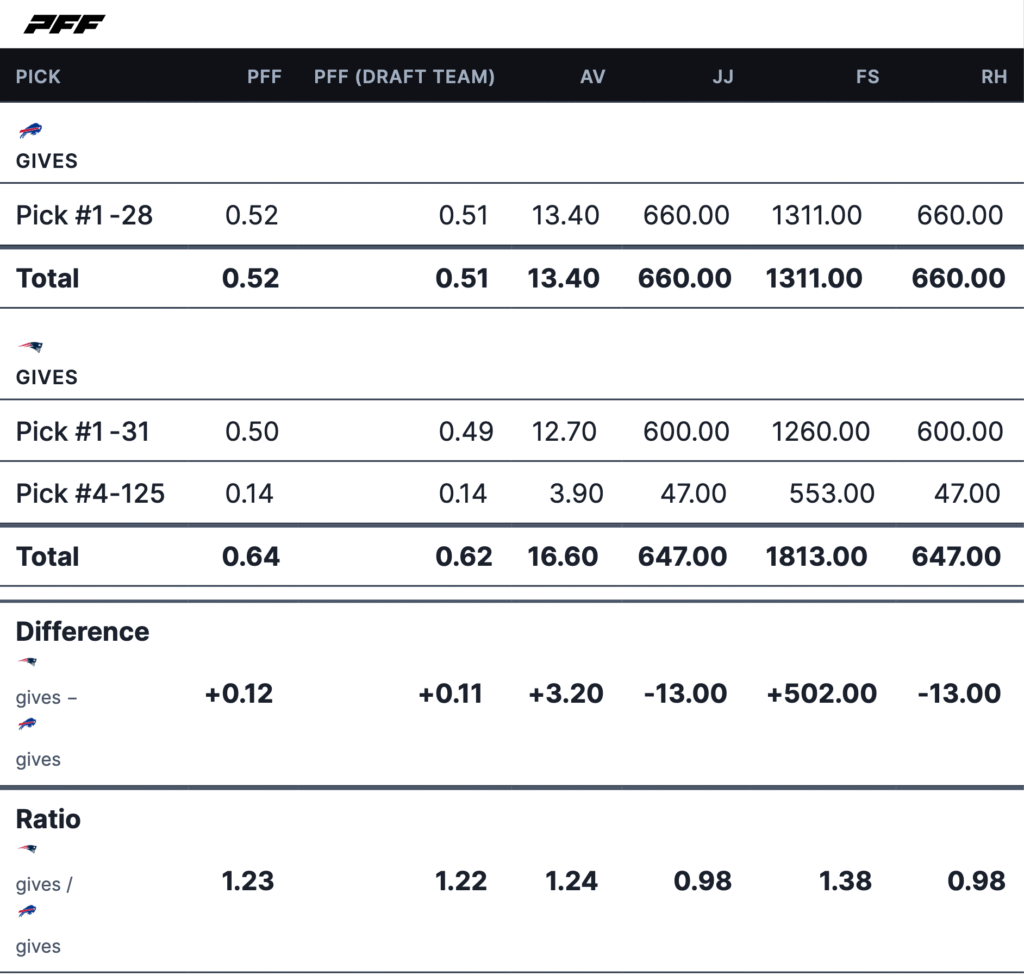
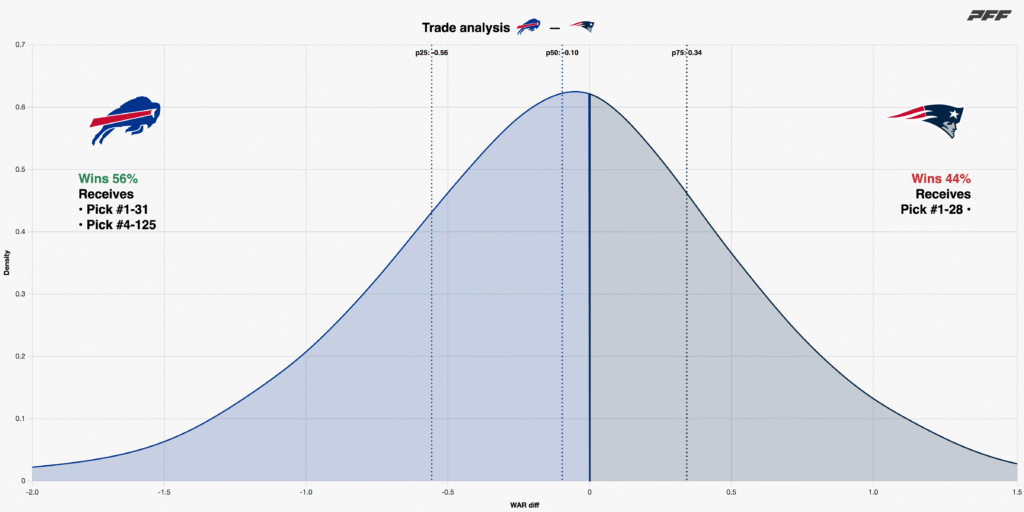
New England moved up from No. 31 to No. 28, sending pick No. 125 to Buffalo to secure Utah offensive tackle Caleb Lomu. The move targets a clear tier break at the position, with the Patriots jumping ahead to land one of the final starting-caliber tackles on the board. Lomu brings a steady pass-protection profile, having earned 75.0-plus PFF pass-blocking grades in each of the past two seasons as a starter at left tackle. While his 68.4 overall grade points suggest a developmental trajectory, the value here is tied to positional scarcity and long-term need, with incumbent tackle Morgan Moses entering his age-35 season.
Buffalo, meanwhile, continues to lean into a volume-based approach, trading back once again and adding pick No. 125 while only moving down three spots in the first round. The deal fits a broader strategy of accumulating mid-round capital, increasing the number of opportunities to extract value across the roster.
New York Jets re-enter the first round, giving a third-rounder to the San Francisco 49ers
Jets receive:
- No. 30 overall (WR Omar Cooper, Jr., Indiana)
49ers receive:
- No. 33 overall pick
- No. 179 overall pick
The Jets traded back into the first round, moving up from No. 33 to No. 30 by sending pick No. 179 to San Francisco to select Indiana wide receiver Omar Cooper Jr. The move comes after New York passed on Cooper earlier in the round, only to capitalize on his slide and secure him as a second first-round addition. Cooper brings a strong production profile, as he earned an 87.4 PFF grade in 2025 (eighth among 432 qualifying receivers) and posted a 0.373 WAA (eighth). His ability after the catch stands out, as he forced 27 missed tackles in 2025 — a top-five mark in the FBS — and profiles as a versatile weapon who can align both in the slot and out wide alongside Garrett Wilson.
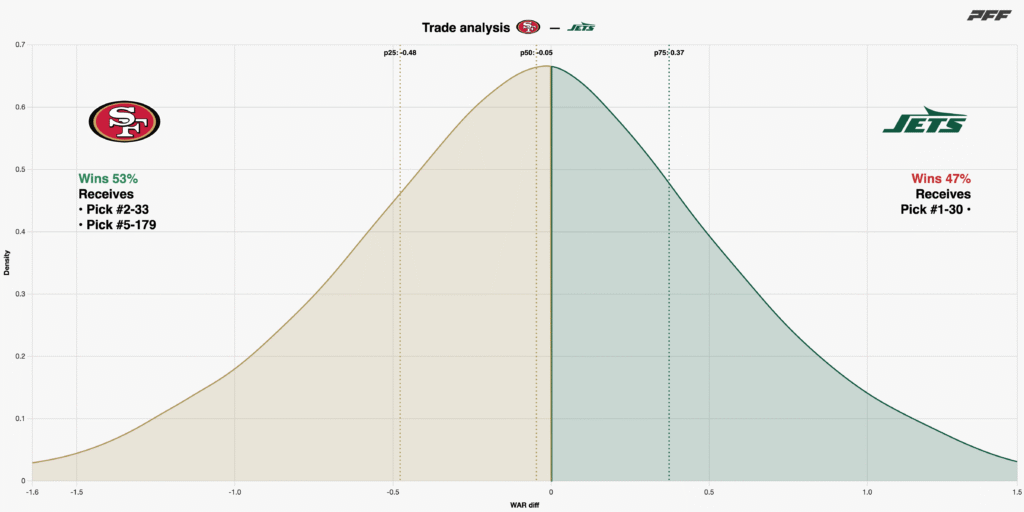
San Francisco, meanwhile, moves back three spots and adds a late-round pick, continuing a broader trend of trading down to accumulate additional capital. By sliding from No. 30 to No. 33, the 49ers stay within a similar tier of prospects while adding another selection, increasing their total number of swings without sacrificing much in terms of draft position.
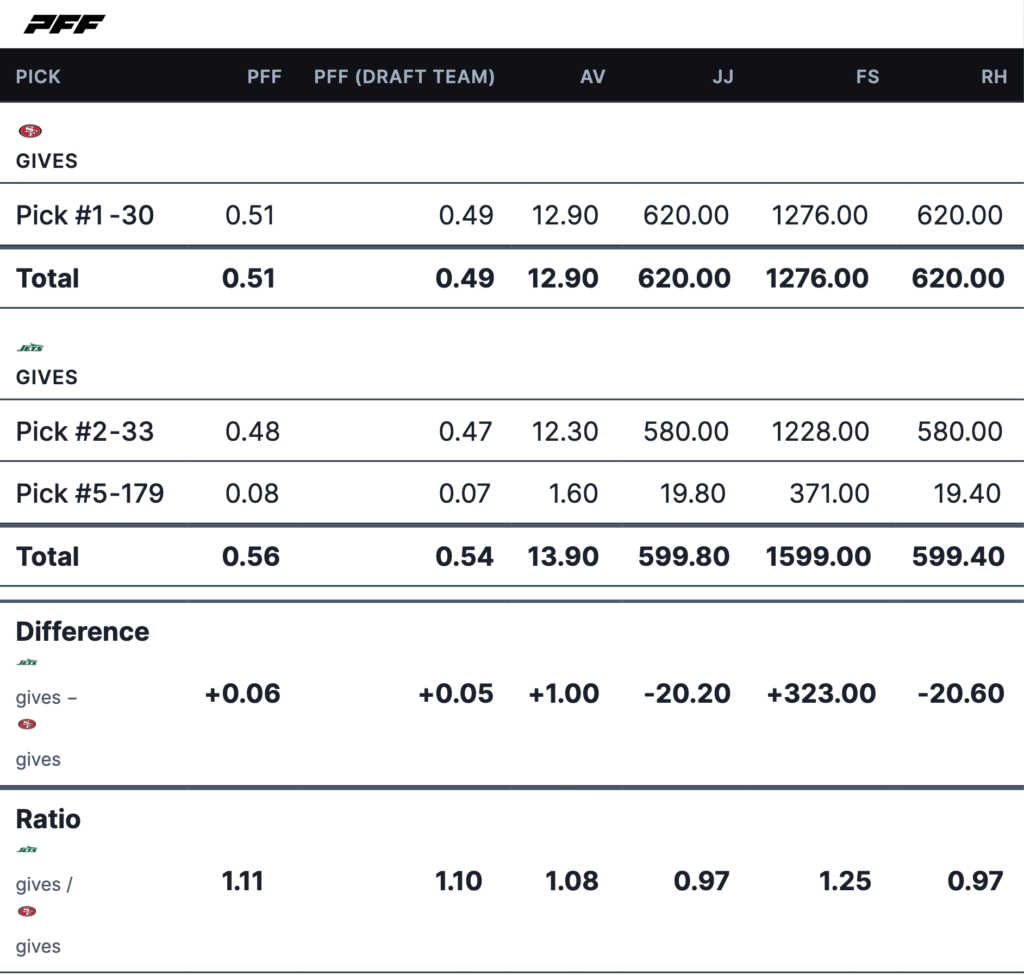
From a draft capital perspective, this is a relatively small but clear win for San Francisco. Based on the PFF chart, the 49ers receive about 10% more value than they give up (0.90 ratio from New York’s perspective), which is a typical cost for a team re-entering the first round. That slight edge shows up in the simulation as well, where San Francisco wins the trade in 53% of outcomes, reflecting the added value of the extra pick and the broader distribution of outcomes.
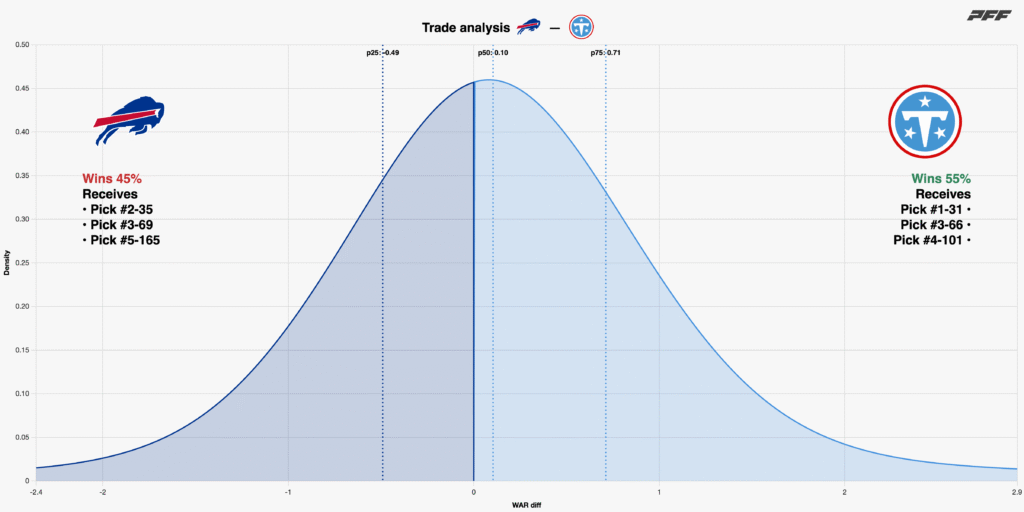
Tennessee Titans trade into the back end of Round 1, Buffalo Bills bow out of Round 1 with no players but a handful of extra picks
Titans receive:
- No. 31 overall pick (edge Keldric Faulk, Auburn)
- No. 66 overall pick
- No. 101 overall pick
Bills receive:
- No. 35 overall pick
- No. 69 overall pick
- No. 165 overall pick
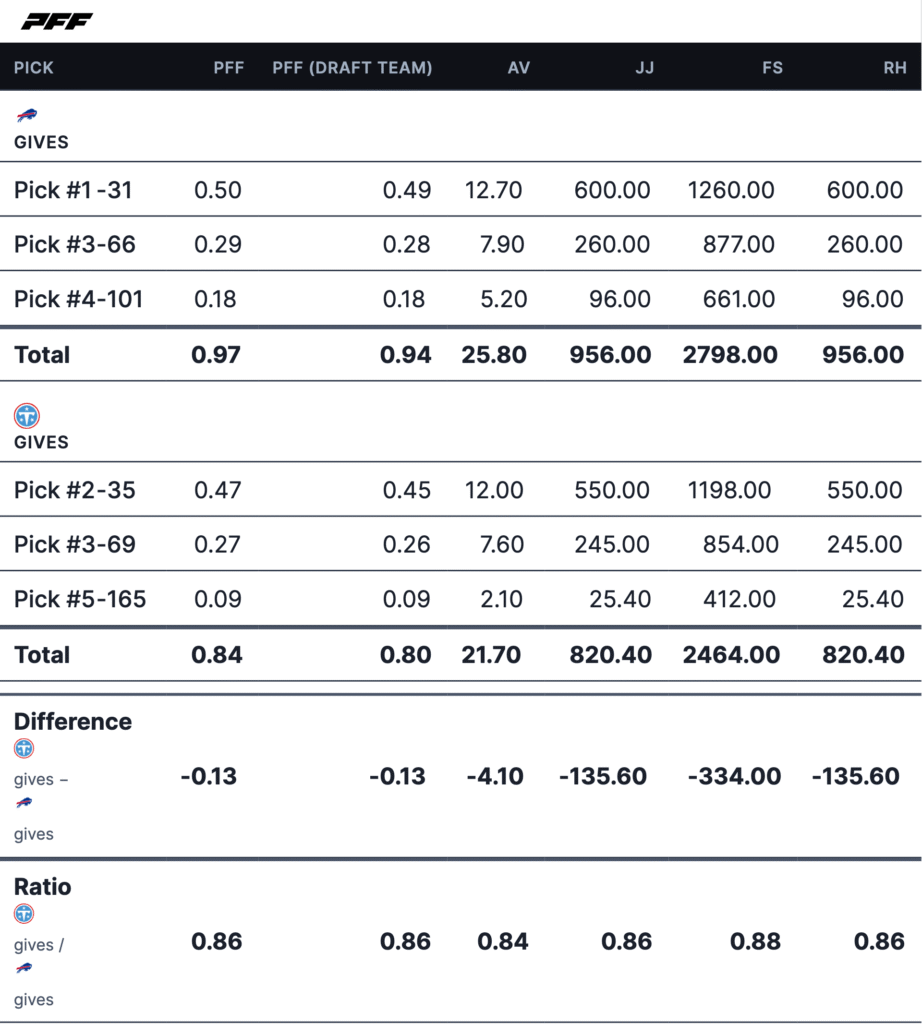
Tennessee traded back into the first round, moving up to No. 31 while also acquiring picks No. 66 and No. 101 in a deal with Buffalo. The move allowed the Titans to secure Auburn edge defender Keldric Faulk, targeting a traits-based defensive lineman to add to a front that head coach Robert Saleh will now shape. Faulk’s production profile is more modest than that of typical first-round edge rushers, as he posted a 75.8 PFF grade in 2025 (102nd among 546 qualifying defenders) and a 0.126 WAA (48th). However, his value lies in his run defense, where he earned 80.0-plus PFF grades in each of the past two seasons, as well as in his size and athletic tools. This is a projection pick, with Tennessee betting on development — particularly as a pass rusher — rather than proven high-end production.
Buffalo, meanwhile, continues its consistent trade-down approach, sliding from No. 31 to No. 35, then from No. 66 to No. 69, while also picking up an additional selection at No. 165.


 © 2026 PFF - all rights reserved.