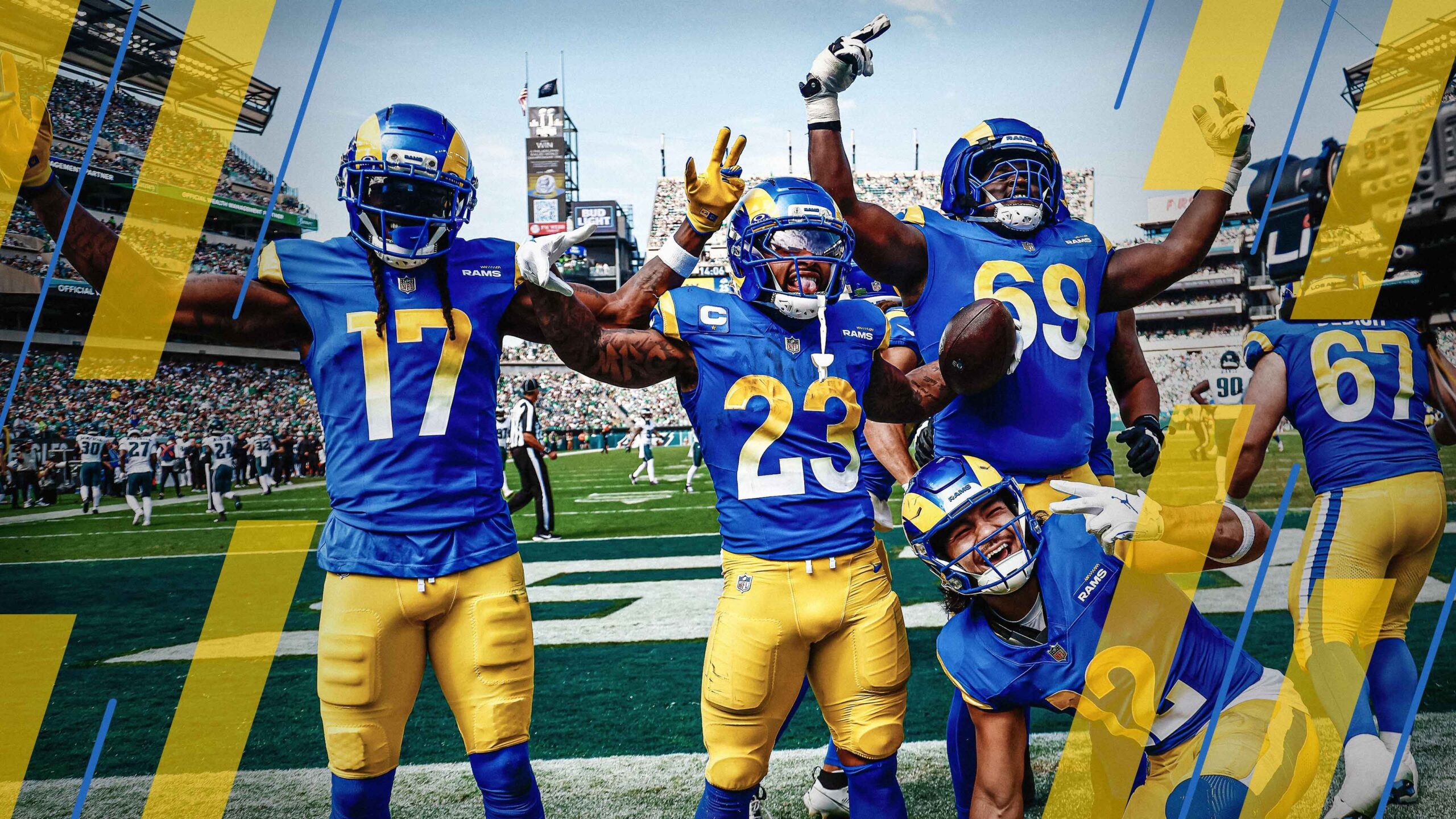
- Matthew Stafford‘s surroundings were very favorable: The reigning MVP played with the highest-graded offensive teammates, including strong rushing and receiving attacks.
- Seattle's Super Bowl title wasn't only due to its elite defense: The Seahawks netted the second-highest-ranked team PFF receiving mark and the best PFF rushing grade.
- A strong offensive line can aid young quarterbacks: The Broncos‘ Bo Nix and the Bears‘ Caleb Williams both benefitted from elite pass protection.
Estimated Reading Time: 9 minutes

Quarterbacks will always be the most pivotal players in football. Without quality quarterback play, you don’t stand much of a chance.
However, in recent years, we’ve seen teams garner major success with quarterbacks who profile as facilitators rather than franchise-carrying stars. Neither of the past two Super Bowl-winning quarterbacks (Sam Darnold and Jalen Hurts) are commonly considered among the league’s elite at the position. The success of their respective offenses is evidence that supporting casts matter just as much as ever.
Since PFF grades players independent of their surroundings, we can use several measures to discover which quarterbacks fetched the most assistance from their teammates last season.
Highest-graded offensive supporting casts in 2025
| Team | PFF Grade |
|---|---|
| Los Angeles Rams | 91.8 |
| Seattle Seahawks | 86.0 |
| Detroit Lions | 82.2 |
| Indianapolis Colts | 81.3 |
| San Francisco 49ers | 80.6 |
| Chicago Bears | 79.6 |
| Buffalo Bills | 78.8 |
| New England Patriots | 78.5 |
Unsurprisingly, this top eight comprises six playoff teams, including both conference champions. The 2025 Rams delivered the highest supporting cast grade since the brilliant 2016 Atlanta Falcons. Boosted by phenomenal supporting casts, both Matt Ryan and Matthew Stafford won MVP awards, aided by two of the greatest wide receiver seasons in modern history from Julio Jones and Puka Nacua.
Those aforementioned Super Bowl champions found their way onto this list for a second straight year. Darnold was assisted by an even higher-graded supporting cast than Hurts with the Eagles in 2024 (80.8).
As for offenses who made the list for a second consecutive season, it’s no surprise to see the Detroit Lions near the top of the list once again. A below-average defense was the limiting factor for Detroit in 2025. Despite losing offensive play-caller Ben Johnson, quarterback Jared Goff spent yet another year in an outstanding structure, highlighted by stars such as Jahmyr Gibbs and Penei Sewell.
Non-playoff teams inside the top 10 can potentially point fingers at substandard quarterback play hindering their ambitions. But in the case of the fourth-ranked Indianapolis Colts, mounting injuries to Daniel Jones spurred a seven-game losing streak to end the season.
Top team PFF receiving grades in 2025
| Team | PFF Grade |
|---|---|
| Los Angeles Rams | 91.1 |
| Seattle Seahawks | 89.2 |
| Detroit Lions | 89.1 |
| New England Patriots | 84.6 |
| Dallas Cowboys | 81.7 |
| San Francisco 49ers | 80.9 |
| Green Bay Packers | 80.8 |
| Cincinnati Bengals | 80.2 |
The top three PFF receiving grades are an identical match to our top three supporting casts, revealing just how much importance is placed on the players catching the ball. The Rams’ Nacua and the Seahawks’ Jaxon Smith-Njigba simultaneously posted the two best seasons by yards per route run in the PFF era (since 2006).
Meanwhile, the Lions were the only receiving corps in the league to average over 6.0 yards after catch and drop fewer than 5% of passes. They also led the NFL in contested situations, hauling in 59% of such targets.
Further down the list, the 49ers finished with 70 total contested receptions. That’s the highest number of catches in traffic by any team in a single season since Andrew Luck’s final year with the Colts in 2018.
The Cowboys didn’t make the top eight in overall supporting casts, but the addition of George Pickens helped propel them to top-five finishes in missed tackles forced, receiving yards after contact and contested catches.
Top team PFF rushing grades in 2025
| Team | PFF Grade |
|---|---|
| Seattle Seahawks | 92.8 |
| Miami Dolphins | 90.8 |
| Los Angeles Rams | 90.8 |
| Chicago Bears | 88.0 |
| Los Angeles Chargers | 86.7 |
| Atlanta Falcons | 85.4 |
| Buffalo Bills | 83.4 |
| Green Bay Packers | 83.1 |
The run game is crucial for taking the heat off quarterbacks and creating more manageable situations for the passing game. The Bills ranked second in overall PFF rushing grade, but fell all the way down to seventh when excluding the efforts of Josh Allen.
On the list of overall supporting casts, the ninth-ranked Falcons narrowly missed the cut, but superstar Bijan Robinson played his part on the ground. Atlanta ranked second in yards after contact per attempt behind only the Miami Dolphins, with Devon Achane leading the individual rankings in this area.
Although this Rams team may not be remembered for its success on the ground, Los Angeles became just the second team in the PFF era to generate a positive EPA on over 50% of its handoffs. The only other team to do so was the 2018 Rams with Todd Gurley — an overlooked and astounding achievement by head coach Sean McVay.
Top team PFF pass-blocking grades in 2025
| Team | PFF Grade |
|---|---|
| Denver Broncos | 78.8 |
| Indianapolis Colts | 74.6 |
| Pittsburgh Steelers | 74.5 |
| Philadelphia Eagles | 74.1 |
| Chicago Bears | 73.1 |
| Buffalo Bills | 72.3 |
| New England Patriots | 71.8 |
| Washington Commanders | 71.6 |
Playing behind the NFL’s highest-graded offensive line, Bo Nix was sacked just eight times in his second professional season. Denver’s unit featured All-Pros Garett Bolles and Quinn Meinerz.
The Steelers allowed the lowest pressure rate in the league last year (23.0%), but much of that can be attributed to Aaron Rodgers’ quick trigger. He spent the third-least amount of time in the pocket of any quarterback on average.
When quarterbacks took longer than three seconds to get the ball out, the Broncos led the way again, allowing Nix to come under pressure just 38% of the time. The Colts and Bears ranked second and third in this category, respectively.
Caleb Williams held onto the ball longer than any other starting quarterback (3.24 seconds on average). However, the combination of his own elusiveness and relentless effort from his offensive line meant he was knocked down on just 4.2% of dropbacks — the lowest rate in football.
This is the first chart not to feature the Los Angeles Rams, who ranked 20th in pass protection. They retain their entire starting five along the offensive line for 2026. While nobody stands out as a glaring weakness, it’s worth monitoring whether an aging Stafford begins to feel the heat a little more entering Year 18.


 © 2026 PFF - all rights reserved.