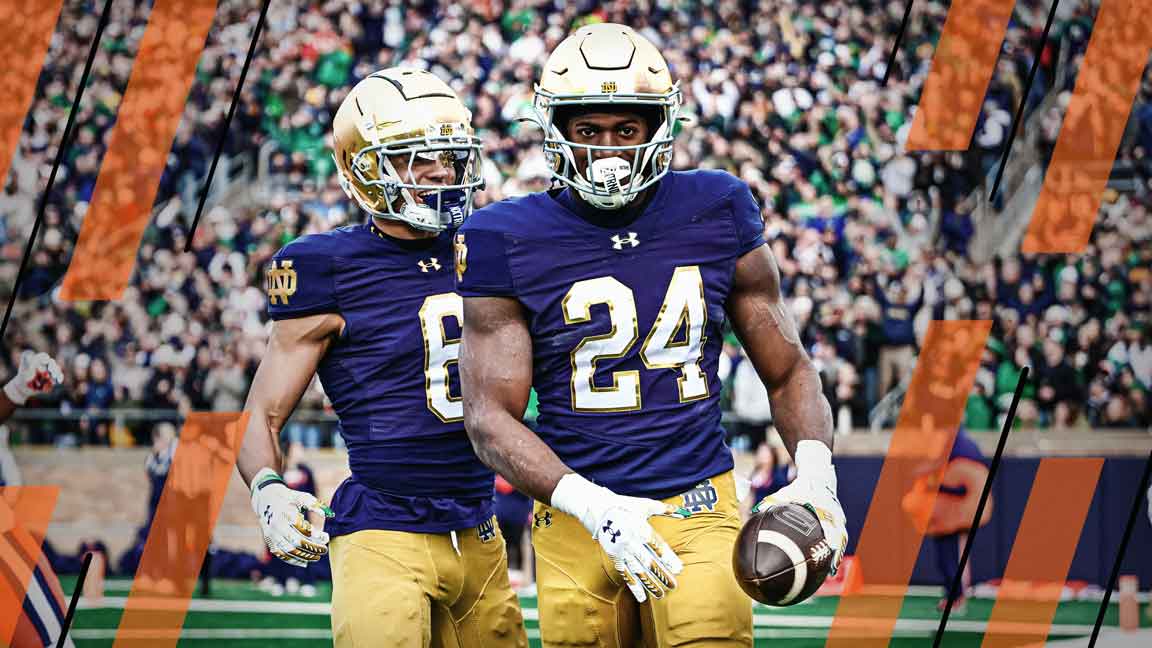
- Replacing a star in the backfield: With Kenneth Walker III departing in free agency, the Seahawks used Pick 32 on Notre Dame’s Jadarian Price. An efficient runner who forced 59 missed tackles over the last two seasons, Price is expected to handle a significant workload immediately.
- Prioritizing length in the secondary: Seattle targeted prototypical size for their defensive system, drafting 6-foot-2 safety Bud Clark and long-limbed corner Julian Neal. Neal was particularly impressive in zone coverage last season, earning a 78.2 PFF grade.
- Elite protection found on Day 3: Iowa guard Beau Stephens represents the class's highest-graded pick (84.9). Despite concerns about his arm length, Stephens posted a 91.6 pass-blocking grade in 2025, allowing zero sacks or hits.
All 257 picks from the 2026 NFL Draft have been made, reshaping depth charts across the league and setting the foundation for the season ahead. But draft weekend is only the starting point — the real evaluation comes from how each class aligns with the board, positional value and projected impact.
This class features a wide range of outcomes. Using PFF's Big Board as a baseline, along with wins above average (WAA) added and an emphasis on premium positions, we can begin to separate sound process from questionable decisions before a single training camp snap is played.
With that framework, here's a look at how the Seattle Seahawks approached the 2026 NFL Draft — where they found value, where they prioritized need and how much immediate impact this class is positioned to deliver.
Seattle Seahawks: C-
Picks: 8 | WAA added: 0.829 (Rank 23/32)
- Pick 32: HB Jadarian Price, Notre Dame Fighting Irish
- Pick 64: S Bud Clark, TCU Horned Frogs
- Pick 99: CB Julian Neal, Arkansas Razorbacks
- Pick 148: G Beau Stephens, Iowa Hawkeyes
- Pick 199: WR Emmanuel Henderson Jr., Kansas Jayhawks
- Pick 236: CB Andre Fuller, Toledo Rockets
- Pick 242: DI Deven Eastern, Minnesota Golden Gophers
- Pick 255: CB Michael Dansby, Arizona Wildcats
Highest-graded pick (2025): G Beau Stephens, Iowa Hawkeyes (84.9)

Price: Seattle made it two Notre Dame running backs coming off the board in the first round. Price fills a need for the Seahawks with Kenneth Walker leaving in free agency. Price played a secondary role to Jeremiyah Love over the past two seasons, but he was very efficient in that role, averaging more than four yards after contact per attempt and forcing 59 missed tackles on 234 carries over that span.
Clark: Clark is a long, explosive playmaker with strong ball skills, but his lack of strength in run defense will need to be managed.
Neal: Neal’s quickness presents a limitation for the next level, but his length stands out, as he measured 32 3/4-inch arms. He showed promise in zone coverage during his first season at the Power Four level, as he earned a 78.2 PFF coverage grade in zone coverage, which could draw interest from defensive coaches.
Stephens: Stephens produced high-level play on one of the nation’s top offensive lines, with strong results in both pass protection and the run game. He measured 6-foot-6 and 315 pounds, but his 31.63-inch arms rank in the ninth percentile at the position, which raises concerns about length and overall athletic profile. He earned a 91.6 pass-blocking grade in 2025 and did not allow a sack or a hit, while surrendering just four hurries across 304 pass-blocking snaps. Teams must weigh the quality of his tape against those physical limitations when projecting his role at the next level.
Henderson: After three seasons at Alabama, Henderson found his footing at Kansas, producing 2.31 yards per route run and 7.0 yards after the catch per reception. His smaller, slender frame and drop issues create challenges for his projection, meaning he will need to lean on his vertical playmaking — highlighted by a 97.2 PFF receiving grade on deep passes in 2025 — and special teams value to carve out a role.
Fuller: Fuller delivered a career-best 82.6 overall grade in 2025, driven by an 80.0 coverage grade and an elite 89.8 run-defense mark. He allowed just 22 receptions for 259 yards on 52 targets, with one touchdown, one interception and nine pass breakups, good for a 56.5 passer rating into his coverage. His 15 solo tackles and nine run stops reinforce strong involvement against the run. At 6-foot-1, 200 pounds, he uses size and length to disrupt releases and control routes early, though vertical speed limitations show up downfield. That profile aligns with his No. 225 placement on PFF’s Big Board as a scheme-dependent corner with zone and potential safety value.
Eastern: Eastern logged a career-high 499 snaps in 2025, earning a 67.3 overall grade with a 68.3 run-defense grade and 66.0 pass-rush mark. He generated 14 pressures, including three sacks and two hits, while adding 18 run stops with five tackles for loss or no gain. At 6-foot-5, 315 pounds with 34-inch arms, he flashes the ability to use length to disengage and find the ball, but inconsistent pad level and balance issues show up against the run. The limited pass-rush production and anchor concerns point to a role as a depth defensive lineman best suited for an odd front with wider alignments.
Dansby: Dansby allowed just a 56.3 passer rating into his coverage in 2025. He gave up 17 receptions over 47 targets for 231 yards, with three touchdowns, while recording two interceptions and seven pass breakups. His usage came almost entirely out wide, with 466 snaps at outside corner compared to just four in the slot. At 5-foot-11, 185 pounds, he shows ball skills and competitiveness at the catch point, though a move inside could better suit his profile at the next level.

 © 2026 PFF - all rights reserved.