- Fernando Mendoza's pocket mobility and movement: Mendoza’s 48.2 PFF passing grade when forced to move off his original spot ranked 58th out of 127 FBS quarterbacks. His 36.8% completion percentage and 55.5 passer rating in these situations were both below the FBS average.
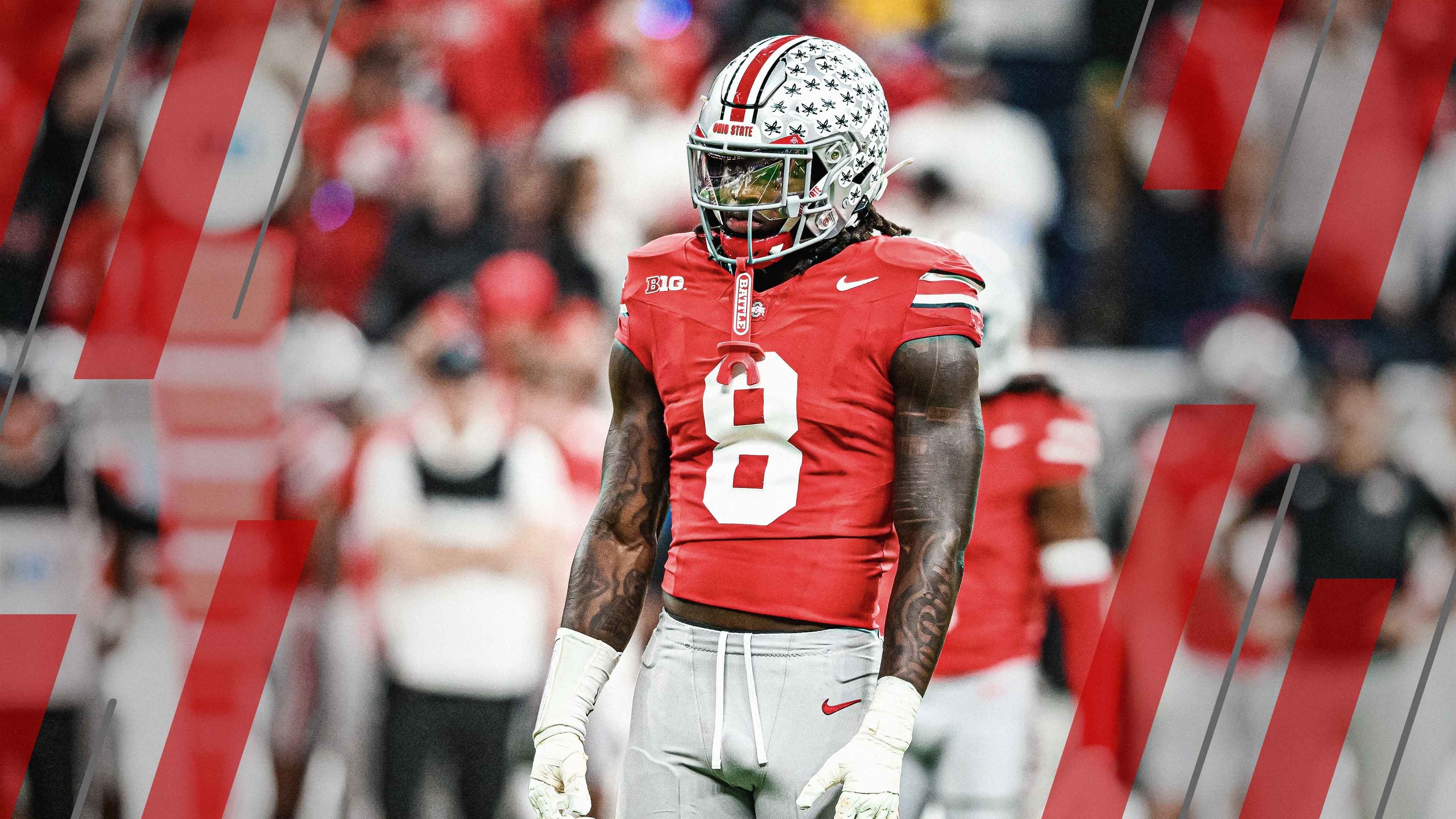
- Sonny Styles' lack of big-play ability: On over 2,000 career snaps, Styles has managed just one career interception, which fell into his lap off a deflection. While he’s an exceptionally nimble mover in space, his anticipation to jump into passing lanes is somewhat lacking.
- 2026 NFL Draft season is here: Try the best-in-class PFF Mock Draft Simulator and learn about 2026's top prospects while trading and drafting for your favorite NFL team.
Every draft cycle develops a sense of certainty as it reaches the final stretch. By April, the top of the board can feel settled, with familiar names repeated so often that the focus shifts away from evaluating the prospects themselves and toward the rest of the class.
The 2026 draft is no different. While it may not feature the strongest group of early first-round talent in recent years, the top prospects are still widely viewed as elite players with few apparent weaknesses. As a result, much of the conversation centers on what they do well rather than where concerns may lie.
Every prospect, regardless of pedigree, carries risk. This exercise shifts the focus to that side of the evaluation. For each of the top 10 players on PFF’s 2026 Big Board, here is one reason to pause before turning in the card.
QB Fernando Mendoza, Indiana
Reason to pass: Pocket mobility and movement
It’s obviously difficult to pick flaws in Mendoza’s game, especially when there is no other quarterback in this class remotely close to his level. Any team passing on Mendoza would be doing so with the intent of pursuing a top passer in next year’s class instead.
One primary area where next year’s prospects appear to outshine Mendoza is when they are forced off their spot in the pocket. While Mendoza has proven he can win with his legs to evade pressure, he struggles to post up in a new spot, regain his composure and find receivers in the scramble drill.
Mendoza’s 48.2 PFF passing grade when forced to move off his original spot ranked 58th out of 127 FBS quarterbacks. His 36.8% completion percentage and 55.5 passer rating in these situations were both below the FBS average.
Passing summary when moved from the pocket
| Player | Completion % | Passer rating |
| Julian Sayin | 68.9% | 105.5 |
| Dante Moore | 56.5% | 97.0 |
| Arch Manning | 50.0% | 94.0 |
| Fernando Mendoza | 36.8% | 55.5 |
This is merely a minor issue in Mendoza’s otherwise very complete game, but it’s an area where the vast majority of first overall picks have thrived, and the same could well be said for the top prospects one year from now.
LB Arvell Reese, Ohio State
Reason to pass: Total edge projection
Whoever drafts Arvell Reese is very likely doing so with the plan to convert him into an edge rusher first and foremost. That’s where the value lies. But this projection will surely give teams pause, considering Reese has only played 333 career snaps aligned on the edge (35% of his career snaps at Ohio State).
The player who many people believe has all the tools to become an elite pass rusher has played only 99 career pass-rushing reps from the edge, from which he produced a fairly standard 16.2% pressure rate and a 68.4 PFF pass rushing grade.
Reese is undoubtedly a sensational athlete with length, explosiveness and high-tier football intelligence, but until this point, he hasn’t needed to develop his pass-rushing arsenal beyond running through or around offensive tackles as quickly as possible.
That doesn’t always fly in the NFL, and while there’s nothing to suggest Reese won’t take to edge rushing the same way Micah Parsons once did, the door is open for this project to fall flat on its face.
RB Jeremiyah Love, Notre Dame
Reason to Pass: Lack of positional value
Identifying a flaw in Love’s play style requires splitting hairs. There’s a reason Love is being talked about as a potential top-five selection. A few poor reps in pass protection or greedy decisions trying to break off big gains aren’t going to sway anyone in another direction.
Instead, we return to the age-old argument of positional value at the top of the draft. The last three running backs drafted inside the top 10 — Ashton Jeanty, Bijan Robinson and Saquon Barkley — have all looked brilliant at the NFL level, but none of them has been able to turn the franchise that drafted them into a winning football team (yet).
No NFL team is ever just one running back away, particularly those near the top of the draft board. You aren’t going to find a better running back than Love in this class, but the argument between drafting Love in Round 1 and a pass rusher on Day 2 or taking David Bailey in the first round and Jadarian Price on Day 2 is worth considering.
LB Sonny Styles, Ohio State
Reason to Pass: Lack of big-play ability
Styles is as reliable as they come at linebacker on a per-play and per-game basis. With just two missed tackles on 90 attempts in 2025 and no games with a PFF grade below 60.0, Styles has rarely been at fault in any situation.
The reason teams may pause before filling in the card is at the other end of this spectrum. Although Styles rarely puts a foot wrong, he isn’t the big playmaker you might be hoping for in a top-10 draft pick.
On over 2,000 career snaps, Styles has managed just one career interception, which fell into his lap off a deflection. While he’s an exceptionally nimble mover in space, his anticipation to jump into passing lanes is somewhat lacking.
Across 228 career tackles, Styles has forced just three fumbles, none of which were recovered by the Buckeyes defense. In a similar vein to the argument around Jeremiyah Love, you are drafting a player in the top 10 to be a true difference-maker who can transform one side of the ball.
There will always be linebackers available on Day 2 who will rarely put a foot wrong in the NFL. They may not be as easy to unearth as Styles, but they do exist. If all a team is getting out of their top 10 draft pick is a sound, reliable defender, one can question whether that’s really worth the lofty investment.
EDGE Rueben Bain Jr., Miami
Reason to Pass: No arm-length precedent
This is a fairly straightforward evaluation. Bain’s lack of arm length is well documented. We haven’t seen an NFL edge defender succeed in the PFF era with arms shorter than 31 inches, like Bain.
Bain’s power-rushing profile and college production are undeniable — his 83 pressures led all of college football last season.
However, the team that drafts Bain is taking a chance on a body type that has never delivered in the modern NFL. Among the top 10 picks in the class, his biggest weakness is the most prevalent.
EDGE David Bailey, Texas Tech
Reason to pass: Work rate and consistency
While Bailey has a much larger sample size of edge snaps than Arvell Reese for scouts to evaluate, it’s worth noting that he has one season under his belt as a full-time starter.
When looking through his play from this past season, you’ll find that the more snaps Bailey needed to play, the less effective he became. Granted, this holds true for almost every pass rusher — they are most effective when fresh — but the difference was particularly stark in Bailey’s case.
Across his 14 games, Bailey rushed the passer more than 27 times in seven contests and fewer than 27 times in the other seven.
His efficiency peaked with a lighter workload: Bailey delivered six games at Texas Tech with a PFF pass-rushing grade above 85.0. Five of those six elite performances came when Bailey rushed the passer fewer than 27 times.
Per the Athletic’s Dane Brugler, NFL scouts say they want “more consistent energy levels” from Bailey behind the scenes. These factors all tie together, raising concerns about whether his overall effort levels are worthy of top-five status.
OT Francis Mauigoa, Miami
Reason to Pass: Oversetting vulnerability
There are very few holes to poke in Mauigoa’s game. Although his arm length is in the 19th percentile for NFL offensive tackles, it remains adequate thanks to his dense frame and natural flexibility.
One of the smaller areas Mauigoa’s future offensive line coach will look to clean up is his tendency to overset both pre-snap and while kick-sliding into his stance. Whether Mauigoa is compensating for his lack of arm length or is just extremely comfortable dealing with college edge rushers in open space, this has sometimes left him susceptible to rushers attacking his inside shoulder.
Nine of the 14 pressures Mauigoa surrendered during his final year with Miami came when he was beaten on the inside. This is an issue that could exacerbate against NFL-caliber power rushers. However, in the grand scheme of things, it’s a very minor issue for an otherwise rock-solid prospect.
S Caleb Downs, Ohio State
Reason to Pass: Inexperienced with his back to the play
Downs has been labeled one of the highest-floor players in the draft during the entire process, and even dating back to the first season of college football at Alabama. Ohio State’s defensive leader is virtually flawless as a deep safety, with remarkably high football intelligence and enough athleticism to execute his mission.
While Downs aligned all over the field throughout the past three seasons, it’s worth noting that he was rarely ever tasked with turning his back against the quarterback.
Across 682 snaps last season, there were just 28 instances of Downs playing man coverage within five yards of the line of scrimmage. Typically, when he was aligned that close to the ball, Downs was blitzing, spying the quarterback or dropping into a hole zone.
A defensive coordinator may prefer safeties who are comfortable getting physical at the line against tight ends before turning and running in coverage. In that case, somebody like Dillon Theineman, who did this frequently with Oregon, could enter the equation.
CB Mansoor Delane, LSU
Reason to pass: Unconventional frame
Delane is by no means undersized as a cornerback. He measured just a shade below 6 feet, and while his arms are shorter than average, he plays in quite an upright stance.
Scouts are less familiar with cornerbacks who play in this manner. Consequently, Delane can sometimes struggle to flip his hips effectively. He can get tangled up in some awkward positions, and larger run-blocking receivers can easily overmatch his thin frame.
There has recently been some buzz that Jermod McCoy could unseat Delane as the top cornerback taken off the board. McCoy comes with red flags about his known history (notably his ACL injury), but he possesses the ideal build for a perimeter cornerback in the NFL.
WR Carnell Tate, Ohio State
Reason to pass: Has never needed to be “the guy.”
NFL general managers don’t spend top-10 draft picks on wide receivers they view as high-end WR2s at the next level. That’s what Carnell Tate was in college. Throughout his career, he has shared the field with Jeremiah Smith, Emeka Egbuka and Marvin Harrison Jr.
Tate possesses the talent to be the primary target in an NFL offense — there isn’t much doubt about that — but he simply has not needed to showcase it yet, and defenses haven’t treated him like one.
Since Jeremiah Smith arrived in Columbus, 56% of Tate’s targets have come against single coverage, compared to 44% for Smith, who receives the lion’s share of defensive attention.
Smith has been followed all over the formation by some of the best cornerbacks college football has to offer, from Indiana’s D’Angelo Ponds to Texas’ Malik Muhammad and Tennessee’s Jermod McCoy a year ago. If Tate finds himself as the clear top receiver in an NFL offense to begin his career, the adjustment could be steep.

 © 2026 PFF - all rights reserved.