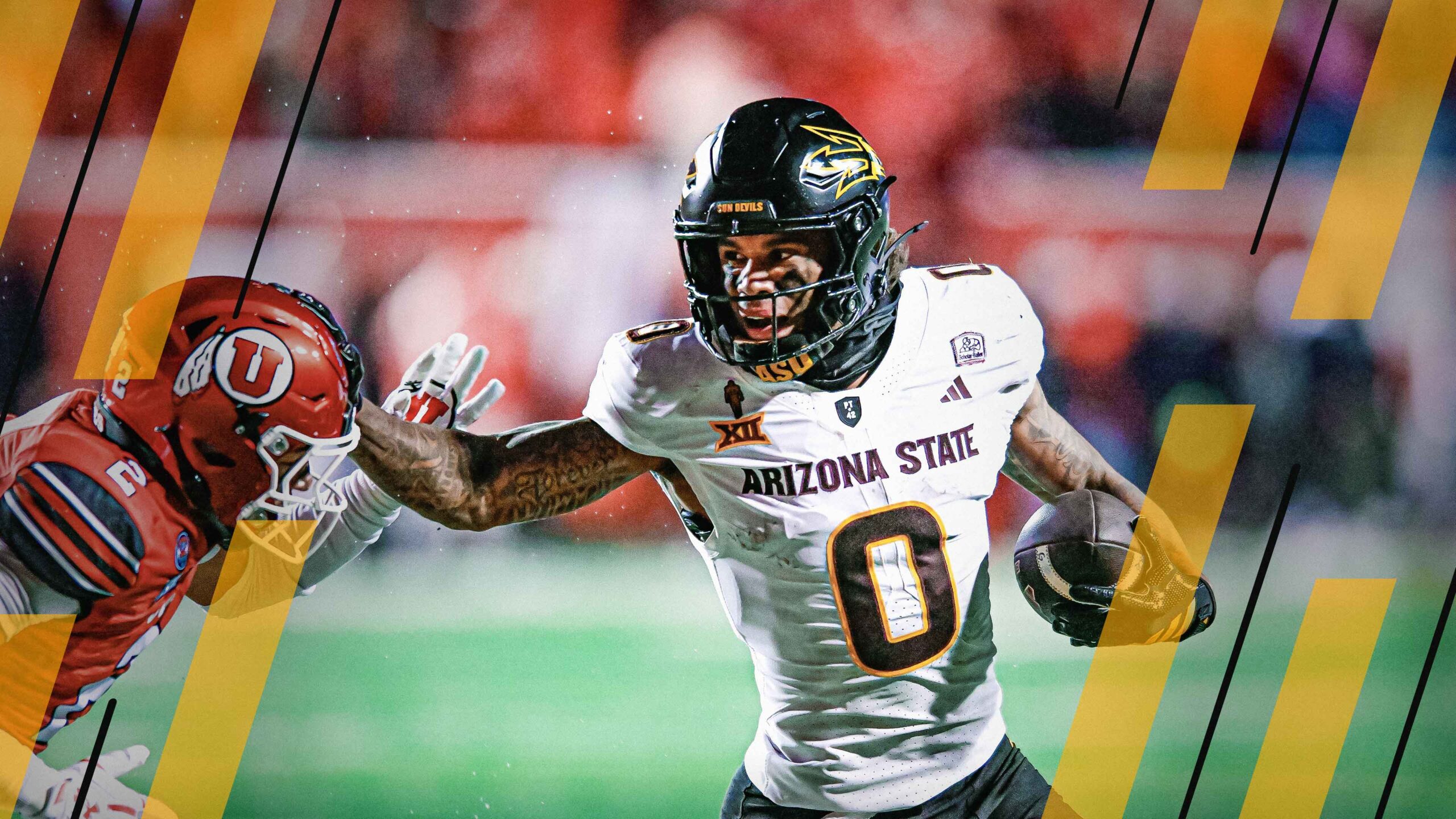
- A premier vertical threat arrives: The Saints selected Arizona State‘s Jordyn Tyson at Pick 8 to replace Rashid Shaheed. Tyson earned 80.0-plus PFF receiving grades in consecutive seasons and provides a high-end separation specialist to pair with Chris Olave.
- Massive value found in the FCS ranks: North Dakota State WR Bryce Lance represents one of the draft's biggest steals. Ranked No. 62 on the PFF Big Board but taken at pick 136, Lance posted the class' highest PFF grade (89.5).
- Defensive reinforcements in the trenches and secondary: New Orleans secured Georgia DI Christen Miller (84.5 PFF grade) to anchor the run defense and added Iowa CB TJ Hall, who ranked in the 85th percentile in forced incompletion rate.
All 257 picks from the 2026 NFL Draft have been made, reshaping depth charts across the league and setting the foundation for the season ahead. But draft weekend is only the starting point — the real evaluation comes from how each class aligns with the board, positional value and projected impact.
This class features a wide range of outcomes. Using PFF's Big Board as a baseline, along with wins above average (WAA) added and an emphasis on premium positions, we can begin to separate sound process from questionable decisions before a single training camp snap is played.
With that framework, here's a look at how the New Orleans Saints approached the 2026 NFL Draft — where they found value, where they prioritized need and how much immediate impact this class is positioned to deliver.
New Orleans Saints: B
Picks: 8 | WAA added: 0.733 (Rank 26/32)
- Pick 8: WR Jordyn Tyson, Arizona State Sun Devils
- Pick 42: DI Christen Miller, Georgia Bulldogs
- Pick 73: TE Oscar Delp, Georgia Bulldogs
- Pick 132: G Jeremiah Wright, Auburn Tigers
- Pick 136: WR Bryce Lance, North Dakota State Bison
- Pick 172: S Lorenzo Styles Jr., Ohio State Buckeyes
- Pick 190: WR Barion Brown, LSU Tigers
- Pick 219: CB TJ Hall, Iowa Hawkeyes
Highest-graded pick (2025): WR Bryce Lance, North Dakota State Bison (89.5)

Tyson: Many of the pre-draft questions surrounding Tyson were medical, but he ran 300-plus routes in each of the past two seasons at Arizona State while earning 80.0-plus PFF receiving grades in both years. He has impressive separation ability and provides a much-needed complement to Chris Olave in New Orleans’ receiving corps after the Saints traded away Rashid Shaheed.
Miller: Miller has a strong frame with good length and rare twitch for an interior defender. His quick first step and leverage make him a reliable run defender, and his processing ability adds to his projection, though he must continue to develop his anchor.
Delp: Delp is an intriguing athlete with a high-effort play style that should get him drafted. However, his limited receiving impact and lack of feel in that area project him as a TE3 or TE4 option.
Wright: Wright showed steady improvement throughout his four-year career at Auburn and provided durability, as he logged 1,498 snaps over the past two seasons. His profile raises concerns for the next level, however, as he will be 24 and struggled in pass protection — where he allowed five sacks in 2025 — while also posting a 66.6 run-blocking grade, which creates an uphill path to a roster spot.
Lance: Lance dominated FCS competition as a versatile “X” receiver. He moves well for his size and pairs that with reliable contested-catch production, giving him a strong case as an early Day 3 pick with the potential to develop into a contributing NFL receiver.
Styles: A former wide receiver turned defensive back, Styles checks in at No. 207 on the PFF Big Board after showing steady improvement at Ohio State, jumping from a 53.2 overall grade in 2024 to 66.0 in 2025. He paired that with strong run-defense marks (78.1, 71.0) and allowed just one touchdown in coverage, recording three pass breakups in each of the past two seasons.
Brown: Brown's clearest path to an NFL roster is through the return game, where he offers good straight-line speed and extensive experience. As a receiver, he must improve his nuance, tempo and catch consistency to earn a consistent role on offense.
Hall: Hall turned in his best work in 2025, earning a 74.4 coverage grade while allowing just a 72.3 passer rating on 63 targets. He broke up nine passes and finished in the 85th percentile in forced incompletion rate, with similarly strong marks in single-coverage grade (86th percentile) and coverage grade against clean-pocket throws (83rd percentile). At 6-foot-1, 189 pounds, he relies on tight footwork and competitive play at the catch point to stay connected in man and close from zone.

 © 2026 PFF - all rights reserved.