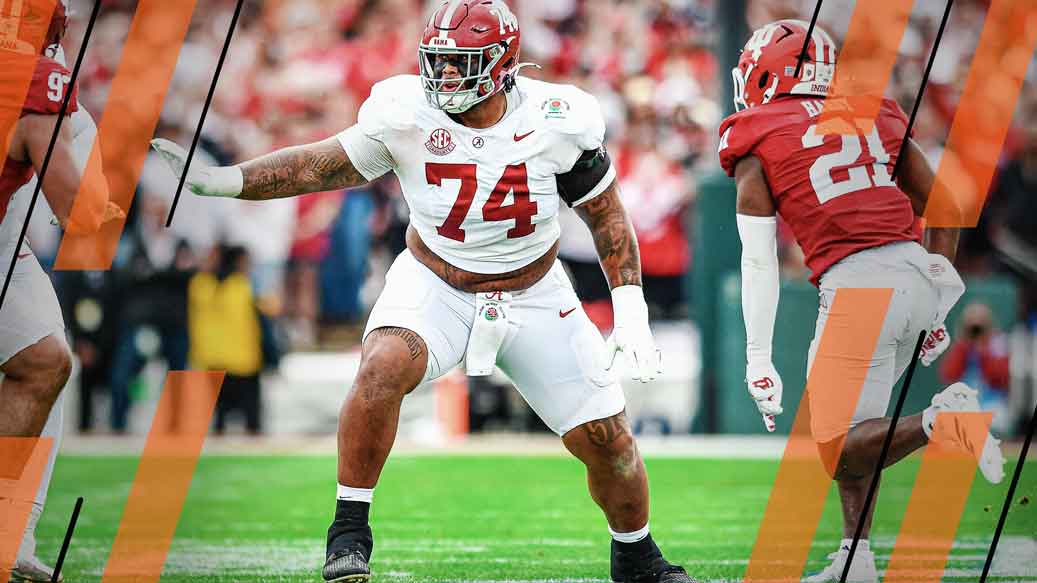
- Foundational trench play at No. 12: The Dolphins prioritized size and stability by selecting Alabama LT Kadyn Proctor. Standing 6-foot-7 and over 350 pounds, Proctor earned a career-best 86.1 PFF grade in 2025.
- Secondary overhaul begins in Round 1: Miami addressed one of the league's weakest units by drafting San Diego State CB Chris Johnson. Johnson was a massive riser, finishing his final college season with an elite 91.6 PFF grade and a 16.1 passer rating allowed.
- Efficient volume fuels a high grade: The Dolphins finished third out of 32 teams in total WAA added (2.092). The 12-player class features elite producers like LB Jacob Rodriguez (93.0 PFF grade) and WR Chris Bell, a significant steal at Pick 94.
All 257 picks from the 2026 NFL Draft have been made, reshaping depth charts across the league and setting the foundation for the season ahead. But draft weekend is only the starting point — the real evaluation comes from how each class aligns with the board, positional value and projected impact.
This class features a wide range of outcomes. Using PFF's Big Board as a baseline, along with wins above average (WAA) added and an emphasis on premium positions, we can begin to separate sound process from questionable decisions before a single training camp snap is played.
With that framework, here's a look at how the Miami Dolphins approached the 2026 NFL Draft — where they found value, where they prioritized need and how much immediate impact this class is positioned to deliver.
Miami Dolphins: B+
Picks: 12 | WAA added: 2.092 (Rank 3/32)
- Pick 12: T Kadyn Proctor, Alabama Crimson Tide
- Pick 27: CB Chris Johnson, San Diego State Aztecs
- Pick 43: LB Jacob Rodriguez, Texas Tech Red Raiders
- Pick 75: WR Caleb Douglas, Texas Tech Red Raiders
- Pick 87: TE Will Kacmarek, Ohio State Buckeyes
- Pick 94: WR Chris Bell, Louisville Cardinals
- Pick 130: LB Trey Moore, Texas Longhorns
- Pick 138: LB Kyle Louis, Pittsburgh Panthers
- Pick 158: S Michael Taaffe, Texas Longhorns
- Pick 177: WR Kevin Coleman Jr., Missouri Tigers
- Pick 180: TE Seydou Traore, Mississippi State Bulldogs
- Pick 200: G DJ Campbell, Texas Longhorns
Highest-graded pick (2025): LB Jacob Rodriguez, Texas Tech Red Raiders (93.0)

Proctor: The Dolphins have a near-clean slate with needs across the board, and they chose to address the trenches early with a massive addition up front (6-foot-7, 350-plus pounds). Proctor is a three-year starter at left tackle for Alabama and is coming off a career-best 86.1 PFF grade in 2025. It remains to be seen where he will slot into the Dolphins’ offensive line, but he raises the talent level of the group up front for Miami.
Johnson: The Dolphins’ secondary was one of the league’s worst units entering the 2026 season, regardless of position. Johnson was one of the bigger risers in the pre-draft process, coming off a 2025 season at San Diego State in which he earned an elite 92.4 PFF coverage grade and allowed a passer rating of just 16.1 on passes into his coverage.
Rodriguez: Rodriguez has elite football IQ but lacks the physical tools to match. His instincts keep him in position, though his limited range and power cap his ceiling.
Douglas: Douglas has the height and length to project as an NFL “X” receiver. However, concerns with his long speed and hands make it difficult to envision a consistent contributing role. He will need to add strength across the board to stick on a roster as a boundary receiver.
Kacmarek: Kacmarek is a 6-foot-6, 258-pound tight end who ranks No. 383 on PFF’s Big Board, bringing strong size and athletic traits with height and weight in the 84th and 89th percentiles, along with an 86th-percentile vertical jump and 73rd-percentile broad jump. His receiving role was limited in 2025 at Ohio State, as he caught 15 of 17 targets for 168 yards and two touchdowns, averaging 5.7 yards after the catch per reception. He went 1-for-2 in contested situations and generated a 147.1 passer rating when targeted. He also offers value as a blocker, as he earned a 72.2 pass-blocking grade in 2025 and has posted run-blocking grades above 69.0 in each of the past three seasons.
Bell: Bell offers an impressive blend of size — particularly weight — and explosiveness as a WR2 in a vertical offense. Some tightness in his lateral movements limits his ability to win with nuanced route-running, but when kept on vertical or horizontal routes, he can generate separation on deep routes and create yards after the catch on shorter touches.
Moore: Moore was deployed all over the field at Texas, flashing as an effective blitzer with a 78.8 PFF pass-rush grade driven by his athleticism. However, his slight frame presents challenges projecting to either edge defender or linebacker, and his struggles in coverage — including a 50.6 PFF grade in 2025 — could limit him to a more specialized pass-rushing role.
Louis: Louis is an undersized linebacker who projects best as a versatile space defender. In the right role, he can be an impact nickel player thanks to his explosiveness and coverage ability.
Taaffe: Taaffe wins with intelligence and anticipation rather than physical traits. His size and athletic limitations mean he will need to earn his role through consistency and awareness.
Coleman: Coleman’s smaller frame likely limits him to a primary slot role at the next level. His ball skills and efficiency provide value, as he posted a 53.7% career contested-catch rate and averaged 6.1 yards after the catch per reception, while maintaining a low drop rate. Those traits give him a chance to carve out a role in a receiving corps.
Traore: Traore entered college with just one season of high school experience and began his career at Arkansas State before moving to Mississippi State. His role remained limited in that offense, with fewer than 400 receiving yards in each of the past two seasons, but his athletic traits stand out. He ranked in the 90th percentile at the position in separation rate against single coverage across that span.
Campbell: Campbell’s arm length, ability to get off the ball and pass-protection reliability — allowing just four sacks over the past two seasons — provide a foundation for an opportunity at the next level. However, his technique will need refinement to sustain a long-term role.

 © 2026 PFF - all rights reserved.